
Extra Amsterdam & Partners
Experts demand urgent reform of Spain's 'predatory' tax bonuses and crippling litigation rules
Authors of a new book call for urgent structural reforms to dismantle the country’s corrupt auditor bonus schemes and economically crippling 'pay-to-play' litigation rules
Dilip Kuner
Málaga
When public policy instruments cease to serve the common good and instead become tools for aggressive capital extraction, the economic foundation of a democracy begins to splinter.
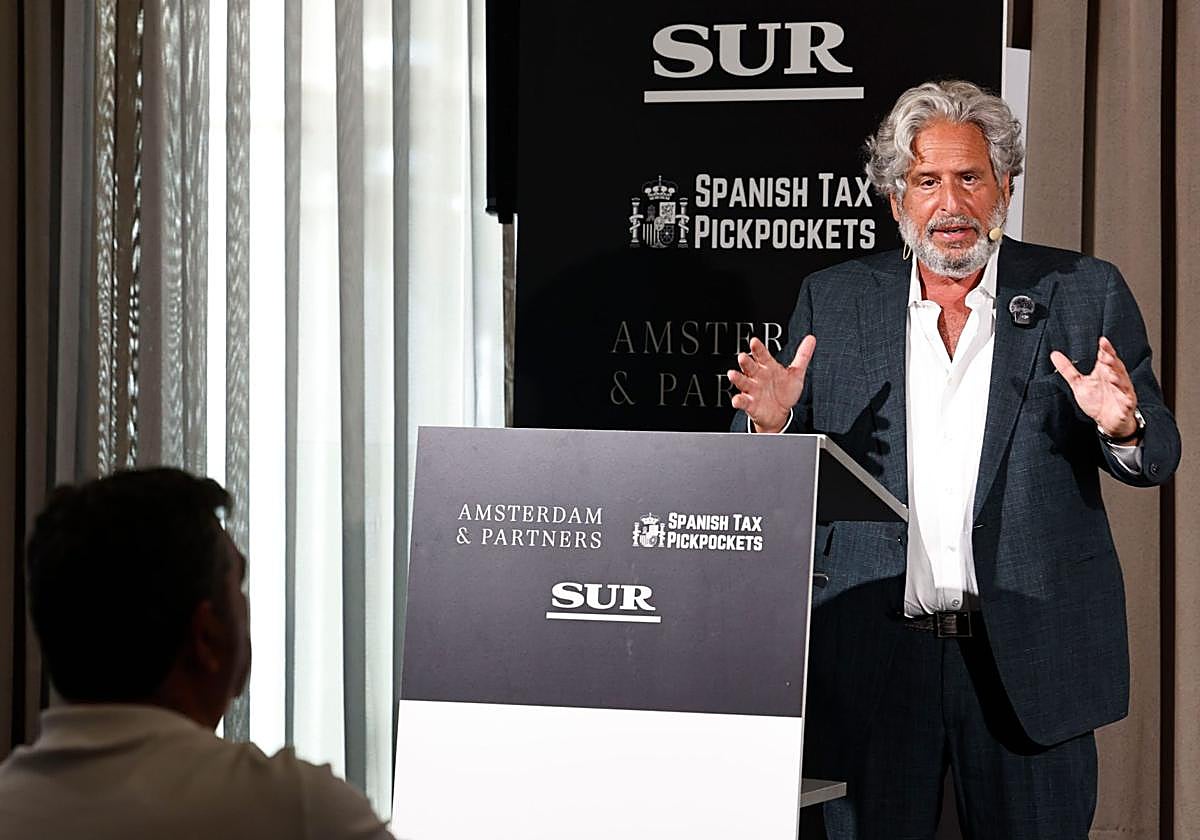
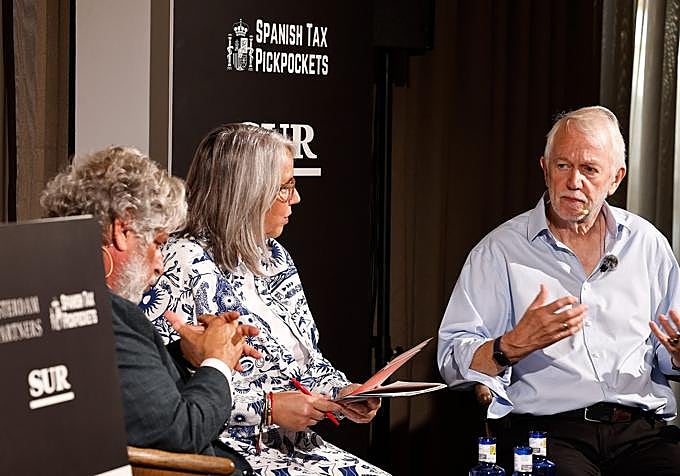
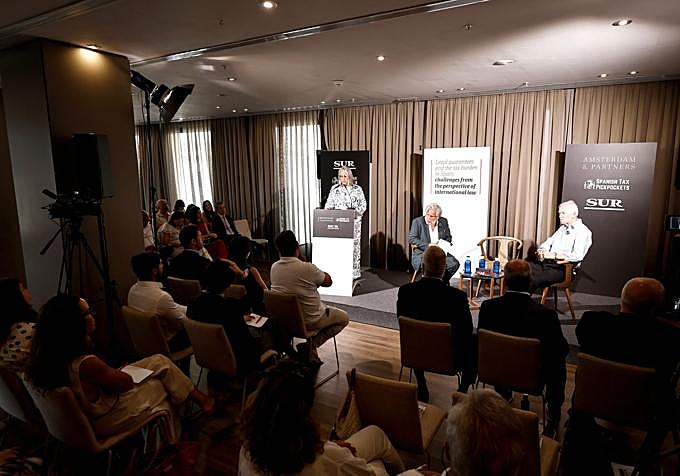
This economic reality took centre stage at a presentation in partnership with SUR in English in Malaga, where economist Dr Christopher Wales and international litigator Robert Amsterdam laid bare the predatory mechanics of the Spanish tax administration.
Amsterdam's "tax pickpockets" campaign accuses the Spanish tax office (known as Hacienda) of "unfair audits, investigations, and onerous financial claims without foundation".
Promoting their comparative analysis, Hacienda and the Dual State (Hacienda y el Estado Dua), the authors shifted the public conversation away from traditional debates over tax rates, focusing instead on the destructive economic incentives embedded deep within the state apparatus.
"Chris and I constantly refuse to discuss rates of tax, tax plans, tax schemes - that's not what we're about," Amsterdam explained.
"We are about the functioning of a tax system that turns citizens into subjects, that makes a laughing stock of guarantees of proportionality, guarantees of equality before the law. This is a tax system that is jury-rigged to screw the individual."
Wales, a veteran public policy expert who has advised 30 countries on fiscal architecture, emphasised that the health of an economy depends entirely on legal certainty and predictability.
Instead of fostering predictability, Spain has developed an incredibly complex, 2,000-page tax manual. Amsterdam was unsparing about the economic motives behind this complexity: "It's because the government doesn't want clarity. They don't want to help you. They want to screw you. And the more complex it is, the more discretion the corrupt auditor has to take more of your money."
The most damning structural defect highlighted during the event is the operational separation of the tax agency from the central treasury, a shift that occurred in 2011.
Under the current framework, the primary metric for administrative success has been reduced to a single variable: the raw volume of extracted wealth.
Amsterdam fiercely attacked the state's internal incentive structures, explaining that the minister in charge has "simply extraction of tax" as his criteria for success. "And what's the best way to do it? Well, the best way to do it is to corruptly give the auditors who are going after each one of you a little bit of the pie. 'Let's see how much they can take from these schmucks.' And then, when they take your money, wrongly in some cases, number one, they're not punished. And number two, you are, because you've got to come up with the money right away - right or wrong, you pay."
This bonus system fundamentally corrupts the relationship between the state and the taxpayer, turning the administrative process into a commercial venture for state employees. Wales, identifying as a social democrat, stated his deep disappointment: "To me, it's quite shocking. The fundamentals we should expect in the administration of the tax system were being perverted with two goals. One is to raise revenue for the government... but the second one, to raise money for the tax inspectors themselves, which I aim to argue is slightly less honourable."
Compounding this predatory incentive structure is the economically crippling policy known as "pay-to-play," which requires citizens to hand over disputed funds to the government before they can legally appeal an assessment.
Because the government receives the capital upfront, it has absolutely no economic incentive to resolve disputes efficiently, tying up private capital for decades. "The pay-to-play system is an incentive for the government to jerk you around for decades, and they do," Amsterdam said, pointing out that cases drag on for up to 23 years while the agency relentlessly appeals.
"We have a very heroic celebrity named Shakira, who won a massive award. And what is the government's response? What is Hacienda's response? Is it mea culpa, 'I'm sorry'? No. Appeal again. Let's wait till Shakira's in a walker before we finally give that woman justice."
To rescue the economy from this systemic trap, Wales and Amsterdam argue that citizens must focus entirely on three non-negotiable structural demands.
First, combine the economic and finance ministries so leadership is on the hook for "economic developments and growth" rather than pure revenue extraction. Second, abolish the internal bonus structures for tax auditors. Third, dismantle the "pay-to-play" model. "If you get rid of pay-to-play, you incentivise the government to bring down this bullshit 20 years of legal hassles," Amsterdam concluded. "Because if the government doesn't have your money, we're going to have an expedited process so that you get tax justice in real time."
![[]](http://static.vocstatic.com/voc26/latest/assets/images/favicon/surinenglish/apple-touch-icon-57x57.png)