
Spain
Spain leads action on violence against women despite 'macho' image
Spain is sometimes portrayed as a macho society, but that stereotype oversimplifies reality. A closer look shows that gender equality and women's rights are given significant attention, often more so than in many other countries

Emilio Rappoid / DPA
For some visitors, perceptions of Spain can quickly slip into familiar stereotypes.
News reports regularly detail cases of women killed by partners or ex-partners, with extensive coverage of trials, funerals and protests by grieving families and entire communities.
To an outside observer, it can reinforce a familiar stereotype: a deeply "macho" society where women are at risk.
Yet that impression is misleading.
According to Spain's Ministry for Equality, 48 women were killed by partners or former partners last year - the lowest figure since records began in 2003.
By comparison, in Germany, where such cases have only recently been systematically recorded, the Federal Criminal Police Office (BKA) reported 132 victims of fatal domestic violence against women in 2024.
Related story
-
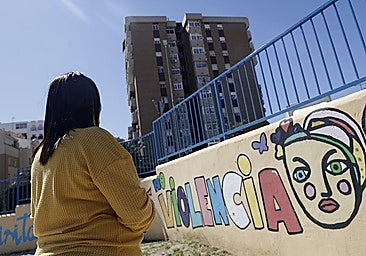
Gender-based violence
Doménico Chiappe
The contrast highlights a deeper reality: while the issue is highly visible in Spain, it is also confronted more openly than in many other European countries.
Years of reporting, public protests and political debate reflect not a failure, but the central importance of gender violence in Spanish society.
Spain is widely seen as a European pioneer in tackling violence against women.
A "revolutionary law"
Spain passed its law against gender-based violence more than 20 years ago, in 2004. The legislation established a comprehensive framework that includes a state observatory and specialised institutions.
Equality Minister Ana Redondo has described the law as "revolutionary, groundbreaking and an international benchmark".
One of its defining features is the creation of specialised judicial structures - something still largely absent in some other European countries.
Most Spanish courts have dedicated chambers with specially trained judges, while training programmes extend to police officers, teachers, lawyers and social workers.
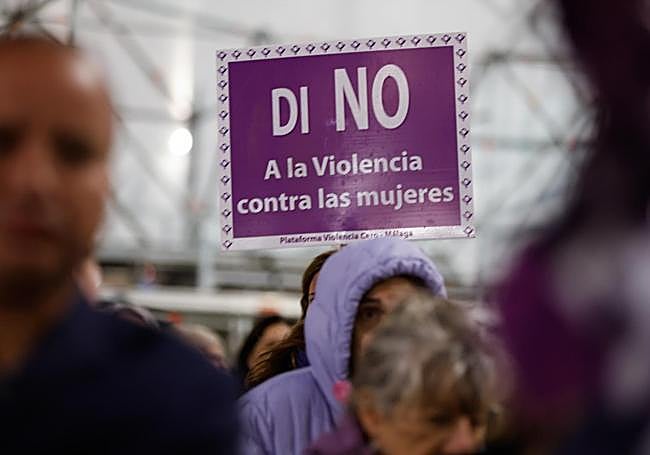
Around 60 crisis centres operate nationwide, offering round-the-clock support alongside helplines in more than 50 languages.
Police and judicial responses follow strict protocols. Authorities are required to act at the first sign of suspected abuse, even without a formal complaint.
Courts can issue protection orders within hours, including round-the-clock police protection.
Technology and strict enforcement
Digital coordination is central to Spain’s approach. Security agencies rely on the VioGén system, which enables rapid data sharing and risk assessment.
Electronic monitoring devices for offenders - used for more than 15 years - help enforce restraining orders in high-risk cases.
At the start of 2024, more than 4,000 such systems were active nationwide.
Spain also applies comparatively tough criminal penalties: abuse by a partner or former partner can carry a prison sentence of at least two years.
Minister Redondo says these measures have helped shift Spain "from a macho-dominated society towards a culture of equality" and moved violence against women "from the private sphere into public consciousness."
A society engaged
Today, domestic violence is widely debated in Spain - in classrooms, on television and in popular culture. Public scrutiny of institutions remains intense.
Spain is now also positioning itself at the forefront of efforts to combat digital sexualized violence.
While many countries are still debating legislation, the Spanish government has already drafted a law aimed at regulating AI-generated deepfakes.
The proposed rules would make it illegal to use a person’s image or voice without consent. For minors under 16, consent would not be recognized at all. Violations could result in prison sentences of up to two years.
The initiative follows high-profile cases such as a 2023 scandal in Almendralejo, in south-western Spain, where teenagers created and shared AI-generated nude images of classmates aged 13 and 14.
The case sparked nationwide outrage and highlighted the risks posed by rapidly evolving technologies. According to Save the Children, around one in five young people in Spain – mostly girls – have already been affected by such abuse.
Authorities are also beginning to enforce existing laws. In autumn 2025, Spain’s data protection agency became the first in Europe to fine an individual for publishing an AI-generated nude image.
At the same time, Prime Minister Pedro Sánchez’s government has called for investigations into major tech platforms including X, Meta and TikTok over potential offences linked to AI-driven sexualized violence involving minors.
A wider European shift
Spain is not alone in moving quickly. Countries such as Denmark and France have already criminalised the creation of non-consensual deepfake pornography involving real individuals, with penalties including fines and prison sentences.
But Spain’s approach stands out for its breadth - combining legal reform, public awareness and technological tools.
For visitors, the constant media coverage may create a distorted picture. In reality, it reflects a society that has chosen to confront the issue head-on.
![[]](http://static.vocstatic.com/voc26/latest/assets/images/favicon/surinenglish/apple-touch-icon-57x57.png)