
Brexit referendum - ten years on
Could the UK ever rejoin the EU?
Ten years after Brexit, the movement in the UK to return to the bloc seems to be growing. Is there any possibility of a ‘Brexin’?
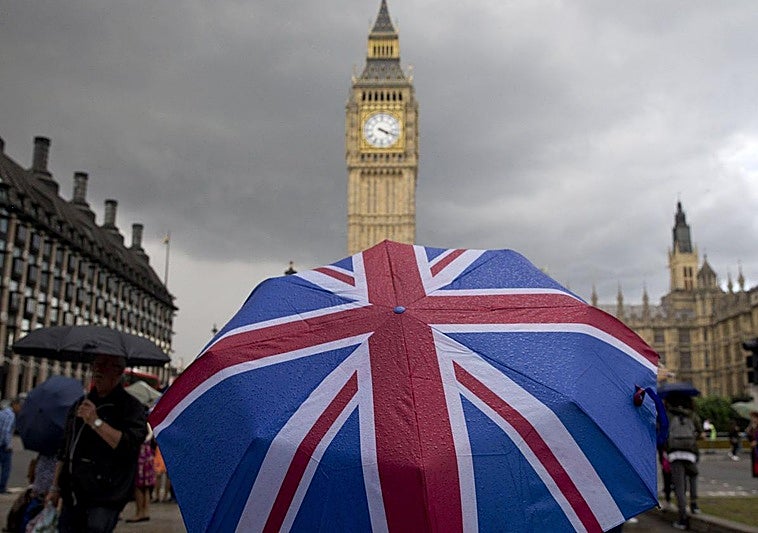

Ten years after the United Kingdom voted to leave the European Union (EU), Brexit is still very much on the country’s political agenda. Amidst ... the Labour Party’s internal struggles following poor local election results in May, former health secretary Wes Streeting said around the time of his resignation shortly after those elections that he believed the country should eventually seek to regain membership. Public opinion seems to support his idea: more than half of Britons (53 per cent) are in favour of rejoining the EU, according to a poll conducted by the research group Best of Britain.
The electoral defeat and the rise of the far right have sparked an internal power struggle within the Labour Party. Some members blamed former Prime Minister Keir Starmer for the poor results and rumours of potential leadership challenges came true on Monday 22 June when he resigned. Perhaps one of the most stark things about the resignation speech is that Beethoven’s Ode To joy - known as the anthem of the EU - could clearly be heard being played in the background.
Starmer’s resignation came just four days after former mayor of Manchester Andy Burnham won a by-election in Makerfield, a constituency in Greater Manchester. The win soon confirmed the rumours circulating way before the by-election that he had his sights set on the top job in UK politics and on the same day as Starmer's resignation, Burnham announced his plans to run for Prime Minister.
Related story
-

Brexit referendum - ten years on
Jennie Rhodes
Burnham considers Brexit to have been “damaging” for the country, but advocates “looking ahead,“ instead of reopening debates about a possible return to the bloc. Wes Streeting, who had also been linked with a possible leadership challenge, but on Monday announced that he was backing Burnham, has described Brexit as “a catastrophic mistake” and wishes to open the door to the UK’s return “someday”.
Although Starmer may not be popular in the UK, on an international level, he has garnered the respect of a number of political leaders, including in the European Union and has forged closer links with Europe, including rejoining the Erasmus scheme from 2027, which will once again allow UK students to study at EU universities and other educational institutions.
Returning to the EU would not legally require a new referendum, but it would be politically desirable to hold one and support for such a return would need to be strong to justify the measure. In that hypothetical scenario, Brussels would also likely ask the British government for guarantees to ensure that the country would not reverse course within another 10 years.
53%
of British citizens
are in favour of reversing Brexit and rejoining the EU, according to a survey carried out by the Best of Britain group.
For the moment, the European Commission prefers not to comment on what would happen if the UK wanted to rejoin the EU. “Right now we are discussing how we can work more closely together in a number of areas, given the reality that the UK is no longer part of the EU,“ the spokesperson for the Presidency of the European Commission, Paula Pinho, recently stated.
The process of returning to the EU inevitably involves difficult technical discussions, including the specific situations of Northern Ireland (which was not resolved until 2023, three years after the UK’s effective departure from the bloc) and Gibraltar (whose agreement was reached in April of this year).
Given the political effort this process would require, the EU might prioritise talks with other countries like Moldova and Ukraine, which are critical to the security of the bloc’s eastern borders. Along this path, the British government would also have to make certain concessions, which might not be well-received by its public.
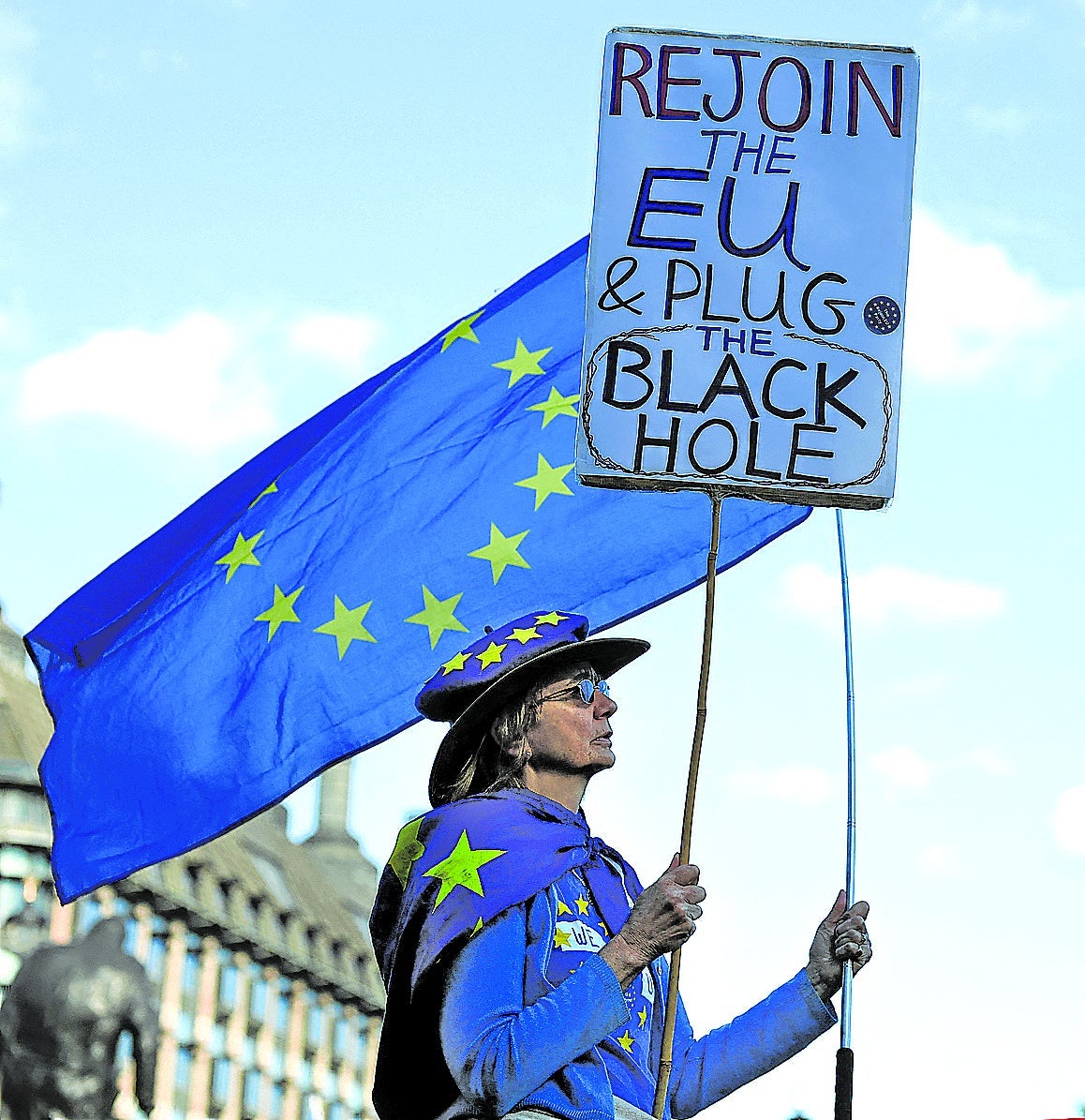
All things considered, the country could seek to achieve an intermediate status that would guarantee it unhindered access to the Single Market, similar to that enjoyed by Switzerland. The Alpine country has struck a deal granting it access to the European electricity market, the Erasmus programme, and space and research programmes for digitalisation. In return, Switzerland has agreed to the free movement of people and to pay 375 million euros a year into the EU’s Cohesion Fund.
In return, Switzerland agreed to the free movement of people through the Schengen agreement and to contribute 375 million euros annually to EU Cohesion Funds. The UK could also apply to join the European Economic Area (EEA), a possibility previously rejected by Starmer. This process would require negotiations and the country would have to accept freedom of movement.
According to British newspaper The Times, Brussels has already set a price for the country’s access to the Single Market: 1.15 billion euros annually, according to a diplomatic source who participated in the negotiations held on the sidelines of the European Political Community meeting in Armenia.
A return to the bloc would require difficult technical negotiations and concessions on the part of the United Kingdom
Another option, perhaps the most advantageous for the country economically and politically, would be to follow the path set by the current British Prime Minister, which consists of aligning with European policies.
The relationship between the UK and the EU has always been complex. The country joined the European Economic Community (EEC) in 1973 under a Conservative government. While other nations opted for political integration, the British government consistently maintained a highly sovereign stance.
The UK never adopted the euro, remained outside the Schengen free movement and negotiated numerous exceptions. In fact, during its almost 50-year stay in the EU, the country was known to “cherry-pick” the aspects of EU law that suited it.
Eurosceptic rhetoric
In the 1980s and subsequent decades, Eurosceptic rhetoric gained traction, fuelled by fears of losing sovereignty and opposition to intra-European immigration. A largely Eurosceptic press and changing views of leading political parties didn't help the EU's cause. It was Conservative leader Edward Heath who took the UK into the then EEC in 1973, while in 1975 a Labour government held a referendum on the UK’s membership of the by then EC, when 67.2 per cent of Brits voted to remain. However, by the time Tony Blair became Prime Minister in 1997 after 18 years of Conservative rule, the Labour Party was seen as largely pro-European, with the erstwhile more pro-EU Conservatives split over the issue.
After the Brexit referendum and years of failed withdrawal agreements it was Boris Johnson who managed to finalise the UK’s departure from the EU with a hard Brexit and political rupture, which ensured tariff-free trade on many goods and limited cooperation.
However, it also led to increased bureaucracy and customs controls, resulting in a decline in trade in some sectors.Tensions with Brussels stabilised during the tenure of Conservative PM Rishi Sunak and at the EU-UK summit, by then under Starmer’s leadership, in May 2025, the relationship was much closer.
Maintaining a good relationship is in the interest of both powers, both economically and geopolitically, at a time marked by the erratic decisions of Donald Trump and by economic competition with giants like the US and China.
Credits
The war in Ukraine, the Trump effect and the agreement with Canada
The Russian invasion of Ukraine upended the Western geopolitical map and the return of war to Europe’s doorstep has drawn countries like the UK and Canada closer to the EU. This trend has been reinforced by Donald Trump’s return to the White House and his use of an aggressive and unilateral foreign policy.
Lately, the British government has aligned itself with Europe on issues such as the tightening of immigration policy and has sought greater economic cooperation. Internationally, the Franco-British axis has strengthened. Starmer, along with French President Emmanuel Macron, has convened several summits to coordinate defence policies and the continent’s rearmament in the face of the Russian threat and to organise the possible deployment of a European security force to Ukraine, among other issues.
Canada has followed the same path, increasingly aligning itself with the EU. Like its European allies, Canada has been attacked by Trump for not spending enough on defence within NATO and faced with the rivalry and polarisation of giants like the US and China, Canadian Prime Minister Mark Carney has urged “middle powers” to form an alliance to avoid becoming targets for the superpowers. The EU also sees Canada as a reliable partner in defending multilateralism and international law.
The UK, which since leaving the EU had opted for autonomy and national sovereignty, had to change course after the war in Ukraine revealed the limitations of that strategy. The country has coordinated with the EU on support for Kyiv, energy measures and sanctions against Russia.
The President of the European Commission, Ursula von der Leyen, has repeatedly stated that the EU is a “reliable partner” amidst a turbulent international landscape and increasingly countries see the bloc as a guarantor of stability, a key alliance on economic issues and in the defence of democracy, in the face of autocracies like China and Russia.
This phenomenon is not limited to the UK and Canada. Sweden and Finland have joined NATO after years of nonalignment with the military organisation. Australia, Norway, and Japan have also moved closer to Europe in strategic areas.
Paradoxically, nationalist movements like Brexit and Trump’s “America First” policy have ended up having the opposite effect, fostering closer cooperation among allies. Paradoxically, nationalist movements such as Brexit and Trump’s ‘America First’ policy have ended up having the opposite effect and boosting close cooperation between allies.
![[]](http://static.vocstatic.com/voc26/latest/assets/images/favicon/surinenglish/apple-touch-icon-57x57.png)