
General strike 2026
Spain's public transport feels the general strike's impact: fewer passengers mas well as cancelled trains and flights
Transport in Barcelona has come to a standstill until this afternoon, although minimum services are being maintained in most areas
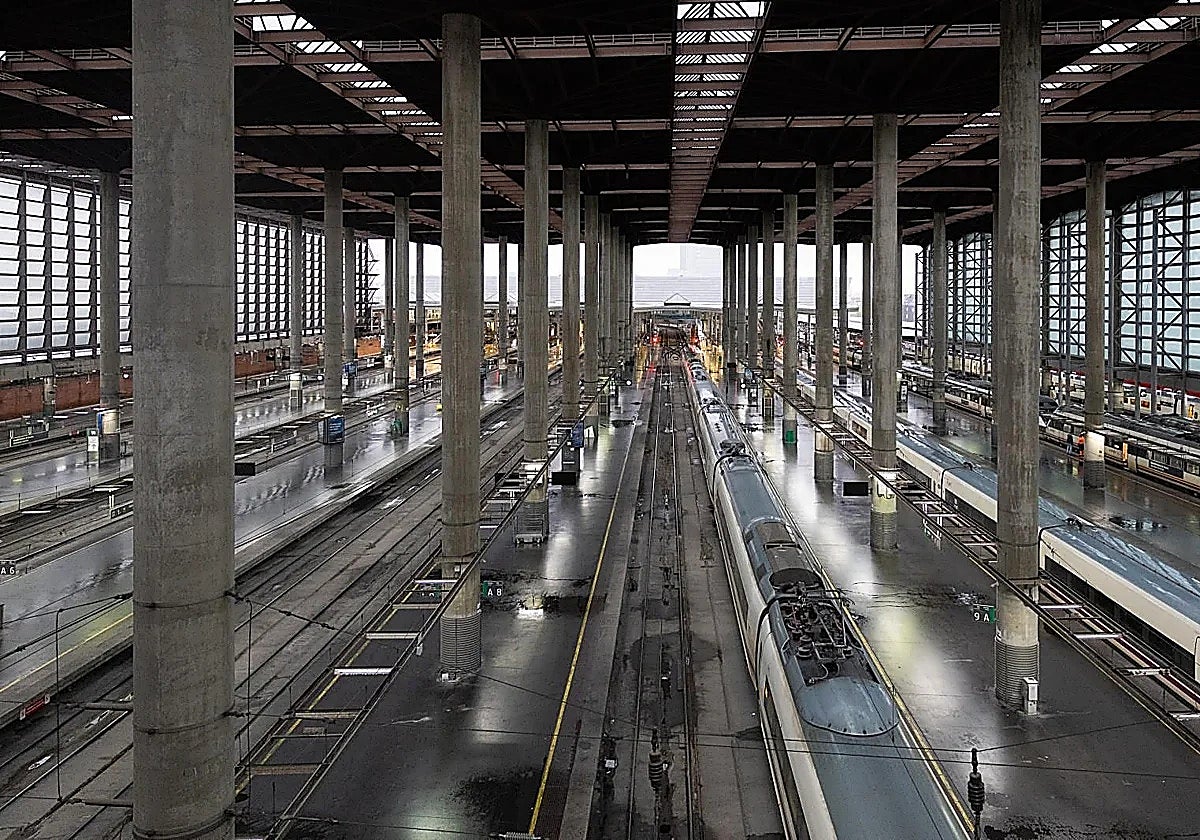

Transport is operating more or less as normal on the day of the general strike in Spain, although not all regions of the country have ... felt its impact the same way.
On Wednesday, passengers described "empty" stations at Atocha and Chamartín, as well as long queues at intercity bus stops in the region of Madrid. The most significant disruption to train services is occurring on the Madrid Cercanías and Barcelona Rodalies networks, with an "uneven" impact across the country, according to a statement from rail operator Renfe.
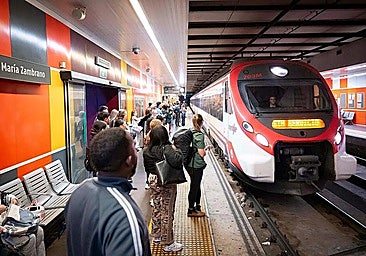
The commuter rail network is operating at 75% capacity during peak hours and 50% during off-peak hours, although some passengers noted in the morning that trains were running at a level even higher than these minimum services in Madrid. Official figures from Renfe indicated that 20% of trains had been cancelled.
Related story
-
Rail strike
Chus Heredia
Related story

The capital's underground network, which has set minimum services at 80% during peak hours and 50% during off-peak hours, has also been running relatively normally.
Traffic in Madrid has fallen by 13%, while passenger numbers on the EMT (municipal transport company) had dropped by 63% during Wednesday's morning rush hour compared with usual levels, according to Madrid city council.
The CCOO union has condemned police charges and the use of pepper spray against picket lines attempting to prevent buses from leaving the EMT depot in Carabanchel (Madrid) early in the morning.
In Barcelona, there has indeed been a complete standstill in transport services due to the strike, with train services virtually suspended entirely. The metro network and Barcelona's bus fleet (TMB) came to a standstill at 9.30am on Wednesday and will not resume service until 4.30pm, following the end of the first period of minimum services during the strike.
In addition, picket lines have set up 50 roadblocks at various points across the road network throughout Catalonia, blocking access to Barcelona, cutting off access to Girona via the AP-7 motorway and also blocking access to the port of Tarragona.
5.2% of flights are not taking off
As for air travel, the strike had led to the cancellation of 5.2% of the 4,529 flights scheduled at Spanish airports for this Wednesday up to 10am, totalling 234, according to figures from airport operator Aena. El Prat Airport, in particular, saw 11% of its flights cancelled.
The Ministry of Transport has set minimum service levels of between 18% and 85% for flights scheduled during the strike, which vary depending on the type of route and the airports of departure and arrival.
Consequently, for domestic flights to or from non-mainland territories, a minimum service level of between 56% and 85% of scheduled operations has been set for each airport. Furthermore, minimum services for routes to the Canary Islands range from 56% to 74%, depending on the airport; in the Balearic Islands, between 68% and 75%; in Ceuta, 80%; and in Melilla, 59%
Meanwhile, for international flights and routes between cities on the Spanish mainland where the alternative journey by public transport takes five hours or more, minimum services range from 39% to 64%.
Aena has pointed out that, due to the general strike, the airlines operating in its network had rescheduled their flights and rebooked passengers onto earlier flights.
A quarter of AVE trains have been suspended
The disruption is also affecting the national rail network, where minimum services are guaranteeing 65% of medium-distance trains and 73% of high-speed and long-distance services. Renfe has put the participation rate in the strike at 6.8%, with 24% of AVE and long-distance services cancelled.
The corridors most affected by the strike are the north-east corridor (connections between Madrid, Aragon and Catalonia, with 27.3% of trains cancelled); the northern corridor (connections between Madrid, Castilla y León, Asturias and Galicia, with 23.8% of services cancelled); and the eastern and Mediterranean corridor (between Madrid, Catalonia, Valencia and Murcia, with 20% of services cancelled).
In the Basque Country, minimum services have been set at 30% for buses, trains, trams and funiculars, while in Andalucía they stand at 60% for urban and inter-city transport, including the metro systems in Seville and Malaga. According to the Andalusian regional government, both services are operating at 100% capacity.
In the region of Valencia, Metrovalencia and the Alicante TRAM have set minimum service levels at 80%. Various picket lines blocked access to Valencia via the V-21 and the Ronda Nord as part of the strike this morning.
