
Innovation
Nissan designs the car of the future in Zaragoza: from following orders to becoming 'intelligent companion'
At the Aucon conference, the brand presented its roadmap towards a vehicle powered by AI, capable of anticipating the driver's needs and managing the home's energy supply
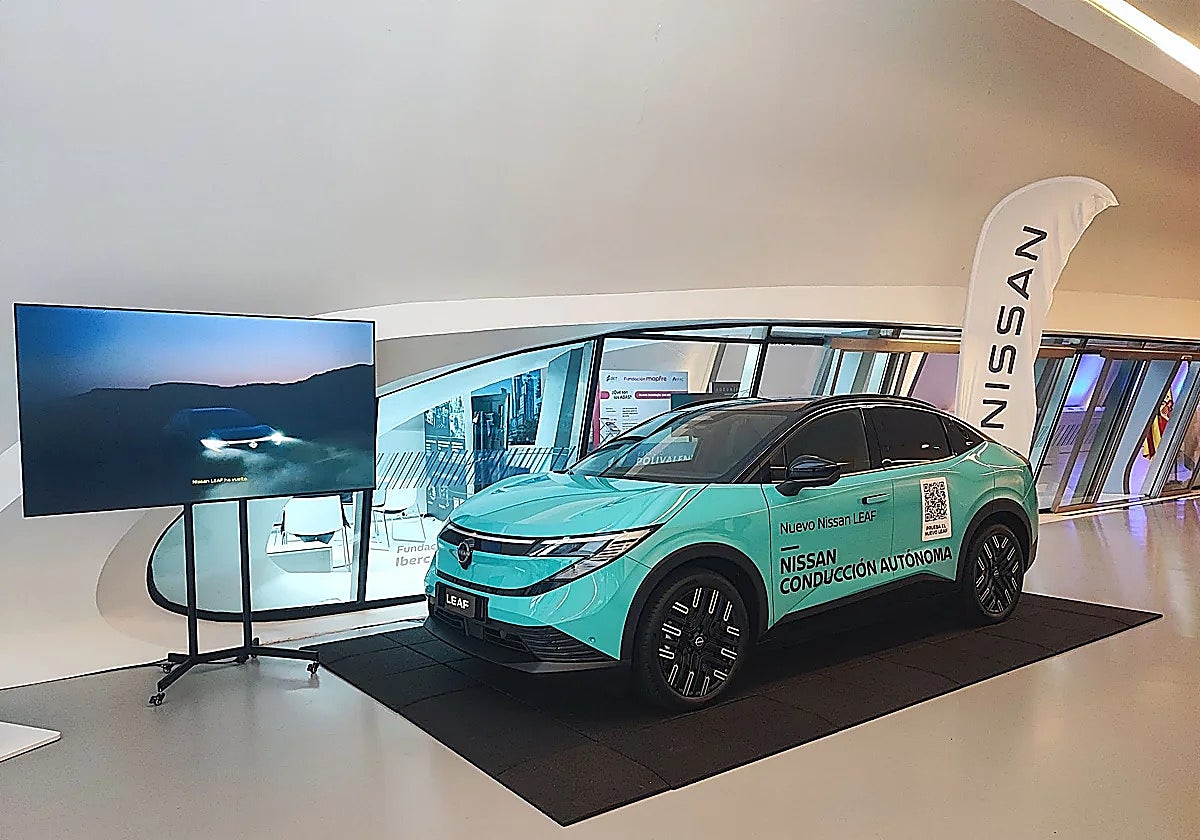

The automotive industry is in the middle of a transition towards the software-defined vehicle, but at Nissan they are already looking one step further: ... the AI-defined car. This was the main argument the Japanese brand put forward on Thursday during the opening day of Aucon, the first conference on autonomous and connected vehicles organised by Anfac and Fundación Ibercaja, in Zaragoza.
The person responsible for setting out this roadmap was Maarten Sierhuis, deputy head of the Nissan Advanced Technology Centre in the Silicon Valley and a former Nasa researcher.
During his presentation, Sierhuis explained that cars are moving away from their traditional role as a machine that waits for instructions and evolving into an "AI Partner" or intelligent companion. "It doesn't just execute code. It interprets its environment, understands the context, learns from interaction and reasons about possible actions," Sierhuis said.
To bring about this transformation, Nissan divides AI development into three areas that converge within a single ecosystem: intelligence within the cabin (to adapt the environment to the occupants' preferences and condition), on the road (to assist with or take over driving in complex environments) and beyond the vehicle (connecting the car to external infrastructure and services).
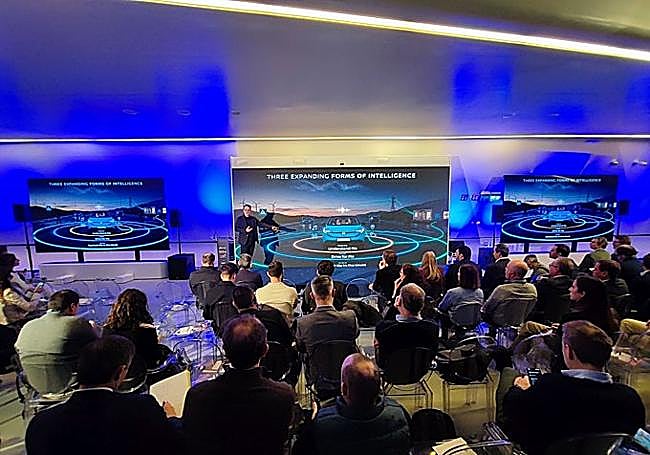
One of the key points in Zaragoza was that the value of these systems lies not in overwhelming the user with information, but in knowing when to intervene. "The aim is not to create a vehicle that talks more, but one that provides guidance on when and how it should assist, always under human supervision," Sierhuis pointed out.
As for autonomous driving, particularly in urban environments full of unforeseen circumstances involving pedestrians and cyclists, he stated that the ultimate goal "is not autonomy for its own sake, but safe, useful and reliable transport".
This is a philosophy that the brand is already testing in real-world scenarios with its robo-taxi services in Yokohama (Japan), where the focus is on the vehicle as well as fleet management and remote support.
The electric car as an energy manager
The Japanese brand's proposal, which forms part of its global strategy Nissan Vision: Mobility Intelligence for Everyday Life, also gives electrification a central role. Thanks to bidirectional technologies (such as V2H or V2B), a smart vehicle will be able to cross-reference the driver's schedule and planned routes with electricity tariffs or the state of the grid to decide when to charge or feed energy back into the home and buildings.
Nissan's managing director in Spain Christian Costaganna backed this approach, stating that technology "is not an end in itself", but rather a tool that should translate into tangible benefits for drivers in their day-to-day lives.
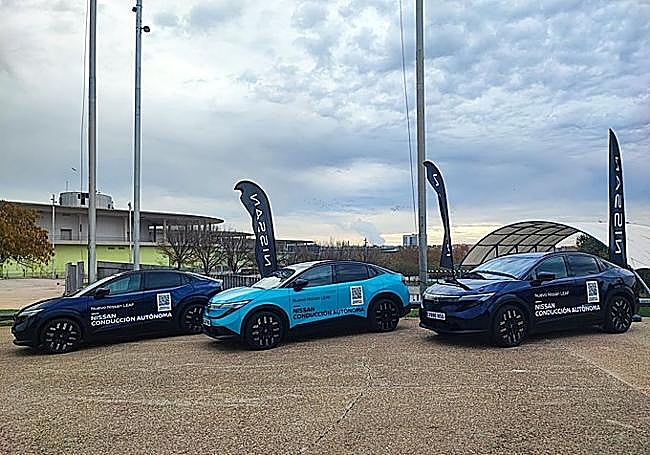
As a practical demonstration of how this technology is already beginning to take hold in today's market, the brand took four units of the new Nissan LEAF (three of which were available for test drives) to the Zaragoza conference, all fitted with the ProPILOT driver-assistance system (level 2 autonomy), illustrating the bridge between today's driver-assistance systems and the intelligent co-pilot of tomorrow.
