
Spain wildfires 2026
Northern Spain firefighting efforts rely on the next two days to bring blaze under control
The Copernicus satellite has revised the number of hectares burnt down to 15,000
C. P. S.
Huesca
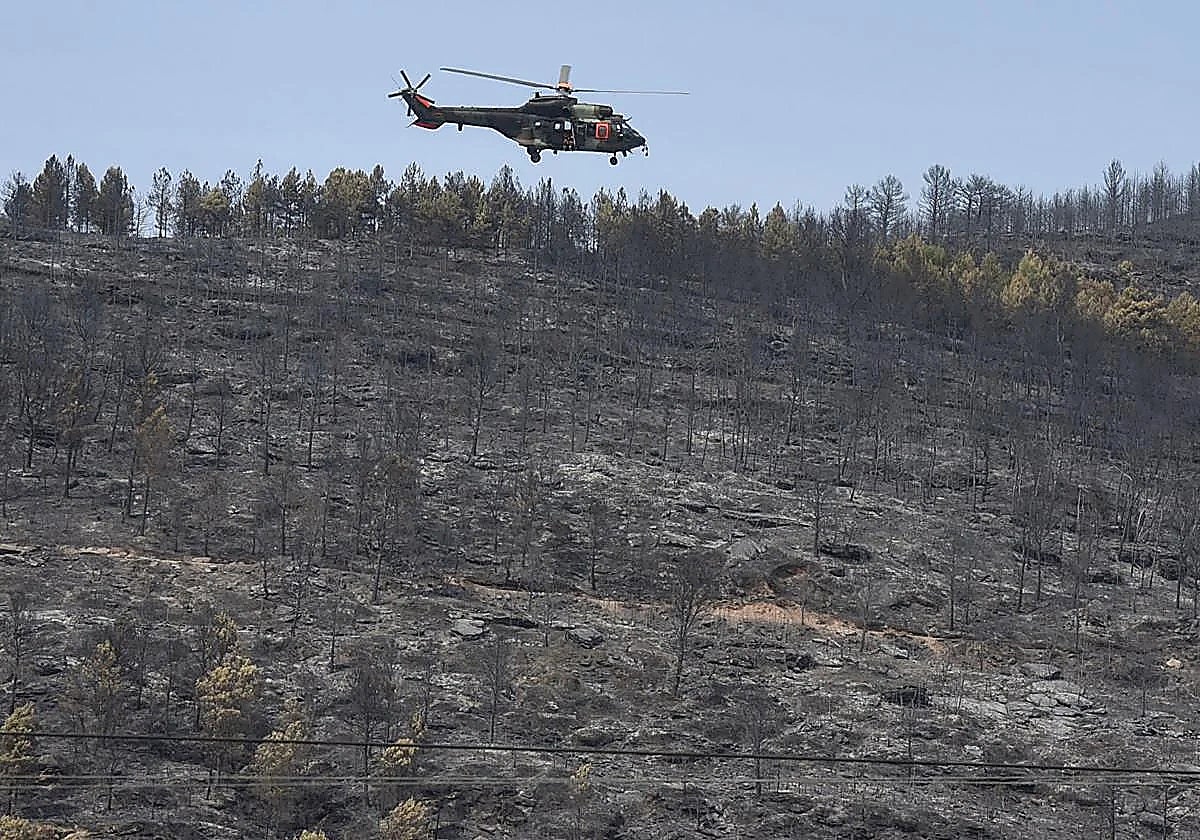
Firefighters tackling the wildfire in Las Peñas de Riglos (Huesca) rely heavily on the next two days. Weather conditions are once again "very poor", with ... winds of over 30 and 40 kilometres per hour, temperatures above 35C and relative humidity dropping as low as 15 per cent.
Meanwhile, some of the people who have evacuated may be able to return to their homes, although there is still no update on this matter.
Regional minister of finance, the interior and public administration Roberto Bermúdez de Castro has expressed confidence that the fire might be brought under control "before Sunday", but reminded that he does not have a "crystal ball".
Related story

Head of the regional government Jorge Azcón reported that the left-hand side of the fire is "very quiet" and that intensive work is continuing in sectors 2, 4 and 6, from the La Peña reservoir to Monte Oroel, although the fire has not crossed the N-240. Sector 6 remains one of the areas of greatest concern, after a fire front spread three kilometres in half an hour on Saturday afternoon.
Another challenging area is sector 4, around the village of Botaya, where the terrain presents an obstacle, although work is progressing. The situation in sector 5 is also "a cause for concern".
Data from the Copernicus satellite has revised the figure for the number of hectares burnt down to around 15,000. There are areas within the perimeter that have not been affected by the flames.
Bermúdez de Castro has not confirmed whether any of the residents of the evacuated areas will be able to return to their homes immediately, as it is first necessary to check the availability of drinking water and electricity and, ultimately, to ensure that the areas "meet the optimal conditions for habitation".
"I understand perfectly well that, after being evacuated from your home for eight days, you're keen to return home. The truth is that it's dragging on for far too long and we hope that things will start to be sorted out in the next few hours," Bermúdez de Castro said.
The fire has led to the evacuation of 1,046 people from 19 municipalities, two campsites and one camp. Of these, 73 are currently staying at facilities provided by the authorities.
Secretary-general for civil protection and emergencies Virginia Barcones offered her condolences to the family and colleagues of a member of the military emergency unit (UME) who died on Sunday during the operation.
"We are all one" when it comes to local, regional national and international authorities tackling emergencies of this magnitude, she stated. "It doesn't matter what uniform you wear or which institution you belong to. We are one family of public servants working to protect the public from emergencies," she said.
Related story
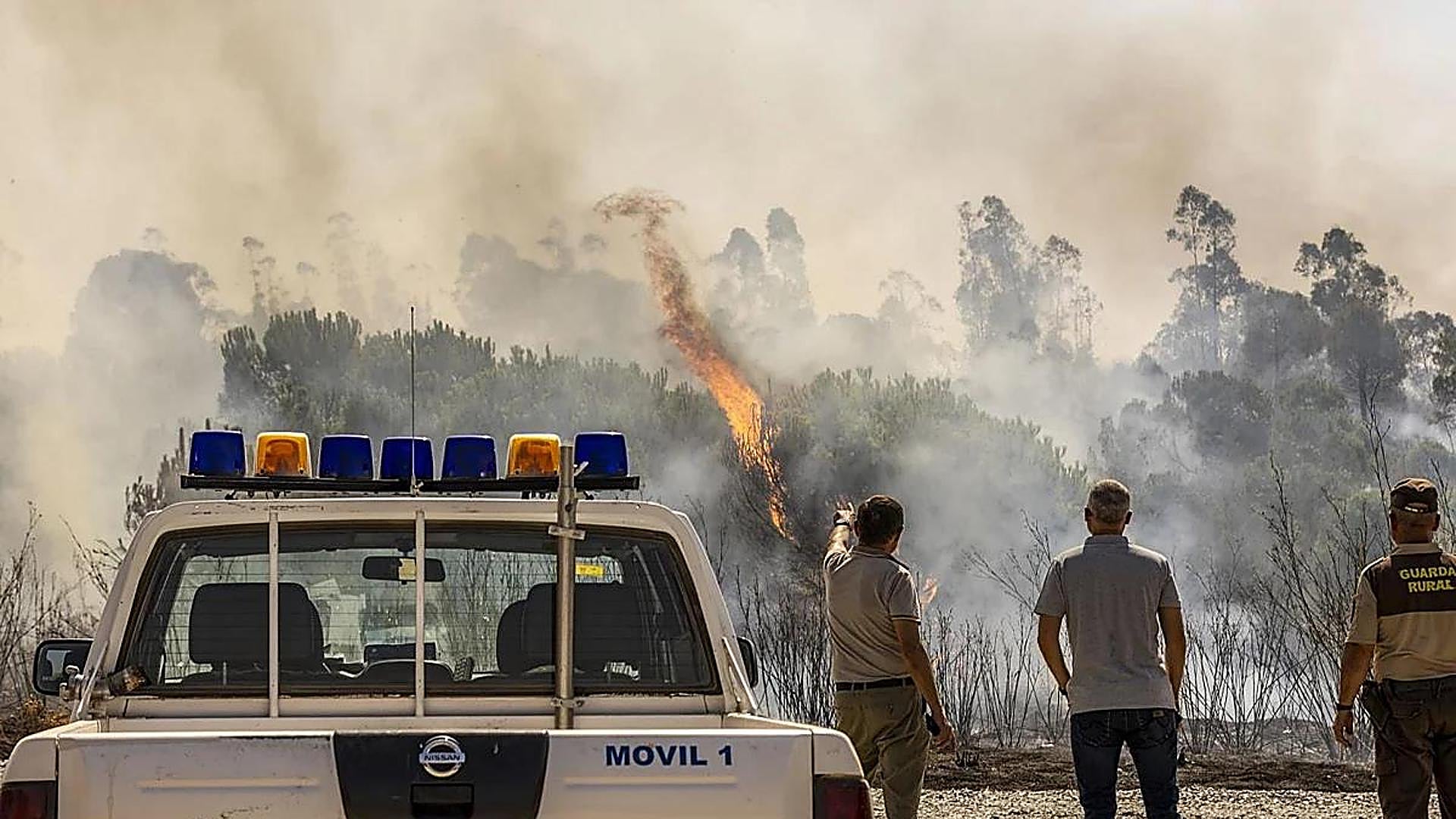
Barcones said that Aragon has been through "an extremely difficult summer". Many of its inhabitants have had to watch as "the ferocity of the flames ravaged its natural landscapes, threatened its villages, forced them to abandon their homes and threatened Aragon's immense historical heritage".
She referred to the monasteries of San Juan de la Peña, which were saved from the flames at the very last moment.
Barcones highlighted the "extremely high rate at which this fire has spread", having consumed almost 2,000 hectares in just half an hour. This feature is something that links all the major fires that have raged this summer, which also share a high tendency to reignite. "Climate change is bringing us these monsters in the form of fire," she stated.
Although "the end is looking increasingly close", Barcones urged people not to "let their guard down" as the weather remains unfavourable.
Overall, she expressed her "confidence" that the "strength, unity and coordination" of resources "will, sooner rather than later, put an end to this terrible fire".
The fire is causing traffic restrictions on the A-1205 between kilometre markers 0 and 41; on the A-132 between kilometres 38.8 and 70.8; the N-240 between kilometre points 287.9 and 303; the A-1603 between kilometres 0 and 10, on the access roads to the Monastery of San Juan de la Peña; the A-2602, on the access road to Bailo; the HU-V-3001, at the access to Rasal; the HU-V-3003, at the access to Javierrelatre; and the local road HF-0262-BA, at the access to Atarés.
![[]](http://static.vocstatic.com/voc26/latest/assets/images/favicon/surinenglish/apple-touch-icon-57x57.png)