
Equality
Ministry of equality calls on Cuenca village to allow women to march in the Moors and Christians festival
The controversy in Sagunto has reignited the campaign by the women of Valera de Abajo
J. M. L.
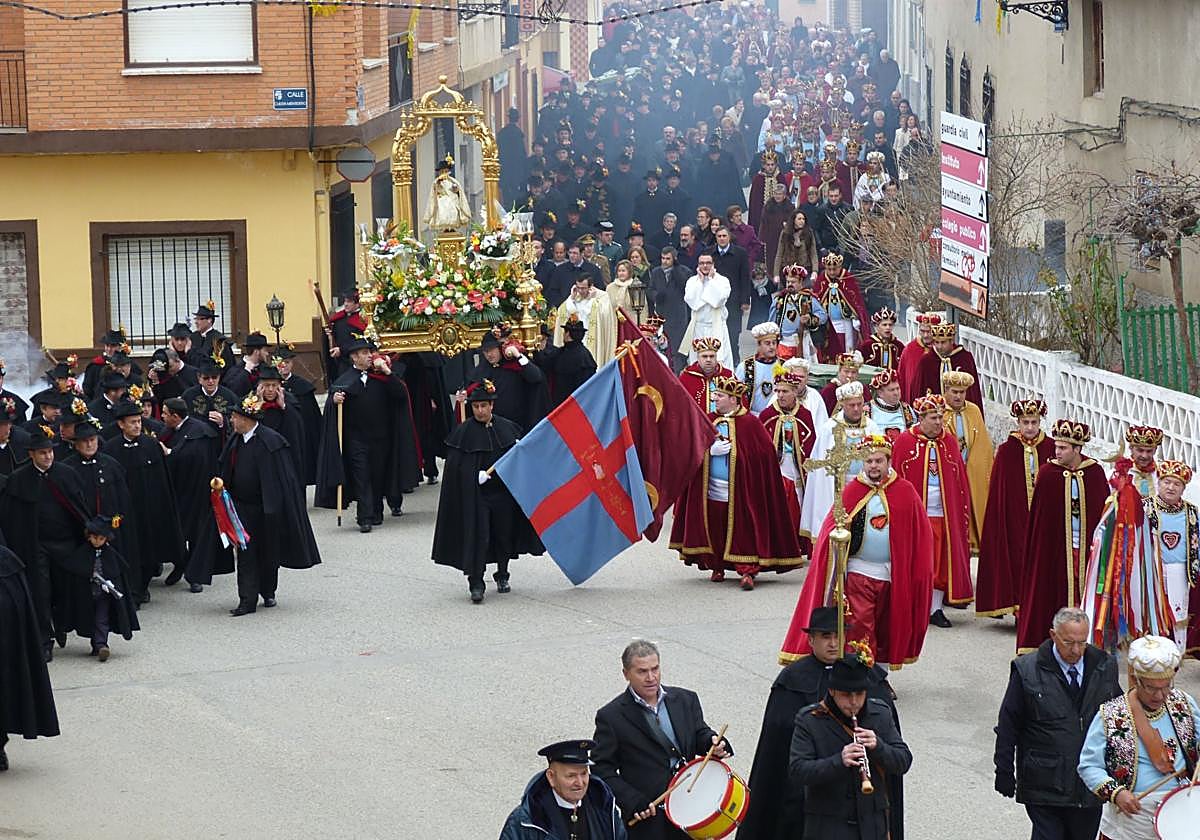
Women in the Cuenca village of Valera de Abajo, home to around 1,500 people, have renewed their demand to be able to take part in the town's Moors and Christian festival, in which only men are permitted to march.
The women of Valera's campaign gained momentum following controversy in Sagunto (Valencia), when women were banned from participating in the Cofradía de la Purísima Sangre during Holy Week.
The ministry of equality which, through the women's institute, has intervened to address the Valera de Abajo Town Council and the Dulce Nombre de Jesús Brotherhood backing the women's demands.
They cited Organic Law 3/2007 of 22 March, on the effective equality of women and men , and warned that excluding women from participating in the festival constitutes a direct violation of this legislation.
At present, the women are limited to supporting roles during the festival, such as preparing costumes.
Another regional government in Castilla-La Mancha has also expressed a commitment to ensuring equality within the festival. However, unlike in Sagunto, they currently have no intention to revoke the event's status as a festival of regional interest.
A festival with over 400 years of history
The local council of Las Valeras, made up of the villages of Valera de Abajo and Valeria, have asked the festival organisers to cooperate with the local women to find a solution. Officials warn that the conflict tarnishes a festivity with more than 400 years of history and could threaten its cultural status.
In the meantime, the women's group 'Moras y Cristianas', continue their campaign to parade on equal terms with the men in this festival which is celebrated in honour of the Santo Niño and includes three symbolic acts: the Moorish victory, the Christian victory and an act of reconciliation.
Festival organisers have defended their position and pointed out that they do not want to go against women, although they prefer the festival maintain the tradition of giving only men the leading role.
The festivity dates back to 1951, with key elements including «guerrillas», verbal battles, the dance of the flag, the sounds of drums, dulzainas ( a traditional Spanish woodwind instrument) and the use of gunpowder.
It was then that the first Lord of Valera, Diego Fernández de Alarcón, established the festival, to commemorate the battles between Muslims and Christians during the Reconquest.
![[]](http://static.vocstatic.com/voc26/latest/assets/images/favicon/surinenglish/apple-touch-icon-57x57.png)