
Media
Madrid judge opens investigation into Interior Ministry's dossier on journalists' political views
The court has referred Iustitia Europa's complaint to the prosecution before deciding whether to open a criminal case concerning the compilation and possible use of the dossier
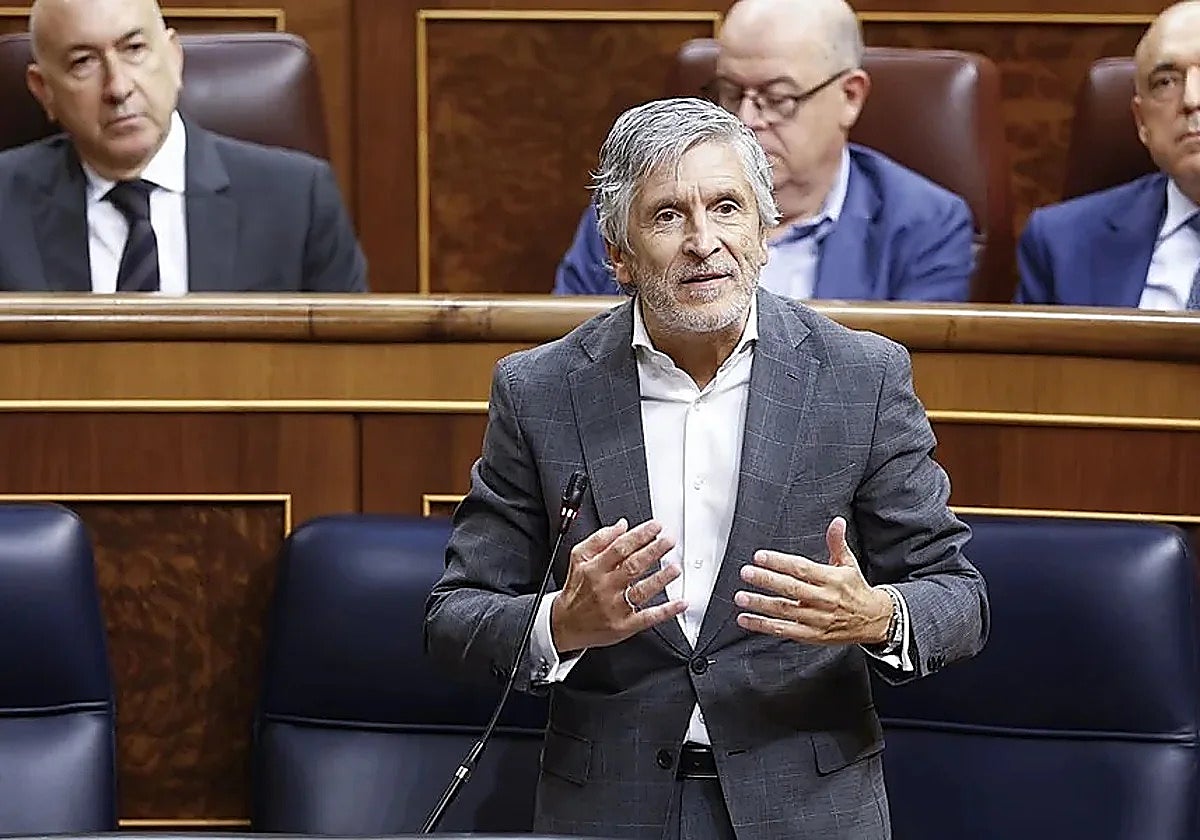

A Madrid judge has launched preliminary proceedings into a dossier compiled by the Interior Ministry's communications office containing the names of 280 journalists, broadcasters, ... politicians and experts, many of whom were classified according to their alleged political views.
Judge Margarita Valcarce has referred a complaint filed by Iustitia Europa to prosecutors, who will now give their view on whether it should be admitted and a formal criminal investigation opened.
The order marks the first known judicial action over the controversial file. However, it does not mean that the judge has admitted the complaint or found evidence of a crime. The prosecutors' opinion will not be binding and the judge will then decide whether to dismiss the proceedings or open a formal case to investigate the matter.
Iustitia Europa, a political organisation headed by Luis María Pardo, filed the complaint on 9 September after the full contents of the document became known.
The organisation alleges that the conduct could constitute offences relating to the unauthorised processing of specially protected personal data.
The court order states that the complaint is directed "against whoever may be responsible" for the "compilation, processing, storage, retention and possible use" within the Interior Ministry and its communications office of a document that "identifies and classifies hundreds of people linked to the media and political discussion programmes".
The dossier contains 281 entries covering 280 people across 54 pages. Alongside photographs, professional roles and details of the programmes in which they appeared, the Interior Ministry included assessments in many of the profiles of the individuals' political positions and how closely they were aligned with or critical of the ruling party in the central government (PSOE) or some of its policies.
The ministry eventually apologised "to the professionals who may have felt offended", while maintaining that the file was solely a "consultative" tool and had never been used to discriminate against any journalist.
Iustitia Europa argues in its complaint that the conduct could fall under several provisions of the Spanish criminal code relating to the discovery and disclosure of secrets. That legal classification has been put forward solely by the organisation that filed the complaint and has not been endorsed by either the judge or prosecutors.
One of the provisions cited is article 197.2, which makes it an offence, without authorisation and to the detriment of another person, to obtain, use or alter confidential personal data held in files, records or other storage systems. The complaint also cites article 197.5, which provides for tougher penalties when the information concerned reveals matters such as a person's political ideology.
The criminal code also contains specific provisions covering conduct by public officials or authorities who use their position in committing such offences.
Article 198 applies in such circumstances and, where the legal requirements are met, provides for sentences to be imposed in the upper half of the applicable range, together with a ban from holding public office for between six and 12 years.
Article 201.2 also allows proceedings to be brought without an individual complaint from each person affected when the alleged conduct could affect a large number of people, involve matters of general interest or fall under the provisions applying to public officials and authorities.
The judicial proceedings come alongside a separate investigation launched on the AEPD's (Spanish data protection agency) own initiative.
"It will now be for the judicial investigation to determine the origin of the data, the instructions given, the people involved, the legal authorisation in place, access to the document and how it may have been used," Iustitia Europa said in its complaint.
The judicial case adds to proceedings already opened by the AEPD. On 9 September, the AEPD launched an investigation on its own initiative to establish the "nature, scope, use and legal basis" of the data processing carried out by the Interior Ministry.
The agency stressed that opening its investigation did not prejudge whether any infringement had taken place. However, it noted that political opinions constitute a category of data subject to special protection.
Since the controversy broke, the Interior Ministry has maintained that Interior Minister Fernando Grande-Marlaska did not commission the document and was unaware of it while it was being compiled.
The minister himself said it was an internal tool designed to monitor what was being said about his department's activities and allow information to be passed on "more effectively".
![[]](http://static.vocstatic.com/voc26/latest/assets/images/favicon/surinenglish/apple-touch-icon-57x57.png)