
International politics
Italy and Spain agree to end border controls imposed following Ceuta crisis
Rome has extended the restrictions by just seven days to ensure its lifting coincides with that of Madrid and to negotiate new security cooperation measures
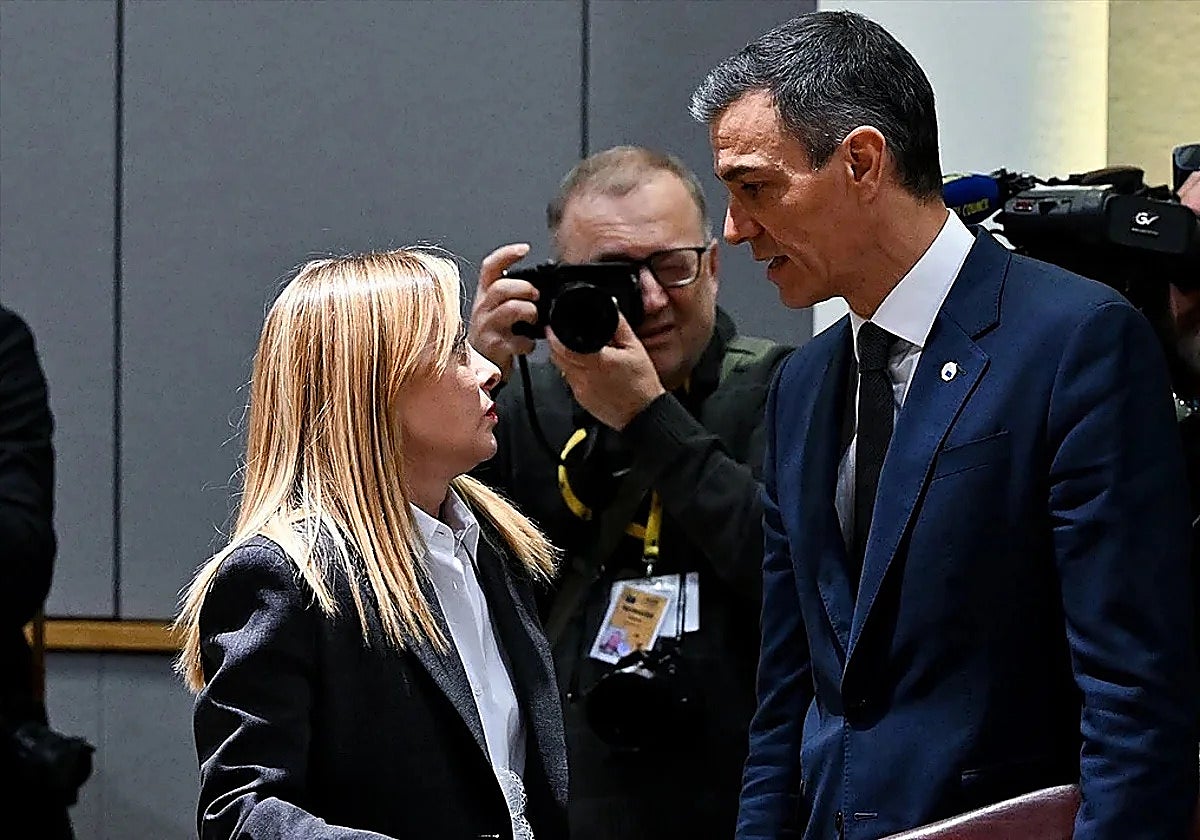

Italy and Spain have agreed to lift, in a coordinated manner, the border controls that have been in place since August, when Italian PM Giorgia ... Meloni's government decided to restrict free movement between the two countries following the mass influx of migrants in Ceuta on 30 and 31 July.
Rome announced on Friday a final extension of just seven days, until 23 October, to align the lifting of its restrictions with those in Madrid. The agreement paves the way for resolving one of the most significant diplomatic standoffs between the two governments in recent years.
Meloni's decision comes after more than two months of tensions and following direct contact between the two governments, according to sources at Palazzo Chigi, the seat of the Italian Cabinet. Moncloa also confirmed the agreement to gradually lift the measures, which affect air and sea links between the two countries.
The Ministers of the Interior, Fernando Grande-Marlaska and Matteo Piantedosi, will be in contact over the coming week to finalise the lifting of border controls and explore alternative forms of police and security cooperation. The aim is to ensure the monitoring of potential migratory movements within the EU without prolonging restrictions that have disrupted the normal functioning of the Schengen Area.
The Italian government said that the decision to grant a further extension had been taken "following discussions between Rome and Madrid" in order to "align the deadlines with the expiry of the Spanish measures". It also announced that officials from the Ministry of the Interior will work to "jointly assess alternative cooperation measures".
The timetable sets out the scope of the agreement. The Spanish measures remain in force until 22 October. The Italian controls, the latest extension of which was due to expire this Friday, will be extended for a further week. This gives both governments some room for negotiation to restore normality by the end of next week.
The announcement has coincided with the European Council summit taking place this Friday in Brussels, which brings together Pedro Sánchez and Giorgia Meloni. Immigration is once again a key topic in discussions among the EU-27, having become one of the main points of contention between Madrid and Rome.
The crisis began in early August, when Italy decided to unilaterally reintroduce controls on passengers arriving from Spain. Meloni justified the measure on grounds of national security, following the mass influx of migrants in Ceuta.
The Italian government then cited the risk that some of those who had entered Spanish territory irregularly might subsequently move on to other EU countries, taking advantage of the freedom of movement within the Schengen area. Rome stated that the scale of the crisis called for a temporary strengthening of surveillance at the border with Spain.
Madrid responded by imposing equivalent controls on passengers arriving from Italy. The Spanish decision turned what was initially a unilateral measure into a bilateral standoff that has now lasted for more than two months, with the restrictions having extended on several occasions.
The checks have mainly consisted of document and identity checks at ports and airports, on a random basis and without the complete suspension of travel between the two countries.
In exceptional circumstances
The Schengen borders code allows for the exceptional reintroduction of internal border controls where there is a serious threat to public order or internal security. European legislation requires, however, that such decisions be temporary, proportionate and limited to the period strictly necessary to address the risk that prompted them.
The European Commission considers that the reintroduction of border controls should be used as a last resort and subjects member states' decisions to notification and monitoring requirements.
![[]](http://static.vocstatic.com/voc26/latest/assets/images/favicon/surinenglish/apple-touch-icon-57x57.png)