
Migration
Irregular migrant arrivals to Canary Islands could double to 50,000 a year, experts warn
Record weekend landings in El Hierro as regional president Fernando Clavijo meets central government ministers in Madrid and migrants are transferred to the Costa del Sol
Gerard Couzens
The number of undocumented migrants reaching the shores of a popular Spanish holiday destination could more than double in the next few years, experts have warned.
Nearly 25,000 people have arrived in the Canary Islands irregularly so far this year, an increase of nearly 66 per cent for the same period last year.
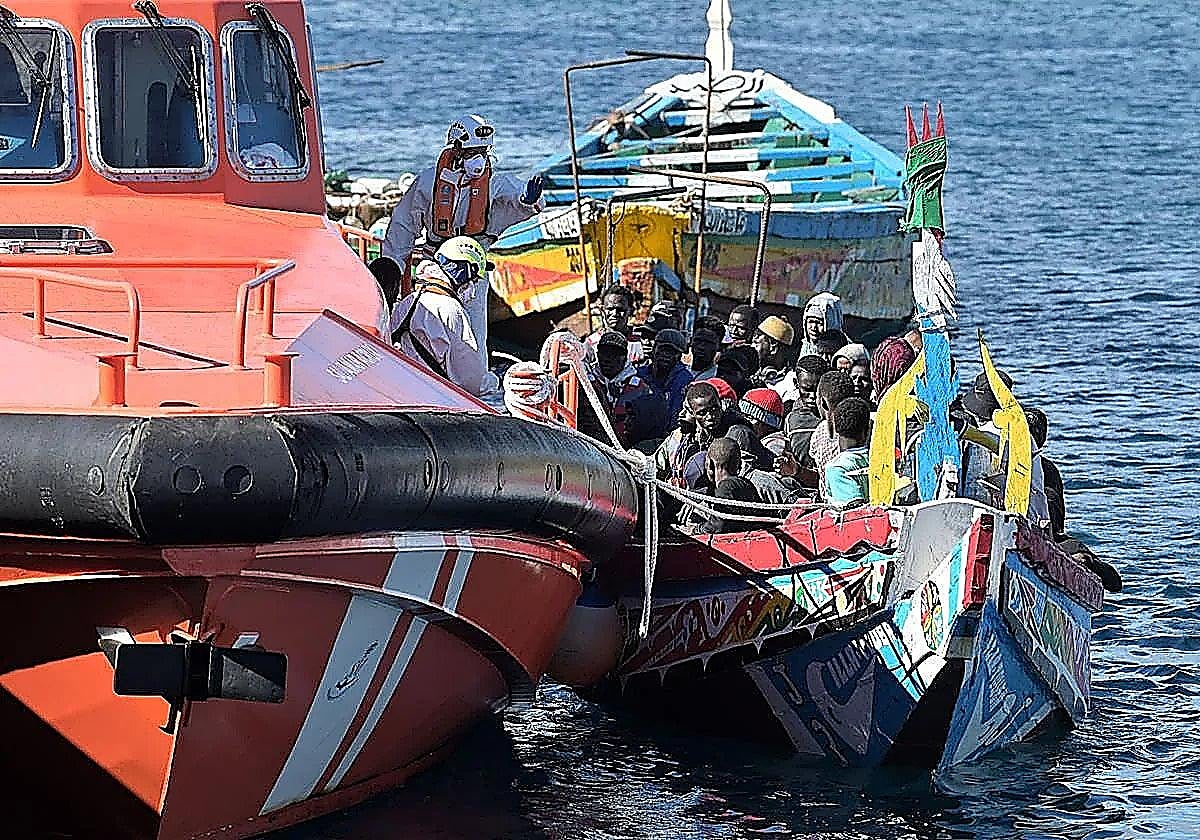
A total of almost 3,200 migrants mainly from West Africa reached the tiny island of El Hierro by boat between Friday and Sunday.
On Saturday a record 1,580 people reached the Atlantic archipelago after Spain declared a migration emergency following the dramatic rise in arrivals.
Canary Islands president Fernando Clavijo flew to Madrid overnight to meet with central government ministers as efforts to relieve the pressure on El Hierro by transferring migrants to Tenerife and the Spanish mainland continued.
The temporary shelters being used include a former beachfront hotel on the Costa del Sol where around 200 migrants have been given rooms. The Urban Beach Hotel in Torrox has been used as a reception centre since 2023.
Overnight it emerged island-based analysts are warning the number of undocumented migrants arriving in the archipelago could reach a staggering 50,000 people a year if economic conditions worsen in the Sahel states just south of the Sahara Desert.
Non-profit think tank Catedra Juan Miguel Sanjuan warned in its latest report on African immigration to the islands that migratory pressure towards the archipelago would continue for at least two decades.
Saying the number of arrivals by the end of the year could reach 33,000, it said: “Medium term the estimation is a fluctuating flow of between 15,000 and 40,000 arrivals per year, determined more by police co-operation in countries of origin than by demand, with longer and deadlier routes.
“Long-term, 2030 to 2040, demographics and climate in West Africa will sustain the pressure.
“The controllable variable is how much of this pressure is channelled through legal and orderly channels.”
Painting a worst-case scenario involving state collapse in the Sahel region, it warned: “Irregular annual arrivals would exceed 50,000 people.
“A scenario of oscillation is today the most probable scenario, with cycles of containment and resurgence as in 2023-2026 with annual irregular arrivals of 20,000 to 45,000 migrants.
“The networks will continue to shift further south, to Guinea, Guinea-Bissau and Ivory Coast.
“We can expect fewer, larger vessels making longer crossings.”
Access the broad Spain national news archive
