
Weather
Heat-related deaths soar to over a thousand in a June that ends on a record high
Meteorologists are warning that a new heatwave could hit this coming weekend, with temperatures exceeding 40 degrees across much of the country

Madrid
The temperature records for last month leave little room for doubt: the trend towards a warmer climate at this time of year is very clear, ... with June ranking as one of the 13 warmest months on record in the 21st century.
Since 1961, it has been the second warmest on record, with an average temperature 3.2°C above normal and surpassed only by the sweltering year of 2025, as confirmed by the Spanish meteorological agency (Aemete). This average is highly significant because year-on-year increases in temperature are usually measured in tenths of a degree. In this case, the fact that the increase is measured in degrees - more than three, to be exact – is truly striking.
With these figures reached in just ten days of the official summer season, the consequences have hit hardest in the area most vulnerable to rising temperatures: health. According to the MoMo surveillance system, coordinated by the Carlos III health institute (ISCIII) through the national centre for epidemiology, the number of deaths attributable to excessive heat in June exceeded one thousand – 1,028.
Bearing in mind that the total number of deaths recorded last June from various causes stood at 34,190 across the country as a whole, the heatwave accounted for three per cent of the total.
Following the first alert issued in May, when the death toll soared to over a hundred people compared with the average for that time of year, the June figure represents the first worrying spike recorded by the official health surveillance system, and it is by no means insignificant: the figure accounts for almost half of all deaths attributed to the heat throughout last summer, when the total reached 3,400, with just over a week having passed.
Related story
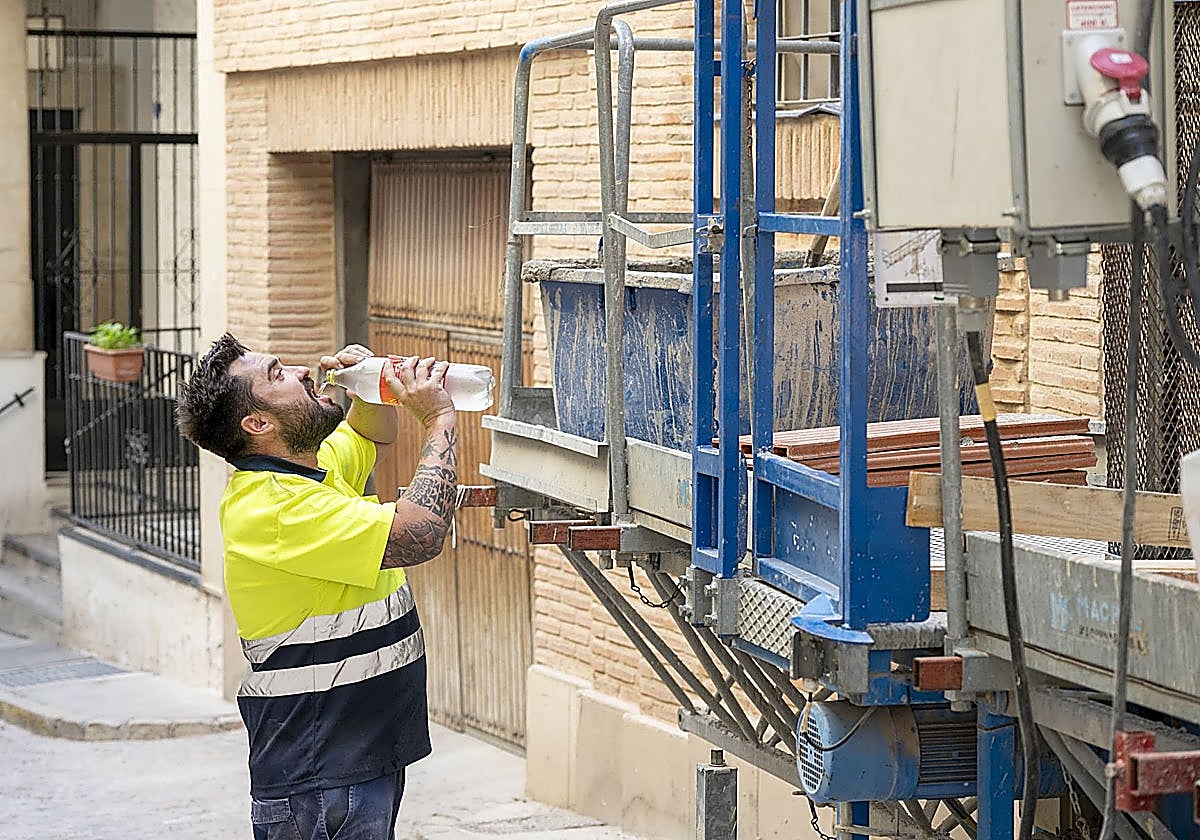
This phenomenon, as described by epidemiological experts, should not be confused with what is commonly known as "heatstroke". When a person dies suddenly as a result of the "shock" their body experiences whilst enduring high temperatures during a specific activity, this is classified differently and treated in a similar way to an accident. This has happened in previous years, particularly among workers who work outdoors during the hottest parts of the day, or athletes who have ignored recommendations not to exert themselves on the most dangerous days.
Vulnerability of the elderly and the frail
But this tally of heat-related deaths, which is witnessed every summer, has more to do with the deteriorating health of people who are already frail – whether because they suffer from illnesses that make them more vulnerable – particularly cardiovascular conditions – or simply due to old age, when people are more prone to dehydration.
This explains why, on closer examination of the data, it can be seen that virtually all those who died from this cause were over 65 years old, while 720 were over 85. Pensioners are once again the group most affected by increasingly extreme weather.
The Kairos system, which analyses the country’s most vulnerable areas, by province and autonomous community, in parallel with Momo, reveals that the second week of the month was the deadliest, coinciding with the heatwave. From the 17th onwards, the incidence rate among the population began to rise, reaching its peak on the 26th.
This can also be interpreted in the context of global warming: heatwaves in months such as May, as experienced in 2025, or June are no longer such a rarity. According to data from the Aemet state weather agency, between 1975 and 2000 there were only two heatwaves in this month on the Spanish mainland. Between 2000 and 2025, there were ten, five times as many. This means it is no longer a rarity, but a trend.
As for the geographical distribution of this phenomenon, it has once again been confirmed that the areas with the least historical experience of coping with heatwaves are the ones hardest hit. Thus, the entire northern half of the country, including Zaragoza, La Rioja, León, Cantabria, Asturias, Huesca and the Basque Country, has been the worst affected, with the sole exception of Almería, a southern province that has also been particularly hard hit.
The forecast: things are looking worse
Although the weekend brought some respite, the rollercoaster ride in temperatures seems to have only just begun, as Aemet is once again forecasting the start of another heatwave next weekend, with temperatures set to exceed 40 degrees across much of the country.
Rubén del Campo, spokesperson for the aforementioned state agency, announced on Wednesday that temperatures could exceed 42 degrees on Sunday in the Tagus, Guadiana and Guadalquivir valleys, and will not drop below 22 to 24 degrees throughout the day in parts of the Mediterranean, the central region and the southern half of the country. “We will even see some sweltering nights, which are those where the temperature does not drop below 25 degrees,” Del Campo said. This will occur mainly in parts of the Mediterranean and in towns in the centre and south of the peninsula.
If the forecasts made so far remain unchanged, the intense heat could continue until at least the middle of next week. With this start to the season, the inevitable question arises: will the summer be a succession of heatwaves? José María Sánchez-Laulhé, a meteorologist at the Spanish meteorological association, said that it may be the case that a succession of heatwaves "will not be the general trend for the summer". “The seasonal forecast maps seem to indicate that, across the peninsula, the number of days with heatwaves during the summer months will be considerably lower than last year, despite global warming.”
![[]](http://static.vocstatic.com/voc26/latest/assets/images/favicon/surinenglish/apple-touch-icon-57x57.png)