
Politics
Spain's government raises abortion topic in its final cabinet meeting in a bid to mobilise female vote
PM Sánchez announced regulations to combat unscientific information, challenged Madrid's "unborn child" law before the Constitutional Court and published a report on inequalities in access between regions
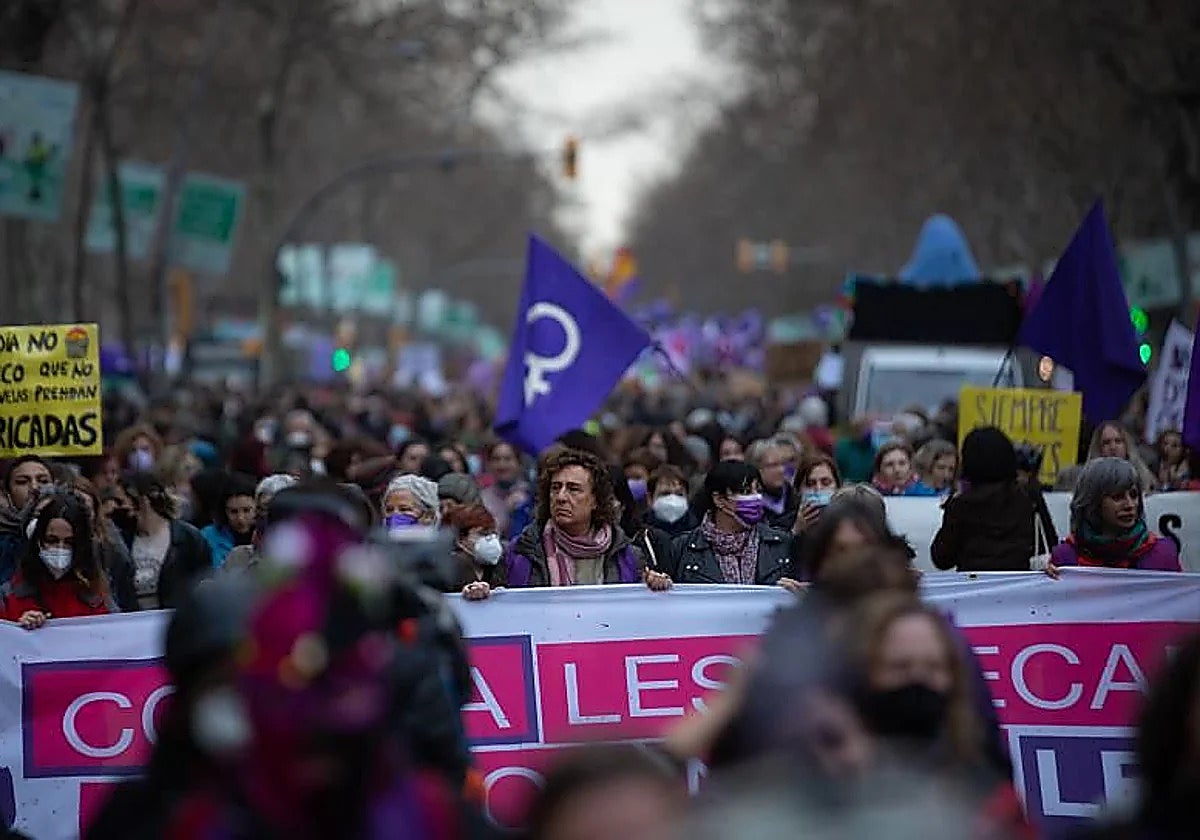
R.C.
Prime Minister Pedro Sánchez made the most of the final cabinet meeting on Tuesday, before Sunday's general election. He brought an issue into the ... campaign with which the PSOE party hopes to mobilise the progressive electorate and women in particular.
The government is approving new regulations on the information provided to those who decide to terminate their pregnancy, appealing to the Constitutional Court against the region of Madrid's "unborn child" law and publishing a report on inequalities in access to abortion across different regions.
The prime minister announced the measures on social media while cabinet was still in session. His message presented the package as a guarantee that all women would be able to have an abortion "within the public health system and safely". He also set it against "those who want to take us backwards", in reference to the PP and Vox opposition.
Related story

During that same meeting, Labour Minister Yolanda Díaz announced the extension of maternity and paternity leave to 20 weeks. The meeting also covered the extension of the bank tax and the royal decree-law increasing leave following the death of an immediate family member from two to ten working days. With these measures, the government is broadening its appeal beyond the female electorate.
The regulation with the greatest practical impact is the one concerning pre-procedure information. The government announced this more than a year ago, after Madrid city council approved, with the votes of the PP and Vox, a motion to inform women about an alleged "post-abortion syndrome". This syndrome is not recognised as a clinical diagnosis and the PP distanced itself from the motion within a matter of hours.
According to the draft that emerged in October, the text requires the information to be accurate, objective, clear and comprehensible and pays particular attention to girls under 16, foreign nationals and women with disabilities. However, its implementation falls to each region, as they are the ones that manage the centres where women are provided with this information. Most of these are governed by the PP.
The differences between regions are the focus of the government's report. The problem is that a large proportion of voluntary terminations of pregnancy are carried out in private clinics with public funding, rather than in public hospitals, due to healthcare workers' conscientious objection. The 2023 reform of the law already obliged the public health service to guarantee access to the service and established a register of conscientious objectors, but it has not rectified this imbalance.
A promise that has not been fulfilled
That was also the reason behind the government's major unfulfilled promise: to amend article 43 of the Constitution so that the public authorities guarantee access to abortion "under conditions of real and effective equality".
Cabinet approved the bill in April and parliament rejected the comprehensive amendments tabled by the PP and Vox. However, the text required a three-fifths majority in both houses, which was never achieved. The dissolution of parliament left the bill with no way forward. The PSOE, however, has included it in its election manifesto.
The Madrid assembly passed the controversial law on 2 July with the votes of the PP and Vox and the government waited until the very last cabinet meeting of this parliamentary term to refer it to the Constitutional Court.
President of the regional government of Madrid Isabel Díaz Ayuso frames the legislation as part of her strategy to boost the birth rate. The law does not regulate abortion: it treats the unborn child as equivalent to a child already born for the purposes of financial assistance and benefits provided by the regional government.
If the government invokes article 161.2 of the Constitution, the acceptance of the appeal for consideration will automatically suspend the law for a maximum of five months. The ruling will come much later.
Unlike constitutional reform, none of the three measures depends on a majority that the government does not have. But neither is a majority required to overturn them. A government of a different political ideology could rewrite the regulations by means of a new royal decree, without going through parliament, and withdraw the appeal before the Constitutional Court. Whoever is in power from Sunday onwards will decide what remains of the package.
