
Transport
Spain ignores airlines' warning and approves 'minimal' increase in airport charges
The Dora III regulation document sets a three-cent increase per passenger per year and raises airport budget to nearly 13 billion euros
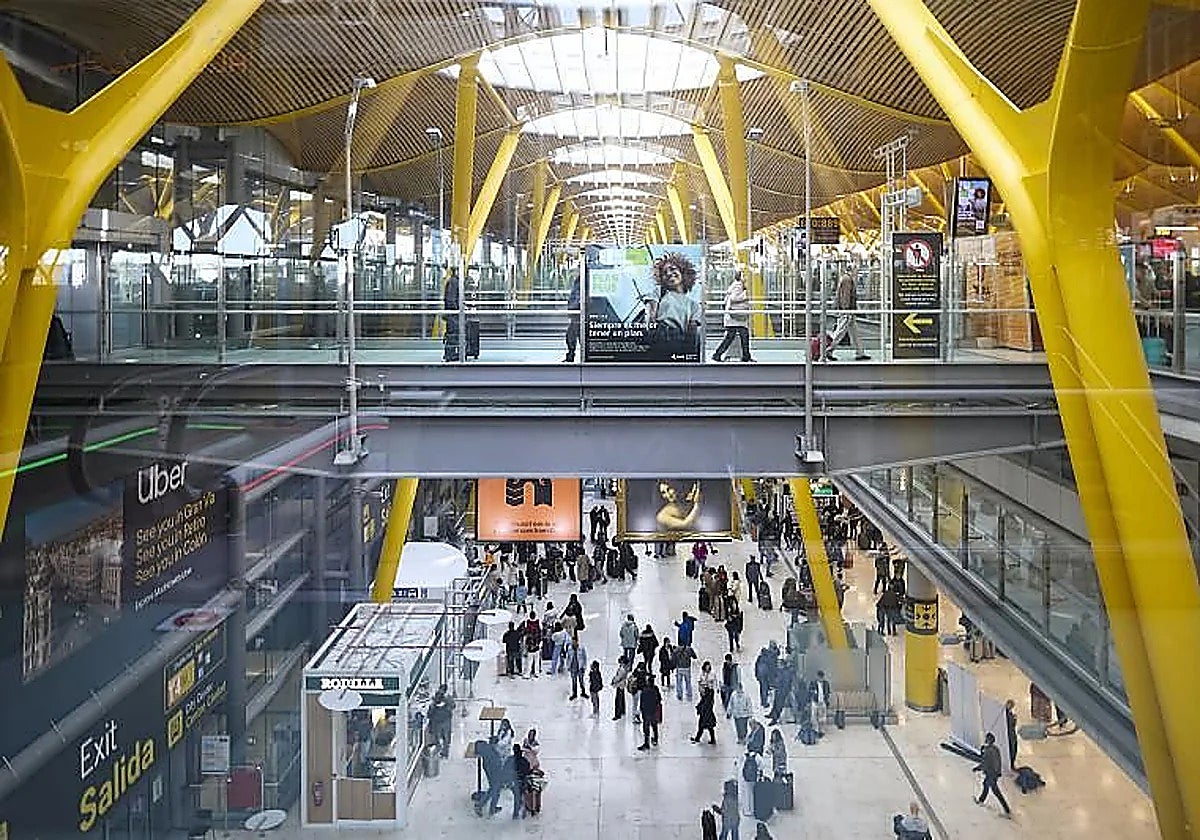

Following a proposal from the Ministry of Transport, Spain's government approved on Tuesday a rise in airport charges for airlines of three cents per ... passenger per year.
This increase is in line with the proposal the Aena airport operator's board of directors made in February, when it proposed an increase of 3.8% per year for the 2027-2031 period in the Dora III regulation document.
"It effectively amounts to a freeze on the fare," the ministry stated.
Related story
-
Air transport
Edurne Martínez
However, Aena's figures at the start of the year put the increase at 43 cents per passenger over the next five years. The transport department has revised this down to "three cents". Both figures fall short of what airlines and the competition authority expected.
Before the summer, the CNMC competition authority said that "airport charges should be reduced". It called for a 0.59% reduction in the charges that Aena levies on airlines. That figure was a long way from the 3.82% increase Aena's management team had proposed. The CNMC said the proposal "adjusts revenues to expected changes in traffic and costs".
With Tuesday's announcement, the government has rejected the competition regulator's recommendation and has also fallen short of the cut sought by the airline industry.
The ALA (Spanish airline association), which had called for a 4.9% reduction in charges under Dora III, acknowledges that the government has scaled back Aena's initial proposal, but maintains that there was still room to reduce airport charges.
The airline association described the approved tariff path as "moderate", with charges set to rise by 0.33% a year between 2027 and 2031, equivalent to a cumulative increase of 1.65% over the five-year period.
However, it warned that this moderation must not be undermined by future price reviews during the regulatory period.
"It is now important to preserve the spirit of this tariff path throughout the entire regulatory period," ALA president Javier Gándara said.
ALA states that passenger growth, combined with lower capital and operating costs, would have allowed airport charges to be reduced. The association also fears that overly conservative traffic forecasts could once again lead to "recurring regulatory surpluses" for Aena, at the expense of airlines and passengers.
Airlines believe Aena's original proposal was based on an underestimate of traffic growth and an overestimate of capital and operating costs.
The industry forecasts annual passenger growth of 3.6% over the five-year period, taking passenger numbers to 401 million by 2031, compared with Aena's estimate of 1.3%.
Airlines also estimate Aena's weighted average cost of capital (WACC) at 6.35%, compared with the 9% proposed by the airport operator. They say that this is well above the levels seen in comparable regulated sectors elsewhere in Europe, which range from 5% to 8%.
The new regulatory framework also comes with a major increase in investment. Dora III provides for almost 13 billion euros of investment across Aena's network over the next five years.
Of this, almost ten billion euros will go towards regulated investment directly linked to aviation activity, while almost three billion euros will be allocated to non-regulated investment.
"Spain is launching one of the largest investment and transformation programmes for its airport network," Minister of Transport Puente said.
Puente says that the transformation of the airport network must keep pace with the strong growth in passenger traffic expected over the coming years.
The almost ten billion euros of regulated investment planned up to 2031 represents an average of nearly two billion euros a year, compared with 450 million euros annually under Dora II.
The investment will focus, among other areas, on terminals, airfields, security, intermodality, sustainability and baggage-handling systems.
Open conflict
The decision keeps the dispute with Ryanair over airport charges alive and further increases tensions with the Irish airline.
Ryanair has spent months attacking the cost of Spanish airports, particularly regional airports, arguing that high charges make them less competitive and restrict the airline's ability to grow.
Its chief executive, Michael O'Leary, has stated that the airline's expansion in its fleet and passenger numbers is not being reflected at these airports because of their costs.
The company has also contrasted the Spanish model with those of countries including Slovakia, Ireland, Sweden and Italy, where it says tax cuts or other measures have been introduced to reduce aviation costs.
O'Leary has also rejected the Transport Ministry's argument that Spanish airport charges are among the lowest in Europe. He is calling for lower charges at regional airports to encourage airlines to open and maintain routes.
![[]](http://static.vocstatic.com/voc26/latest/assets/images/favicon/surinenglish/apple-touch-icon-57x57.png)