
Fuel prices
Fuel prices rise for five consecutive weeks and approach their highest levels of the year
Petrol prices have risen by 2.6 per cent over the week and diesel by 4.1 per cent following the withdrawal of tax subsidies
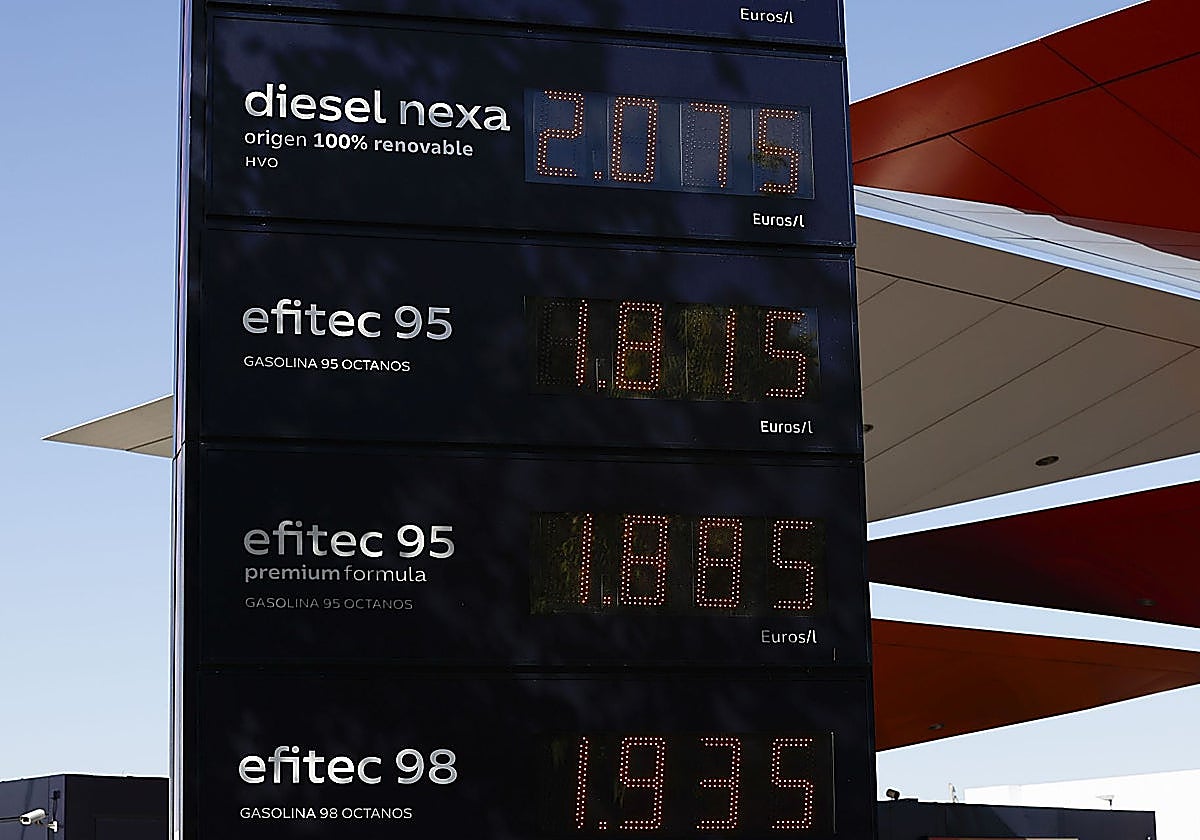

Fuel prices in Spain have now risen for five consecutive weeks, coinciding with the start of August and one of the busiest travel periods of ... the year. According to the latest European Union Oil Bulletin, between 27 July and 3 August the average price of petrol stood at 1.69 euros per litre, while diesel reached 1.79 euros.
In just one week, the prices of both fuels rose by 2.6 per cent and 4.1 per cent respectively and are approaching the highest levels recorded in March following the outbreak of the conflict in the Middle East, when petrol reached 1.73 euros per litre and diesel 1.88 euros.
This rise is mainly due to the gradual phasing out of the tax measures introduced to mitigate the impact of the energy crisis. Since 1 August, the excise duty rebate on hydrocarbons has been reduced from 15 to 10 céntimos per litre, following the return of VAT on fuels to the standard rate of 21 per cent after several months at a reduced rate of 10 per cent. The timetable drawn up by the government provides for a further reduction in the subsidy in September, when it will be limited to five cents per litre.
The rise in prices is also taking place against a backdrop in which international oil prices have provided some relief. Last week, the price of a barrel of crude oil fell, driven by expectations of a de-escalation of the conflict in the Middle East. However, this relief has not been passed on at Spanish petrol stations, where the impact of the withdrawal of fiscal stimulus measures is outweighing the trend in the price of this commodity on international markets.
Impact on inflation
The rise in fuel prices is also occurring at a particularly sensitive time for consumer spending – during one of the busiest months of the year for travel due to the summer holidays – and this has already begun to be reflected in inflation. The Consumer Price Index (CPI) rose to 3.5 per cent in July, driven, among other factors, by the rise in the cost of fuel and electricity, which once again pushes inflation further away from the two per cent target set by the European Central Bank.
Despite this rise, Spain remains one of the countries with the cheapest fuel prices in the European Union. During the same period, the average price of petrol across the EU-27 stood at 1.95 euros per litre, while diesel once again exceeded the two-euro mark, averaging 2.04 euros. Denmark recorded the highest petrol prices in the bloc, at around 2.40 euros per litre, whilst the Netherlands once again led the way in diesel prices. At the other end of the scale is Malta, which has kept the prices of both fuels frozen since 2020.
Within the sector, the Spanish Confederation of Service Station Operators (Ceees) has criticised the phasing out of tax relief over the summer, arguing that it reduces consumers’ purchasing power at the height of the holiday season and undermines the competitiveness of the tourism industry.
![[]](http://static.vocstatic.com/voc26/latest/assets/images/favicon/surinenglish/apple-touch-icon-57x57.png)