
Golf
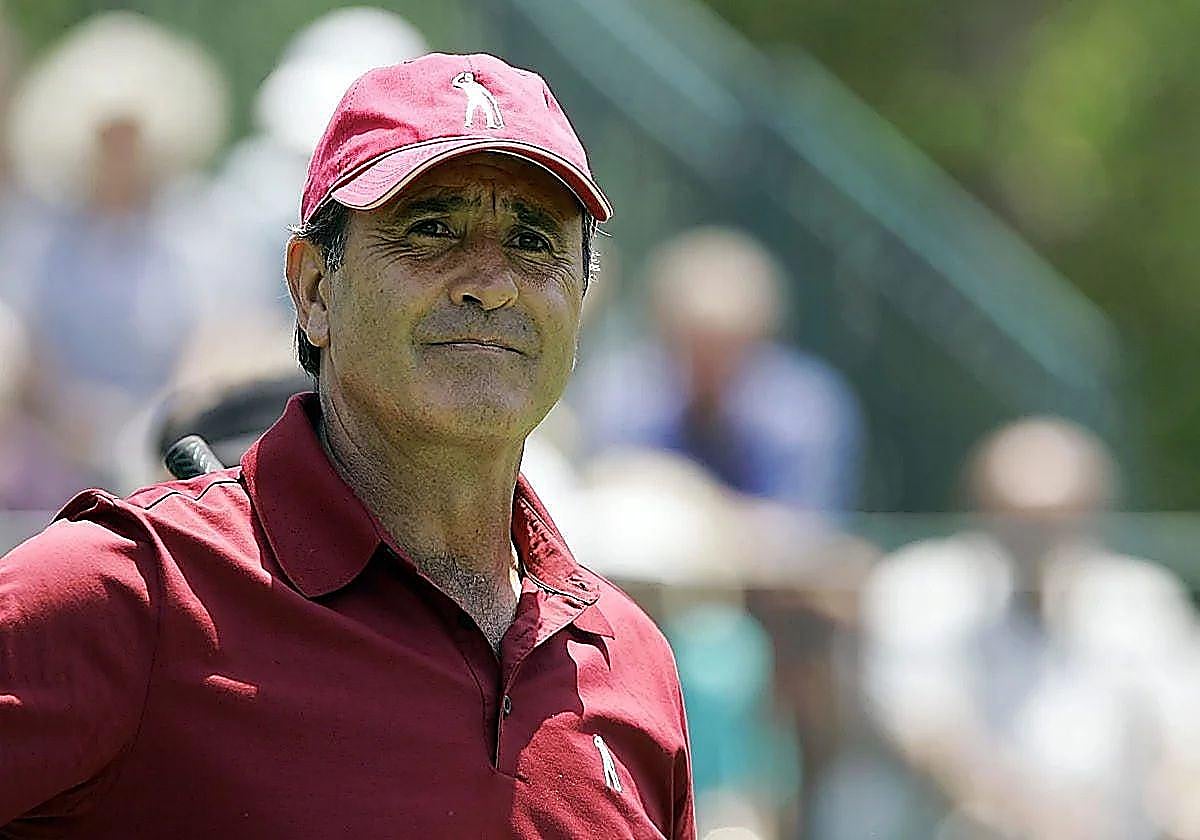
Fifteen years without Seve, the genius who reinvented golf
The legacy of Severiano Ballesteros lives on through his peerless record and a unique philosophy of the game that captivated entire generations
Leila Bensghaiyar
Santander
Fifteen years after his farewell, the figure of Severiano Ballesteros continues to orbit over golf as a presence impossible to erase.
He died at his ... home in Pedreña after a long battle with a brain tumour, but his story, which blends indomitable talent, intuition and character, continues to beat in every creative stroke and in every fan who approaches a course for the first time.
To speak of Seve is to speak of the player who made the improbable imaginable. The golfer of the improbable shots, capable of building beauty from places where others could hardly see a way out. His magnetism transcended the sporting aspect: whoever watched him play was not just watching a competition, but a spectacle. In a country where golf was confined to certain circles, Seve opened it up, took it out into the street and democratised it.
His track record helps to understand the size of the myth, although it does not fully explain it. Five majors - three Opens and two Masters at Augusta - six victorious Ryder Cup appearances and 94 victories as a professional over more than three decades in the elite.
He was also the first European to win the Masters at Augusta in the modern era and for years the youngest to wear the green jacket, until the emergence of Tiger Woods in 1997. But to reduce his legacy to figures would be barely scratch the surface.
Because Ballesteros also changed the way Europe looked at itself in golf. Before his arrival, the Ryder Cup was almost exclusively American territory. With him, the balance began to shift. Seve not only brought points, he brought pride, and then the competition ceased to be a predictable formality and became a vibrant duel.
The European golf team owes much of its modern identity to him. And yet it all began far from the spotlight. In Pedreña, that little corner of Cantabria where a course inaugurated in 1928 changed the course of a restless child.
The boy who started out as a caddie found in golf something more than just a game. He had an almost obsessive drive to learn, to master the gesture, to understand the ball. He would sneak out onto the course at night, overcoming fences, to continue playing under the moon.
There, among the sand, the wind and the lack of light, he gradually moulded a different talent. Perhaps that is why his style was never orthodox. Or maybe it was because his imagination was several steps ahead of the manual. What is certain is that Seve saw shots where others could not even conceive of them. Ben Crenshaw summed it up accurately: "He was able to execute shots that others couldn't even visualise". That difference, that way of understanding the game, made him a global phenomenon.
A special game
His breakthrough into the professional ranks came early, in 1974, before he was even 17 years old. It didn't take him long to stand out.
That same year, he was already winning and coming close to triumphing in important tournaments.
But the real turning point came in 1976. In the Open at Royal Birkdale he came within a whisker of victory with a shot that is still remembered today. From then on, his progression was meteoric. He won in different countries, measured himself against legends and began to build a career that would soon demand a major title.
That moment came in 1979, when he won his first Open, becoming its youngest winner in the 20th.
The next step was America. In 1980, in Augusta, Ballesteros gave a dazzling performance. He dominated the tournament with authority and left an iconic image, that of a European breaking barriers in historically foreign territory. He would win the Masters again in 1983 and would add another Open in 1984, before closing his account of majors in 1988 with his third British Open. By then he was already an undisputed reference. Not only for what he won, but for how he did it.
Influence
But his influence did not stop on the course. Seve understood that golf needed to grow, open up and stop being perceived as a distant sport.
In Spain his impact was direct: the number of golf club members grew notably and the country now had hundreds of courses, many of them accessible in his efforts to bring golf closer to the people. His role was also key in Europe. At a time when the circuit was going through difficulties, his decision to compete on both sides of the Atlantic helped to strengthen it. It generated interest, raised the level of competition and improved conditions for future generations.
The chapter on the Ryder Cup deserves a separate mention. After the disappointment of missing out in 1981, Ballesteros found in this competition an ideal stage for his character. He won as a player in 1985, 1987 and 1995, and as captain in 1997, in a historic edition held in Spain.
That victory was also the culmination of his efforts to bring the best golf to the country. His retirement came on 16 July 2007, at Carnoustie. Two words, "I'm quitting", put an end to an unrepeatable career. By then, his body had already begun to take its toll, especially with back problems.
But his figure, far from fading, had grown. Today, 15 years after his death, the memory of Seve continues to be a reference. Not only for those who saw him play, but also for those who have inherited his influence.
He was much more than a champion. He was the boy from Pedreña who changed a sport forever.
![[]](http://static.vocstatic.com/voc26/latest/assets/images/favicon/surinenglish/apple-touch-icon-57x57.png)