
29 November election
Spain's four election candidates clash in debate, with Feijóo and Abascal closing in on PM Sánchez and Colau questioning him on behalf of the left
The PP and Vox candidates stayed clear of each other, while the leader of the Frente Amplio criticised the prime minister for a lack of "courage"
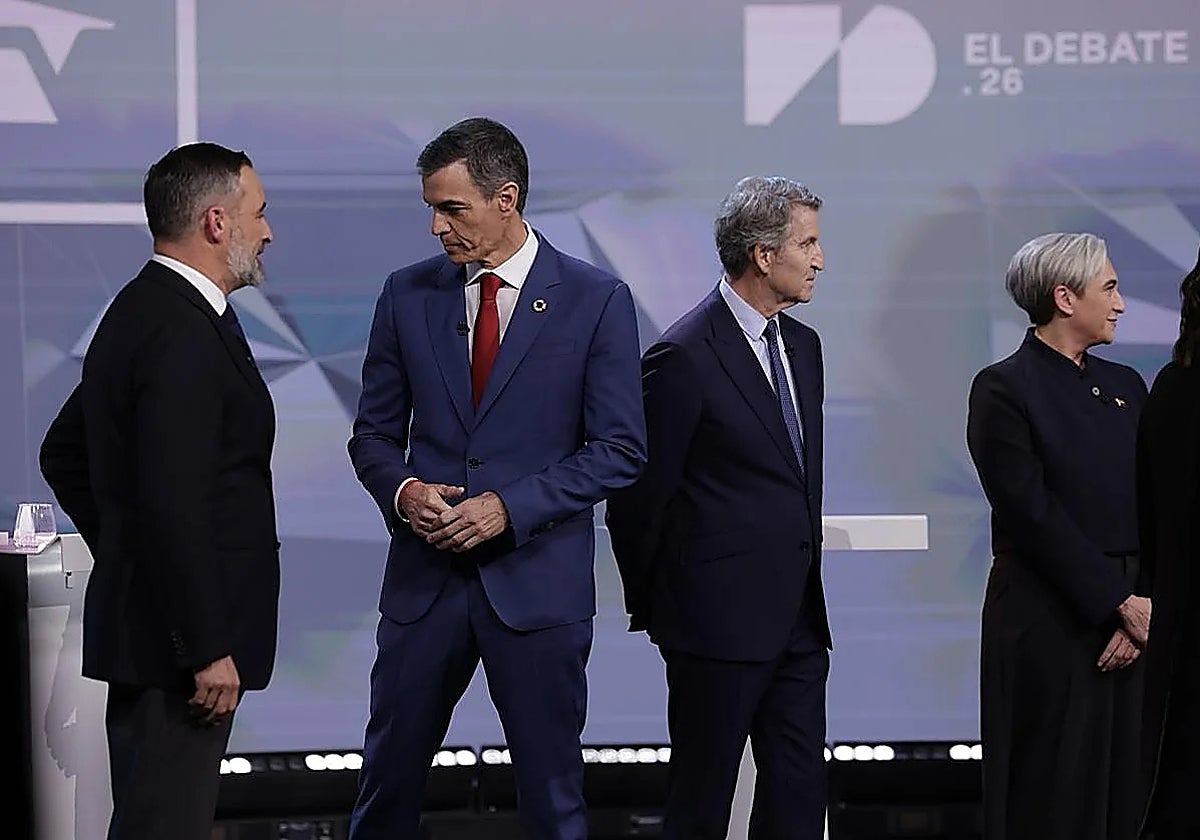

With 78 hours to go before an election in which the country stands to see whether there will be a change in the political cycle, ... the Spanish electorate watched on Thursday a debate between the four main candidates. They laid bare the strategies in a heated exchange between the blocs characterised by polarised intensity.
The debate highlighted that the tacit non-aggression pact between the right side's PP and Vox parties is holding firm in the face of what they consider the overriding objective: to forge a majority at the polls that will oust PM Pedro Sánchez from La Moncloa.
On the left side, Frente Amplio's Ada Colau, forced to preserve her position and that of her voters, fought against the right but also against the prime minister (PSOE party), from whom she demanded "courage".
PM Pedro Sánchez, who intended to repeat the controversially conciliatory approach he had adopted in his debate with PP's Fejóo a week before, was forced to deviate from where he had intended to steer the debate, in the face of the relentless, united attack from the lead candidates of the PP and Vox.
The initial tactic of Sánchez's campaign was to be on the defensive, stating that his political agenda for the next term is the only one capable of halting the "regression" of the "international far-right".
Colau was determined to assert herself before her voter base. The Frente Amplio candidate was the only woman in the debate. She went on the offensive from her opening remarks, seeking to expose the right's sexist denialism without Feijóo backing down.
"This has been the most sexist government in history," the PP leader responded, citing former minister Ábalos's history with prostitution. He used this as a prelude to the diatribe he would later unleash against Sánchez over corruption.
Feijóo and Colau clashed on the circumstances and consequences of the 'dana' disaster in Valencia in October 2024. While Feijóo accused Colau of staying quiet at the time, she attacked him for not removing the then-president of the regional government of Valencia from his post.
Sánchez focused on confronting Abascal and Feijóo, who responded by criticising his entire tenure and urging him to waive his parliamentary immunity if he fails to form a government again. The Vox leader combined his predictable attacks on Sánchez and his "whore-mongering cronies" with a breakdown of his manifesto aimed at winning the vote of "that caste of forgotten, unemployable Spaniards".
"Enough of these hoaxes," the prime minister said.
One of the paradoxes of the debate was that all four candidates presented themselves, during the segments focusing on housing and other basic necessities, as champions of the middle class, as defenders of those parts of the population that struggle to make ends meet.
Both Sánchez and Colau quoted statements from one of Abascal's loyalists, José María Figaredo, who on Thursday pledged cuts of at least 112 billion euros if his party were to take power at La Moncloa, to which the Vox leader responded by accusing Sánchez of having become the "true enemy of the workers" and the "vulture" in the face of the serious housing crisis.
Colau's questioning of Sánchez gave Feijóo the opportunity to say that the government is now identifying problems it has had "eight years" to try to resolve. The PP candidate needed to consolidate his lead and neutralise the fear that Vox instils in the electorate.
He chose not to engage with Sánchez and Colau's attempts to draw him into a confrontation with Abascal, instead insisting on bombarding his main rival with the railway accidents, corruption investigations and the overall state of public services.
Sánchez once again appealed to voters' emotions to halt what, in his view, is not a change of government but a step backwards in history, after demanding to know whether Feijóo would accept the result of the ballot. Colau found reason to celebrate having come out on top in a campaign that had been hostile to her party.
