
Energy
Spain sees highest electricity bills since outbreak of Ukraine war
The cost for an average consumer on a regulated tariff rose by almost 20% compared with August 2025

Renewable energy generation is growing, but electricity bills do not reflect that. Solar photovoltaic production rose by 27.6% in August compared with the same ... period last year and accounted for around 14.6% of total generation.
This, however, did not prevent the wholesale electricity price from rising by more than 70% compared with the same period last year, reaching an average of 118 euros per megawatt-hour (MWh). In fact, on just three days, from 22 to 24 August, the price in the so-called 'pool' remained below 100 euros per MWh, according to data from the Iberian market operator (OMIE).
Although solar power has been the country's main source of electricity generation this month (as is usually the case in summer), when it stops producing, the system still needs to rely on other technologies to meet demand. Heatwaves have driven up electricity demand at precisely a time when solar power alone cannot meet all the system's needs.
In this context, gas has once again taken centre stage. In fact, combined-cycle power stations accounted for 10.3% of electricity generation in August, 25.5% more than a year earlier.
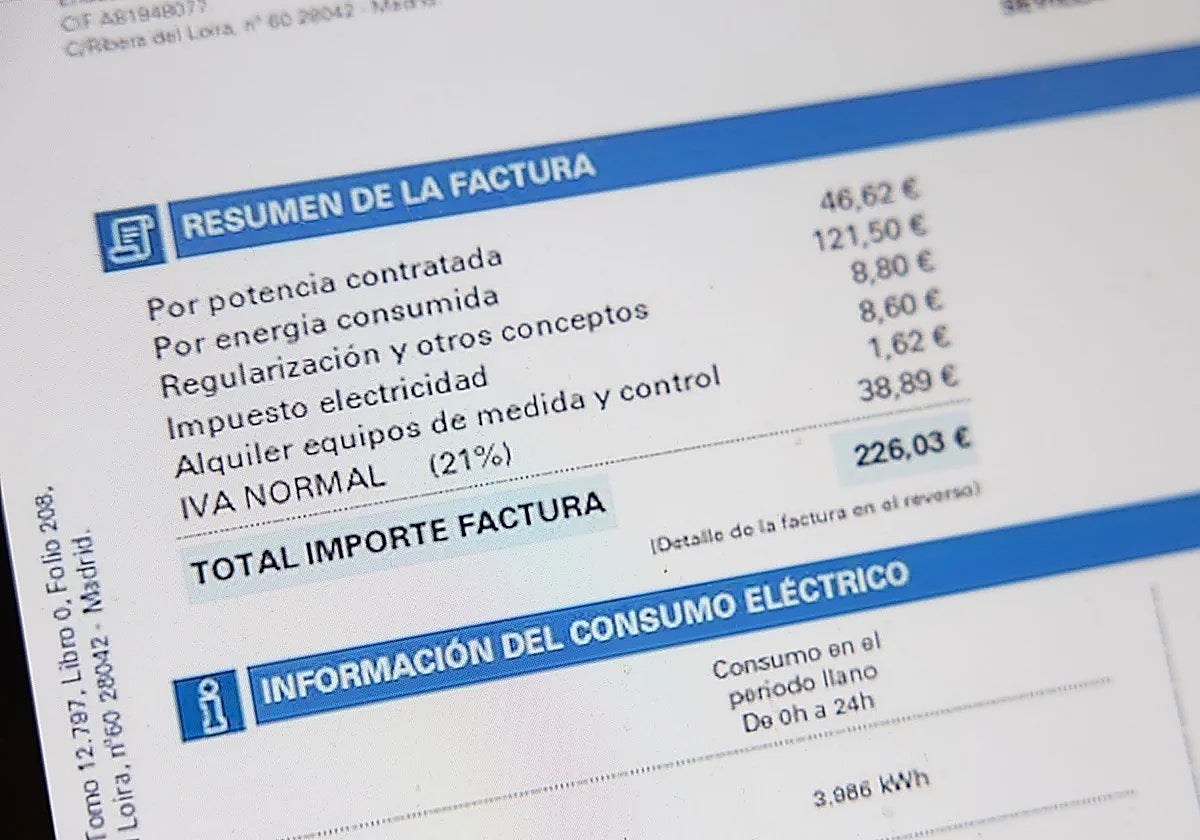
Consumers' pockets feel the impact as they face the dreaded September price hike, with a widespread rise in prices resulting in the highest bill for the eighth month of the year since 2022, in the middle of the energy crisis stemming from the war in Ukraine.
The cost for an average consumer on a regulated tariff (PVPC) stood at 96.65 euros, according to an analysis by Facua-Consumidores en Acción. One has to go back to October 2022 to find a higher bill, when it reached 103.34 euros.
According to their calculations, the bill rose by 19.8% compared with the 80.71 euros it cost in August 2025. In recent years, the average bill of a customer with a contracted power of 4.4 kilowatts (kW) and a monthly usage of 366 kilowatt-hours (kWh) for August was 96.65 euros in 2026, 80.71 in 2025, 78.21 in 2024, 73.21 in 2023 and 158.30 in 2022.
Until the end of May, the measures to mitigate the impact of the war in Iran helped ease the burden on household bills. However, from 1 June, IVA tax on electricity returned to 21%, compared with the 10% rate applied until then.
At the end of that month, a new decree introduced a phased reduction in the tax on the value of electricity production (IVPEE), which will fall from the current 7% to 5% in 2026, to 3.5% in 2027 and will be abolished in 2028.
Despite the surge in electricity prices, the wholesale market price isn't directly passed on to households with regulated tariffs. The PVPC (voluntary price for small consumers) derives 40% of its price from the daily electricity market and the remaining 60% from a basket of futures-traded prices, so that the volatility of the wholesale market has a smaller and more gradual impact on the bill.
However, this doesn't mean the PVPC is immune to current price increases, as the tariff incorporates other costs, including those associated with the enhanced operation that REE (Red Eléctrica de España) has maintained since last year's blackout. As a result, price hikes eventually reach regulated consumers as well, albeit in a different way and with some delay.
The situation is different for those on a fixed-price contract in the open market. In their case, a one-off rise in the wholesale market does not immediately affect what they pay because, while the contract maintains the agreed price, the consumer is protected against such spikes.
However, the impact may be felt later on, when it is time to renew the contract and if the supplier decides to pass on the rise in energy costs to the new terms and conditions. According to the latest figures from the CNMC, 27.4% of consumers are on the PVPC electricity tariff, while 37.4% of households have an electricity tariff with the same price at all times of the day.
The CNMC has approved the expansion of the continuous intraday electricity market to 96 trading rounds per day, up from the current 24, with the change expected to be implemented in September. This will allow producers, consumers and storage systems to adjust their positions every 15 minutes, closer to the moment electricity is generated or consumed.
For example, this measure will allow a solar plant to more accurately correct its production forecast if the weather changes during the day or a battery to adapt its operation to system conditions.
By enabling these adjustments more frequently, the gap between the electricity that market participants had planned to produce or consume and the electricity they actually generate or use will reduce. This could also decrease the need to activate reserves and other mechanisms REE uses to maintain system balance.
The change doesn't directly lower electricity bills for households, but it can help reduce the operating costs of the electricity system and, in certain circumstances, lead to more efficient wholesale prices. The reform completes the transition to an operating system based on 15-minute periods and represents a significant technological challenge for market operators, as it increases the frequency of processes and the volume of information that must be managed.
![[]](http://static.vocstatic.com/voc26/latest/assets/images/favicon/surinenglish/apple-touch-icon-57x57.png)