
Adamuz train crash 2026
Adamuz rail accident investigation studies causes of passengers' injuries and new luggage retention systems
They are analysing the role of suitcases, trolleys and luggage racks in injuries and examining whether the impact exceeded the regulatory strength of the Alvia's anchor points
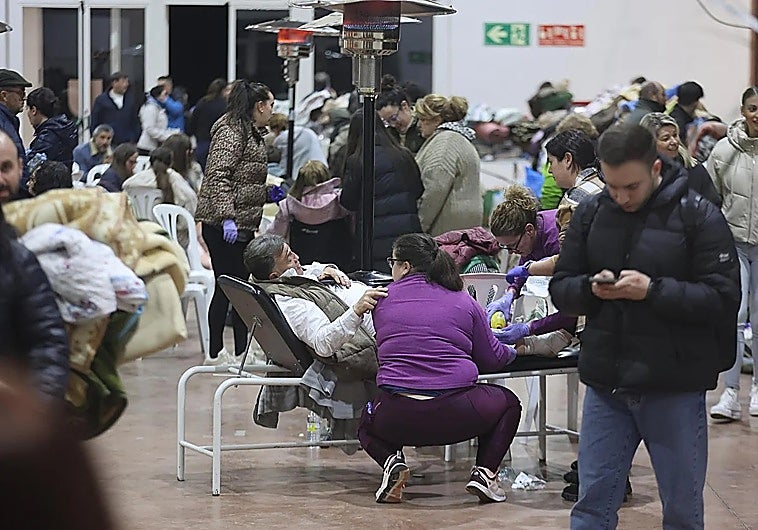

The investigation into the rail accident in Adamuz, Cordoba, in January has included a study focusing on passive safety and the behaviour of the train ... interiors during the impact. The aim is to determine which factors caused the passengers' injuries and assess possible recommendations regarding luggage restraint systems and seat belts.
According to the document, investigators have established that, on the Alvia train, some components became detached from their fixings. The report states that tables and seats came loose from their mountings on the Alvia train.
The incident occurred when the Iryo 6189 train, operating the Malaga María Zambrano-Madrid Puerta de Atocha service, derailed as it approached the points at Adamuz station. Part of the train was guided along these points and encroached onto the adjacent track, where the Alvia 2384 train (Madrid Puerta de Atocha–Huelva) was travelling in the opposite direction, resulting in a collision between the two trains.
According to the document of the Aitat investigators, the tables and seats that came loose on the Alvia were required by regulation to withstand certain levels of acceleration. However, the investigation team have yet to calculate the actual accelerations to which these components were subjected during the accident. Consequently, the document cannot rule out that the forces of the impact exceeded the levels they were designed to withstand.
The investigation distinguishes between the detachment that has already been confirmed and the determination of whether the dynamic loads exceeded the required thresholds or whether there was any failure to meet the strength requirements. This point remains pending the relevant technical calculation.
To establish what caused the passengers' injuries and provide a basis for any recommendations regarding passive safety, the Aitat team are analysing the role of various interior elements and objects, including suitcases, trays and luggage racks, and examining possible recommendations regarding luggage restraint systems and seat belts.
This work is based both on the accounts of those who were on board and on medical-forensic information. As of the November 2026 progress report, the investigation team have interviewed 161 individuals and have at least another 186 interviews to conduct.
Meetings with the forensic team
Furthermore, the investigators have held meetings with the forensic team that carried out the post-mortems on the deceased and have analysed the reports in accordance with the conditions laid down by the court. The letter formally states that the attached progress report is a working draft prepared at the request of the court by the field investigation team. It is therefore not equivalent to a provisional or official report approved, nor does it condition, bind or prejudge the final conclusions that the final report will reach in due course.
The passive safety investigation is taking place in parallel with the other lines of enquiry the Aitat has opened as part of the investigation into the incident. These include an examination of the sudden rail fracture, an analysis of the welds and track maintenance in relation to a dip detected on the track bed in September, which was repaired but reappeared in October and had become more pronounced by November, with no further inspection carried out prior to the accident, as well as the previous recommendation regarding the early detection of clean rail breaks.
In addition, there is the pending review of a large part of the safety management system and the supervision of the AESF, the analysis of the response and evacuation plans of the companies (Iryo, Renfe, Adif) and external service providers,and the review of psychological support, cover for family members and close relative and the categories and amounts set out in the 1989 compulsory passenger insurance regulations.
