
Sexuality
Asexuality and stigma in Spain: 'There are people who realise at the age of 50 that they have never felt sexual attraction'
Over the past year, 12.12 per cent of people in this group have been subjected to harassment, 25.76 per cent have experienced discrimination and 19.7 per cent have experienced violence
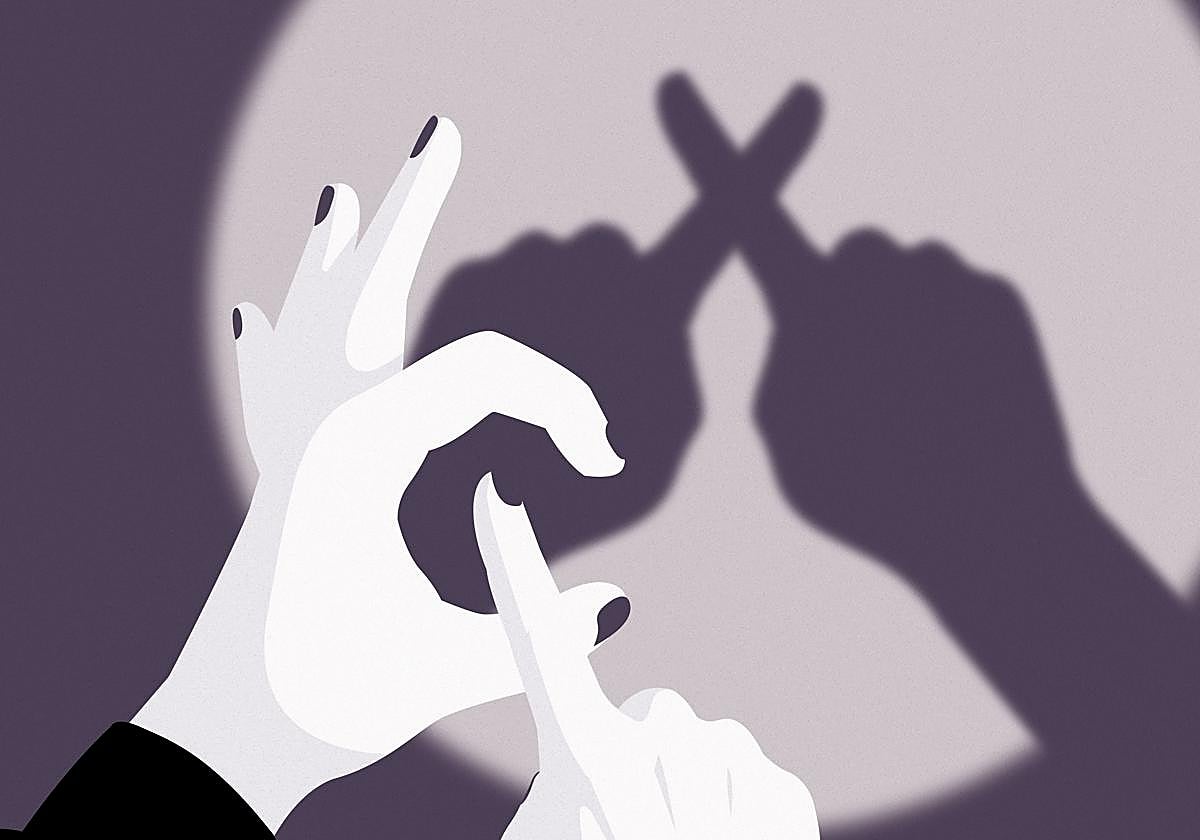

Leticia has known since she was a teenager that she is asexual and yet she still went to the doctor to have hormone tests.
Davie ... has also known since his adolescence and yet he still had to put up with a condescending speech from his school's head of studies about his sexual orientation.
Asexuality is an orientation that are unfamiliar with, which adds to the stigma and social pressure that those who identify as asexual experience.
"Asexuality is a spectrum, not a single point. It is the spectrum of people whose sexual attraction is not directed towards anyone. In other words, people who never or almost never feel sexual attraction, except in very specific and very rare circumstances," LGBTQ+ activist Leticia Rey says.
That said, not feeling sexual attraction does not mean that these people cannot feel or do not feel other types of attraction, such as romantic, aesthetic or sensual attraction. Nor does it mean that they never have sex.
"Asexual people generally lack the motivation provided by sexual attraction, but that doesn't mean they can't have sex for other reasons: for fun, for intimacy, out of a desire to have children," Leticia states.
She adds that masturbation is not incompatible with being asexual, although she acknowledges that many asexual people "have little or no sex".
This is not the only myth surrounding asexuality. Leticia says that there are common misconceptions concerning the entire LGBTQ+ community, such as the idea that it is "a fad", "a phase" or "a way of seeking attention".
"In the case of asexuality, there's also a widespread belief that you'll find the right person eventually," Leticia explains.
"There's a sort of covert conversion therapy, even within healthcare and psychological circles," she states. It is "very common" to think that being asexual means hating sex or never wanting to talk about the subject.
The "most harmful" stereotype, however, is that "you'll end up alone".
Davie Rey, Leticia's brother, is also asexual. "My parents are like a factory," he jokes about this coincidence with his sister, who is 15 years his senior.
"It wasn't so much that she told me about her experience and I thought it was exactly what was happening to me, but rather that, as she'd already spoken to me about the subject before and we'd always got on really well, it wasn't difficult for me to recognise it and put a name to it. I already had a close point of reference," he says.
Despite having first-hand experience and being familiar with the term, Davie has had to endure pathologisation on several occasions. One of the incidents he remembers most clearly took place in front of his whole class, when he was at secondary school.
He told a friend that he was asexual and his friend, without bad intentions, shared this with the rest of the class. At that moment, the head of studies overheard the conversation and intervened.
"She stood in front of the whole class and launched into a five-minute speech saying that such a thing didn't exist, that it was an illness and that you couldn't use that word because it was tantamount to calling someone sick," Davie remembers.
"It was very shocking to see a figure of authority saying all that in front of the class." Davie admits that he did not find it "particularly traumatic", but he does think about how such remarks might impact other, more vulnerable people.
"At the end of the day, it was a figure of authority telling a pupil, in front of everyone, that their identity was an illness," he reflects.
Few studies
Leticia also highlights the scarcity of studies on asexuality, but draws on FELGTBI+ reports on hate crimes to assert that asexual people face significant levels of harassment, discrimination and violence.
Over the past year, 12.12 per cent of people in this community have suffered harassment, 25.76 per cent have experienced discrimination and 19.7 per cent have faced violence. People often face hatred in their private lives.
The Spanish asexual community (ACEs) published a report in 2021 based on a sample of 615 people with this sexual orientation. The report reveals, among other things, that of the 369 people who have had or are currently having sexual relations, 45.8 per cent are doing so for reasons other than their own needs and enjoyment. Furthermore, 17 per cent of asexual people are unable to determine whether they have experienced sexual violence.
This is another major problem: the pressure some people in the community feel to have sex.
"There are heteroromantic people who try to fit in with social norms as much as possible and spend years ignoring or downplaying their asexuality," Leticia says.
She knows of cases where people have discovered they are asexual in their 40s or 50s, after decades of trying to have sex because they thought "that was what they were supposed to do as a partner".
"Sometimes they love their partner very much and enjoy their company, but they do not desire sexual contact. That can lead to a great deal of guilt, because we are taught that love and sexual desire always go hand in hand," Leticia explains.
How can someone recognise themselves as asexual if they've never heard the term or if it's been explained to them incorrectly? "Many people have heard of asexuality, but with incorrect definitions, such as 'people who want to be alone' or 'people without sexual desire', so they end up thinking it doesn't apply to them."
Leticia highlights the importance of showcasing diverse realities: some have partners and others don't, some have sex and others don't, some feel sexual desire and others don't… "The more variety people see, the easier it will be for someone to recognise themselves."
Davie was able to recognise from the outset that he is asexual because he was familiar with the term. "When I reached puberty and realised I wasn't attracted to anyone, I thought: 'Well, I suppose that's what I am'," he says.
At first, he saw it as something temporary, because he was aware that, at his age, "people can change". "It was a bit like: 'I'm asexual until proven otherwise.' And that hasn't changed, so here we are," he says.
TV series and films can help promote representation, although there isn't a huge variety to choose from: Heartstopper features asexual and aromantic characters; there is an episode of Sex Education that deals directly with asexuality; in BoJack Horseman, one of the main characters discovers that he is asexual.
Leticia recommends Koisenu Futari, about two asexual and aromantic people who decide to live together, as well as Slow, which depicts the relationship between an asexual man and an allosexual woman (people who do experience sexual attraction).
"There is very little representation and when it does exist, it tends to be very peripheral. Often, these are details mentioned in passing or confirmed by the author later on," Davie says.
Visibility
One of the main demands of the asexual community is visibility. "Many of our problems stem from the fact that people don't even know we exist," Leticia says.
She highlights the importance of consent-based sex education from childhood onwards. "Many people believe that sex education means teaching people how to have sex, but in reality the key is learning about boundaries, consent and bodily autonomy," she says. Consent is essential for asexual people because it can be "compromised by social pressure".
In Davie's case, there have been no issues regarding consent. He has always been in romantic relationships with queer people. "The people I have been in a relationship with already knew this from the start," he points out.
Davie says that sex doesn't repulse him. "My current partner and I communicate well. Our needs are compatible and she has always respected my identity and my boundaries."
His experience does not mean he is unaware of the more difficult situations other asexual people face, such as sexual relations without genuine consent, constant pressure or deeply harmful dynamics.
Davie has seen other aspects of his identity cause him more social conflict than his asexuality itself. "I remember a classmate constantly asking me about my sex life, making jokes or insinuating that I was making it all up," he says.
He knows that the reason why his experience hasn't been "particularly negative" is, to a large extent, because his sister was already out, informed and an activist. "Having someone close to you who understands what you're going through helps a great deal," Davie says.
Training in healthcare, education and public administration are among the other causes the community champions. "There are workers in the field who pathologise asexuality or confuse it with disorders."
Leticia says that she herself came to believe she had a hormonal problem because of social pressure, despite having been familiar with the term for years. She went to the doctor to have some hormone tests done, but in the waiting room she started reading stories about asexual people and thought: "What am I thinking?"
![[]](http://static.vocstatic.com/voc26/latest/assets/images/favicon/surinenglish/apple-touch-icon-57x57.png)