
A Look at La Liga
It's not rocket science
There is a system; it allows individual expression and harnesses tactical nous. The players can also look after themselves says columnist Rob Palmer
Rob Palmer, commentator ESPN
How do the songs go? “Football’s coming home” and “It’s just like watching Brazil!”
Both historic terrace tunes need a re-write. Spain is now the home to most of football’s accolades and the teams are far more pleasing on the eye than the South Americans.
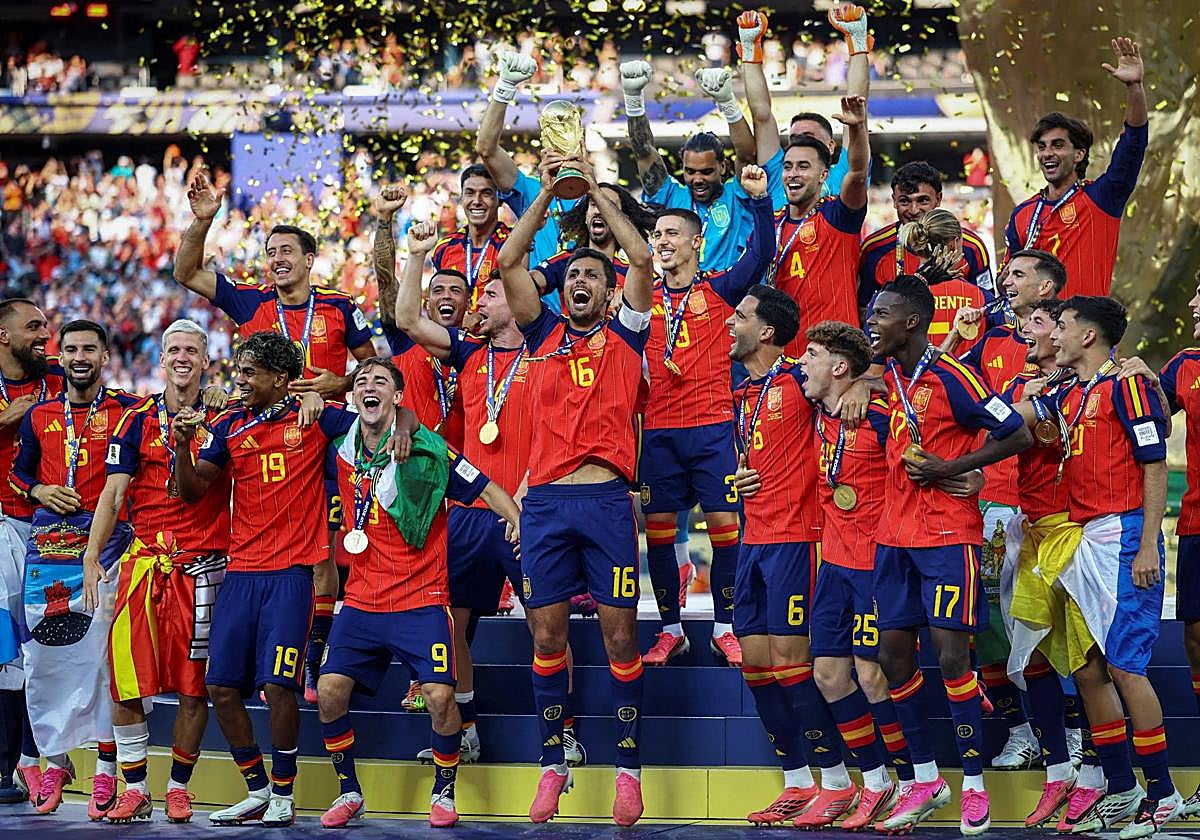
This is now truly the epicentre of world football. The men and women are champions of the world. The men hold the European and Olympic titles; the women were the last Nations League winners; there’s also a multitude of youth trophies. The FC Barcelona women’s side are also the reigning Champions League holders.
Spain has always had great club teams and amazing individual players, but evolution has led to the national teams becoming the best on the planet.
It goes far beyond a collection of players: it comes down to the organisation, the coaching, and the mindset.
Some mocked Thomas Tuchel when he spoke about footballing DNA, but the England coach had a good point. I was brought up in England where the instruction when winning by a single goal with minutes remaining was to go on the defensive, hold the lead. When I first started commentating on Spanish football, I couldn’t fathom why players wouldn’t launch the ball into touch or head for the corner flag on a late counterattack. The mindset was to keep possession or strive for a two-goal lead, instead of hanging on for the win.
Tuchel was affected by the English way at the World Cup finals. He was lauded for throwing on “Big Dan Bur”’ to secure success against Norway and Mexico but rightly received criticism for going defensive too early against Argentina in the semi-finals; the German had become anglicised
Luis de la Fuente had other ideas. I’ve written in previous weeks how it has been team ethic over individual talent. In the final, the camera kept cutting away to the previous Spanish World Cup winners - the so-called “golden generation”. Of the 2026 team, I’d argue that only Lamine Yamal would possibly have made it into their line-up.
Ironically, Yamal didn’t play his best. Rodri re-emerged as a superstar after a couple of difficult years, and Pau Cubarsí was rightly named as the tournament’s best young player. Aside from those three, the team was interchangeable.
This goes for all the Spain national team at men’s, women’s and youth levels. There is a system; it allows individual expression and harnesses tactical nous. The players can also look after themselves. When Argentina resorted to skullduggery, Spain kept their discipline. They too knew how to concede a tactical foul, if and when necessary, without losing their heads.
De la Fuente is the king of coaches. Other Spanish coaching royalty is spread throughout Europe. Pep Guardiola is regarded as a visionary; Mikel Arteta has just won the Premier League; three of his biggest rivals this coming season will be managed by Andoni Iraola at Liverpool, Unai Emery at Aston Villa, and Xabi Alonso at Chelsea.
Watch Spanish kids and you’ll see the coach willing them to play and express themselves. Watch in other countries and you’ll hear those on the sidelines telling them to run and move the ball quickly.
It’s not rocket science - but it is science and Spain have cracked the code.
![[]](http://static.vocstatic.com/voc26/latest/assets/images/favicon/surinenglish/apple-touch-icon-57x57.png)