
The Euro Zone
Double standards
Columnist Mark Nayler argues that the Prime Minister’s hypocritical response to a major corruption conviction is a blatant insult to voters that should ultimately cost him his government
Mark Nayler
This week saw two depressing developments in the Sánchez Show, only one of which was surprising. Given how weak the case against the prime minister’s wife is, taking away her passport seemed a pointlessly aggressive act. The judge’s claim that Begoña Gómez’s security team might try to smuggle her out of Moncloa was paranoid and ridiculous - richly deserving of the potential disciplinary action brought against him through the General Council of the Judiciary.
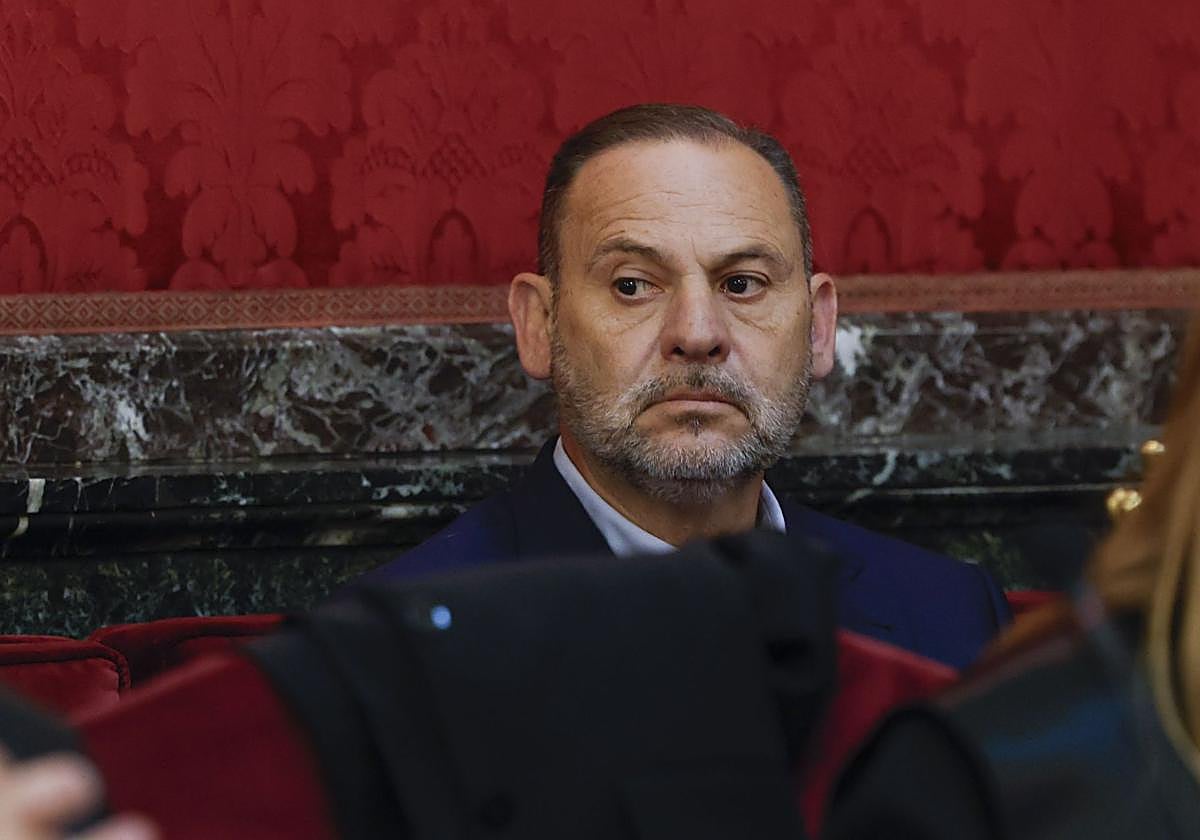
The conviction of Pedro Sánchez’s former transport minister José Luis Ábalos, on the other hand, seemed inevitable. The sentence given to him was fair, as was that received by his partner-in-crime, Koldo García. But Ábalos’s conviction wasn’t the worst thing that happened in Spanish politics this week. It was Sánchez’s reaction.
Related story
As a political columnist, I sometimes worry that I’ve become impervious to corruption scandals. The sense of outrage I used to feel has been dimmed by familiarity. But the way in which Sánchez handled the latest instalment in the Koldo case reassured me that I am not desensitised to the behaviour of power-crazed politicians. Some things still shock me.
Sánchez said in congress on Wednesday that he respected the Ábalos ruling, made all the right noises about there being impunity for no-one etc, and repeated that he’d been completely unaware of the kickback scheme run by some of his most senior former aides.
The last claim, even if true, is no defence. Sánchez called for Mariano Rajoy’s resignation over a corruption case that began before the PP leader even became prime minister; so knowing or not knowing what your ministers are up to, by his own standards, is irrelevant. Guilt, Sánchez seems to believe, is very much by association in such cases.
Sánchez then insulted the intelligence of his fellow politicians and the electorate by denying that there was a widespread corruption problem in Spain. He claimed that the media falsely gives that impression, when really (he implied) it’s isolated cases featuring abnormally greedy and unprincipled individuals.
If that were true, Spanish politicians wouldn’t be able to use corruption allegations as currency - one with much more value than policies. Sánchez himself admitted as much last summer, when he said that “there is no such thing as zero corruption”.
Perhaps Alberto Feijóo could ask the prime minister next week to reconcile these two apparently contradictory facts: 1) In Spain, it’s unreasonable to expect a political party to be completely clean; and 2) Spain does not have a widespread corruption problem.
Of course, in one sense, you know what Sánchez means. Human nature being what it is, corruption is always going to exist in politics. But that doesn’t absolve him of responsibility. The Koldo case has done as much damage to his government’s reputation as Gürtel did to Rajoy’s. The same result should follow.
![[]](http://static.vocstatic.com/voc26/latest/assets/images/favicon/surinenglish/apple-touch-icon-57x57.png)