
The Euro Zone - opinion
Change is hard
Daylight saving time was an attempted solution to a problem that no longer exists, but as recent events have shown, we are still not immune to energy crises
Mark Nayler
As a committed opponent of the twice-yearly clock change, I planned to open this column by remarking on how outdated the practice is.
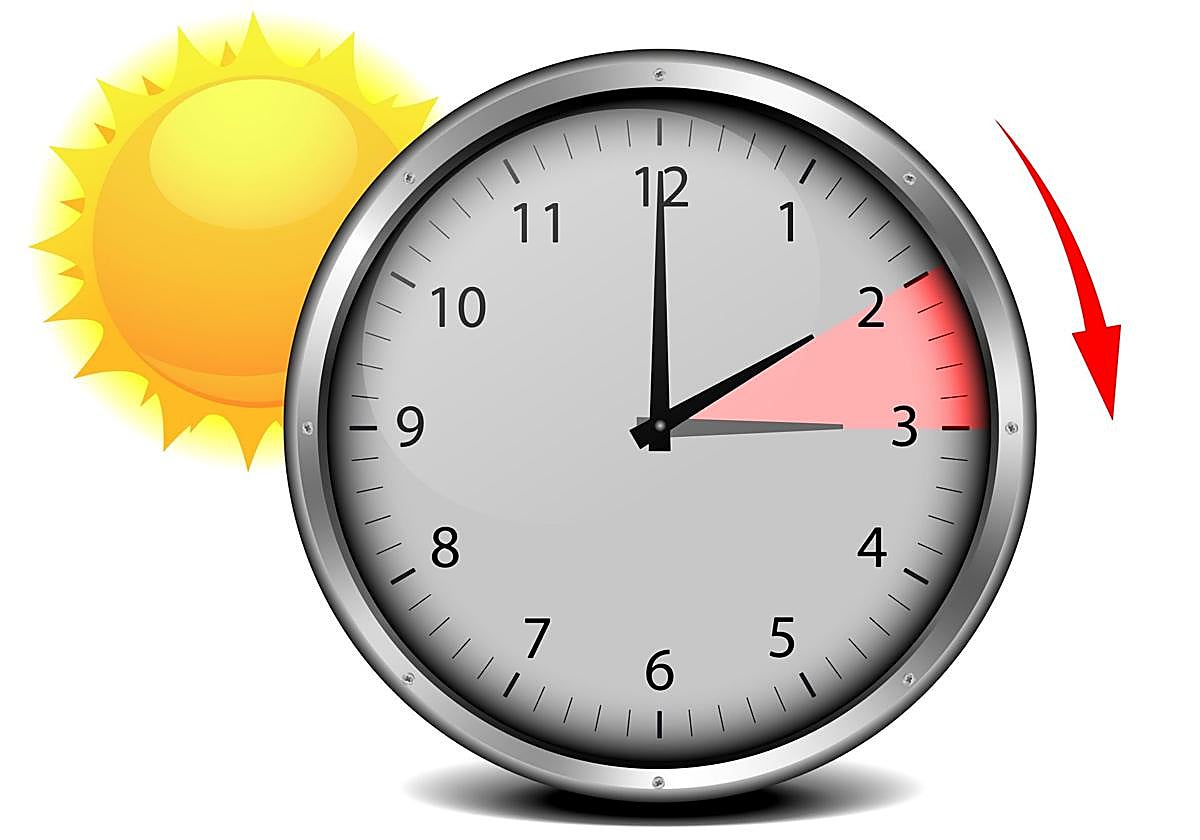
Daylight Saving Time (DST) was introduced in Europe and the US during the Second World War as a way of preserving coal; but 80 years on, diverse energy sources and sophisticated technology keep the power flowing throughout global turmoil.
DST was an attempted solution to a problem that no longer exists, so it's time (ho ho) we got rid of it.
But as recent events have shown, we are still not immune to energy crises. Russia's invasion of Ukraine and the Iran War have pushed up gas and oil prices across the globe.
Both conflicts have also highlighted Europe's lack of energy sovereignty, thus vindicating those nations that have returned to nuclear energy in recent years. As Pedro Sánchez rolls out emergency measures to reduce the impact of the Iran conflict on Spaniards' pockets, many households will be grateful for an extra hour in the evening when the lights don't have to be on.
The case against DST, however, is still much stronger than that in favour. The energy savings are negligible, and the disruption caused to our circadian rhythms has been found to increase the risk of heart attacks, strokes and traffic accidents.
According to David Ray, a professor of endocrinology at Oxford University,"[O]ur internal circadian clocks naturally align with the light-dark cycle, so the only problem comes when you start arbitrarily defining time based on a clock."
Only a third of the world's nations still mess around with their watches twice a year, a practice that is estimated to cost the US economy $2 billion in wasted labour. In 2022, three more nations abolished DST: Mexico, Syria and...Iran!
Spain, quite rightly, wants Europe to follow their example (surely the only area in which European democracies can take inspiration from Iran's dictatorial regime).
Ahead of putting the clocks back last October, Spain petitioned the EU to scrap DST from this year, a proposal last discussed eight years ago.
In 2018, then-EU Commission president Jean-Claude Juncker pledged to abolish DST by the end of 2019, but failed to secure enough support. Which was odd, because a survey of 4.6 million European citizens that year found that 84% were in favour of abandoning the clock-change. In Spain, that figure was 93%.
So I know I'm not alone in resenting the several disrupted mornings it takes to adjust to DST.
I love Spanish summer evenings, but they would still be long and warm without the clock-change. Hopefully, this will be the last year that we're required to mess up our bodies' natural rhythms twice for no good reason.
![[]](http://static.vocstatic.com/voc26/latest/assets/images/favicon/surinenglish/apple-touch-icon-57x57.png)