
The Bottom Line
Celebrating immigration in Malaga
A new Irish consulate in Malaga offers a timely reminder of shared heritage and the power of empathy says David Andrews
David Andrews
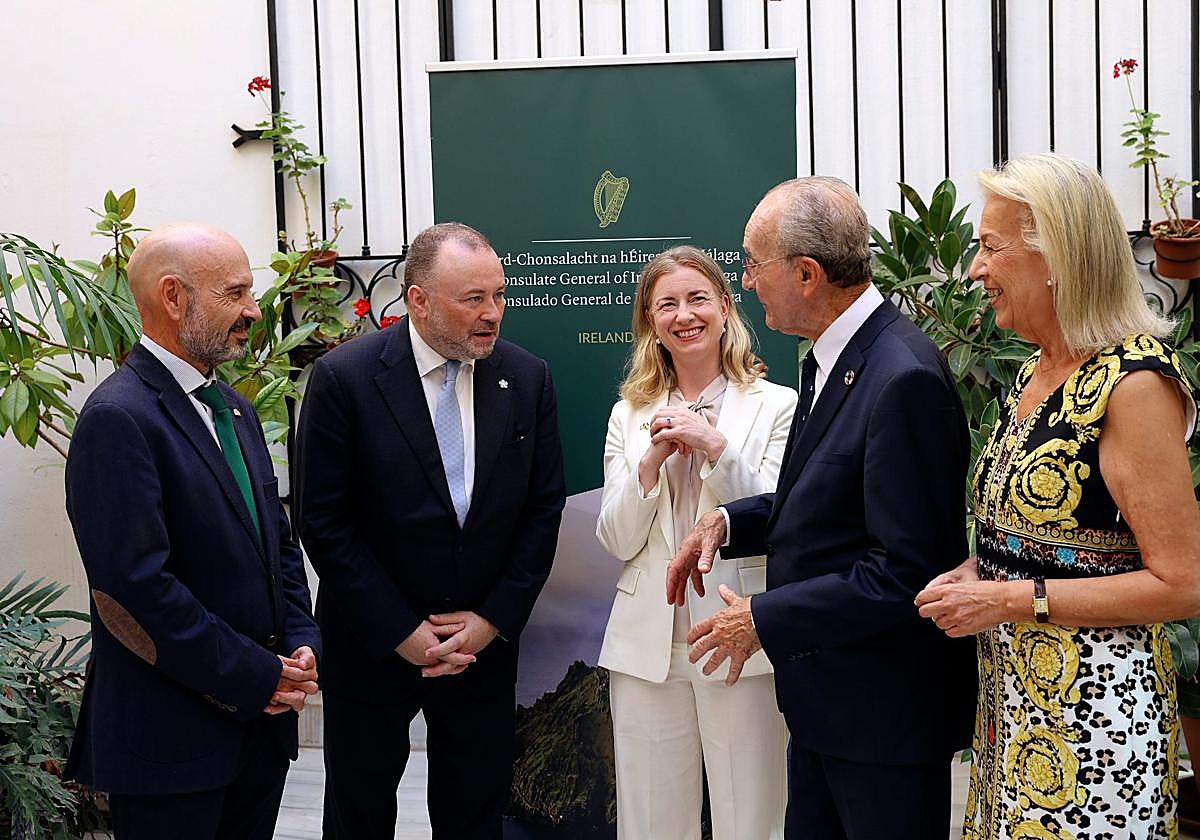
The new Irish consulate general in Malaga was officially presented in society earlier this month. The Spanish and Irish share a common privilege in today’s divided Europe, they are universally liked. This may seem inconsequential but, as any school child will tell you, being popular is incredibly important. Being friendly, self-effacing, authentic and not taking yourself too seriously puts people at ease. The minute that you say you live in Spain, people’s faces immediately light up and you are regaled with stories of their experiences of Spanish warmth, life, generosity, culture and cuisine. The same is true with Ireland, but maybe not so much regarding the cuisine.
During the opening speeches the bonds of friendship between Spain and Ireland were remembered. It was Philip II (1556-1598) who first welcomed Irish immigrants fleeing from religious persecution and subjugation in their own country. Philip’s “open border” policy meant that the Irish could freely immigrate to Spain and he set up a fund to help the new arrivals settle in their new home. Speakers celebrated Irish immigrants’ contribution over the centuries to Spain and highlighted the impact of Irish immigration across the globe, around 100,000,000 descendants in total. What struck me was the very diplomatic way that nobody mentioned the reasons for why the Irish had to leave their homeland and whether they had been welcomed with open arms when they first arrived in Spain.
People have emigrated since time immemorial for political, economic or religious motives or because they were just looking for better lives for themselves and their children. They have nearly always been met with fear, prejudice or mistrust due to perceived differences. Sometimes there have been obstacles and difficulties in their integration but, in time, migrants have become valuable members of the local community, while still maintaining a pride in their roots.
I hope that as Europeans, who have been emigrating for centuries, we can understand the plight of the vulnerable and desperate who decide to leave their families, friends and birthplace and embark on a perilous journey to an uncertain destination. I ask myself, are we capable of empathising with those who arrive in a new country without support or a home, of comprehending the difficulties they may have integrating into a completely new way of life, of appreciating all that we can learn from them and of acknowledging their contribution to our society? Unfortunately probably not, when the shoe is on the other foot, our memory turns more selective; forgetting our own history and ignoring the causes behind mass migrations today and in the past.
![[]](http://static.vocstatic.com/voc26/latest/assets/images/favicon/surinenglish/apple-touch-icon-57x57.png)