
Infrastructure
Western Costa de Sol takes key step towards second desalination plant
Water company Acosol has entrusted Ayesa with defining capacities and possible locations
Chus Heredia
Technicians and water supply experts often say that major infrastructure projects to combat drought should begin during periods of prosperity.
The Costa del Sol has finally left behind the nightmare of water scarcity. In fact, it was the first area to move out of the drought alert level. It faces the peak season with the La Concepción reservoir at 94 per cent capacity, holding 54 million cubic metres.
The truth is that it would contain double the amount during the winter, if it had the capacity.
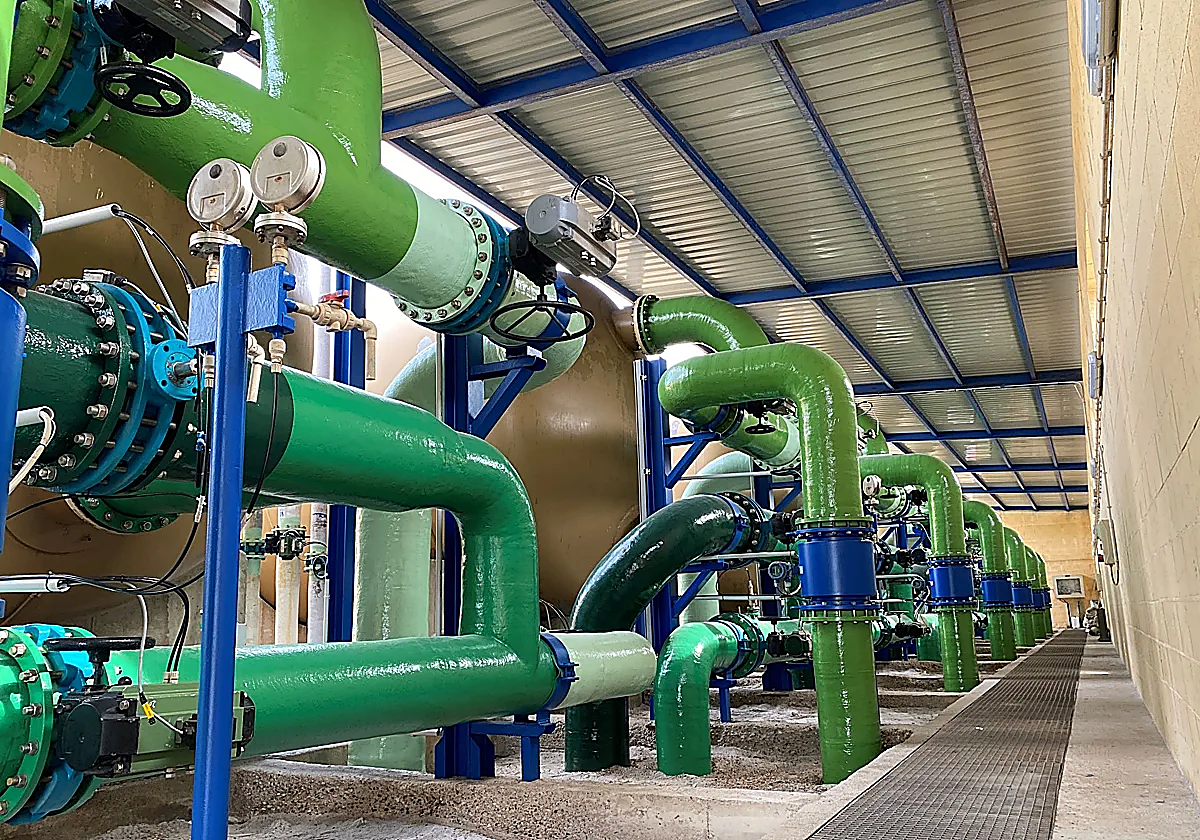
The Marbella desalination plant can now produce 20 million cubic metres per year, thanks to two modernisations and expansions the Andalusian regional government (Junta) carried out as part of the emergency drought relief efforts.
Western Costa del Sol water company Acosol has just commissioned the preliminary design for a second desalination plant. Ensuring a long-term water supply for the entire area between Torremolinos and Manilva is crucial.
Awarding process
The company developing the preliminary design is Ayesa. Acosol has awarded it the contract for 859,819 euros, including taxes. The company will have two years to complete this document, which will define the fundamental features of the new plant.
The process has been lengthy. Preparing the tender specifications has taken time. Added to this is the failure of the previous attempt to develop this facility.
In 2008, the central government awarded a contract to a consortium (Sacyr, Sadyt and Construcciones Vera) for the construction of a desalination plant between Mijas and Fuengirola for 61.7 million euros. Despite the award, they never built the plant.
This time, the authorities are looking for a new site. A move closer to the Benalmádena-Torremolinos area is a possibility.
"However, the limited storage capacity [of the reservoir], the irregularity of surface water inflows and the overexploitation of coastal aquifers frequently create imbalances between demand and available resources, especially during peak tourist seasons and periods of low rainfall. Several previous studies have highlighted the need to incorporate a new, stable, sustainable and scalable water source that will reduce pressure on aquifers and strengthen the resilience of the water supply system for the Western Costa del Sol," the contract technical specifications state.
The contract includes all the necessary documentation to enable the joint bidding process for the construction project and work. This includes the preparation, processing and obtaining of the required environmental, sectoral and urban planning permits, depending on the chosen option.
It will also include the delimitation of the necessary land, the technical documentation for initiating expropriation proceedings where applicable, as well as responding to objections and incorporating any required modifications.
The fieldwork will take place in three phases. The first is the needs assessment, with an estimated duration of three months. The second is the alternatives study, which will take nine months. Finally, the preliminary design will take one year.
At this point, Acosol is allowing a longer timeframe than estimated to also cover the environmental permitting process, public consultation and required sector-specific authorisations.
A plant of this type must take into account countless variables: energy, piping, acoustics, effects on the marine environment (brine, outfalls, diffusers), capacities, profitability curves, etc.
Another key issue will be the study of the overexploited underground water reserves in the Costa del Sol. This will be one of the bases for justifying the need for additional water allocations.
The plant will be expandable. In its first phase, it should meet the projected demand in the Costa del Sol until 2039.
Initially, although not included in the tender specifications, the plan is to start with an annual capacity of approximately ten to 12 million cubic metres, which could double in the future. This would give the desalination plant a capacity similar to that of the recently renovated and modernised Marbella plant.
Other resources
The Costa del Sol also has the Fuengirola and Guadalmansa wells as an important resource. They cover up to ten per cent of demand.
There are also the resources available to each municipality, including wells and springs. At the same time, the tertiary treatment system of wastewater treatment plants has the capacity to produce around 47 million cubic metres per year, although the water is not potable. Only seven to ten million cubic metres end up being reused.
In the long term, the Costa del Sol is focusing on the Gibralmedina reservoir project between Cadiz and Malaga, which would provide approximately 15 million cubic metres of treated water annually. However, the project is estimated to cost over 700 million euros and faces a lengthy bureaucratic process.
The 'water highway', whose construction has just begun and which will provide a reliable connection to the city of Malaga, is another vital project. It will allow the exchange of up to 500 litres per second of water in both directions via the upgraded Rojas pumping station (Churriana).
![[]](http://static.vocstatic.com/voc26/latest/assets/images/favicon/surinenglish/apple-touch-icon-57x57.png)