
Health
Vets warn that 80 per cent of urban wild boars in Malaga province are carrying infectious diseases
Diseases such as hepatitis E and salmonella can be transmitted to humans through contact with faeces in parks

Malaga
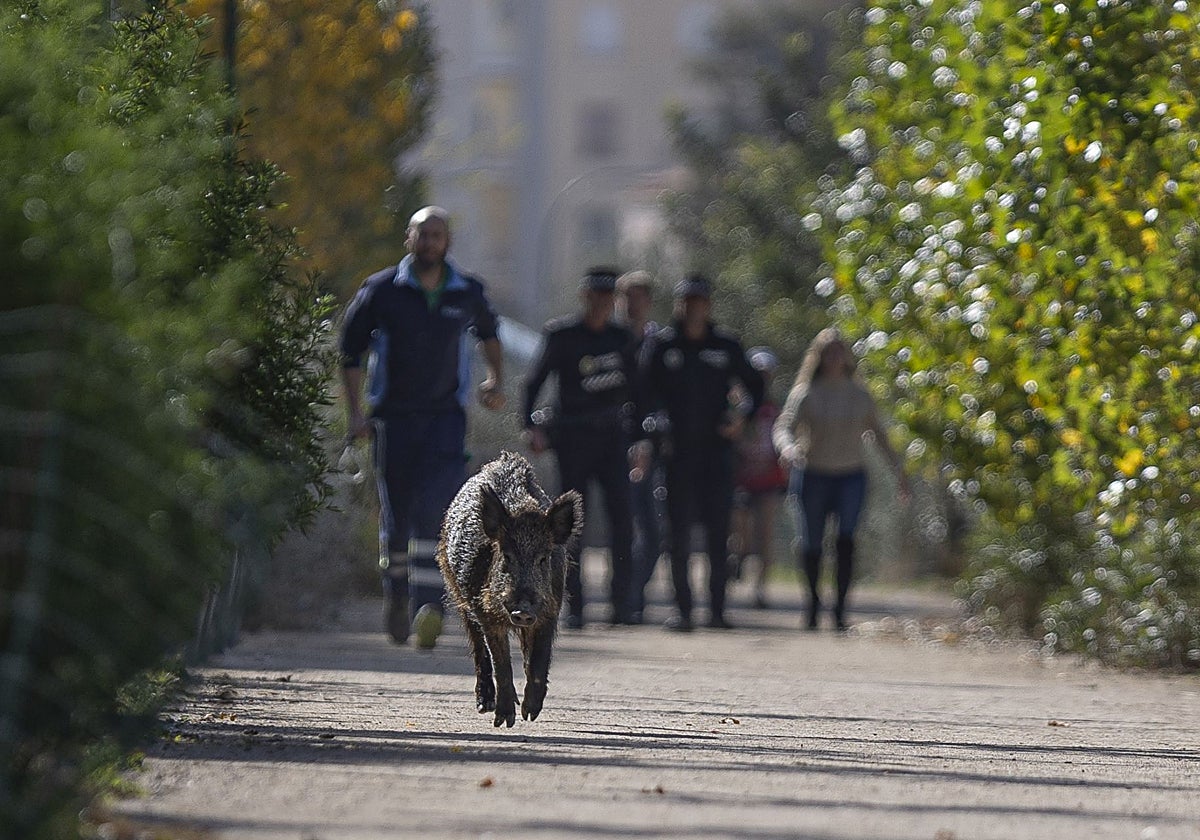
For the first time in Spain since wild boars began moving into urban areas, a pioneering epidemiological study has revealed the potential public health risks ... posed by contact with the animals.
The research, carried out between December 2024 and January 2026, was led by the One Health Chair at the Malaga College of Veterinarians and the University of Malaga, in collaboration with the University of Cordoba. It found that more than 90 per cent of wild boars and feral pigs living in urban environments across Malaga province were carrying infectious pathogens. Around 80 per cent were found to harbour zoonotic pathogens, meaning infectious agents that can be passed from animals to humans.
The health assessment was based on samples taken from 80 animals captured in Costa del Sol municipalities. Marbella accounted for 40 per cent of the sample, followed by Malaga city with 30 per cent, Fuengirola with 22.5 per cent and Benahavís with 7.5 per cent. More than 2,400 laboratory tests showed that 92.5 per cent of the animals were infected with, or had antibodies against, at least one pathogen.
A total of 86.3 per cent tested positive for one or more zoonotic pathogens, presenting a potential risk to people who come into contact with wild boars in parks and areas on the edge of towns and cities. The report also identified a high rate of co-infection, with 78.8 per cent of the animals carrying two or more pathogens simultaneously. In Benahavís and Fuengirola, every infected animal had multiple infections.
Related story
-
Animal welfare
Alfonso Torices
Among the microorganisms detected, the most common zoonotic parasites were Blastocystis spp., found in 63.1 per cent of animals, and Ascaris suum, detected in 54.9 per cent. The hepatitis E virus showed a seroprevalence of 57.1 per cent.
The study also detected disease-causing bacteria including Brucella spp. in 32.9 per cent of samples, Salmonella enterica in 30 per cent and Escherichia coli in 18.5 per cent. The latter was associated with strains capable of causing severe haemorrhagic colitis.
On a positive note, the researchers found no evidence of major veterinary diseases such as African swine fever, classical swine fever or swine influenza. However, vets warned that continued vigilance remains essential because of the animals' mobility.
The project was supported by the Competitive Research Unit on Zoonoses and Emerging Diseases (ENZOEM) at the University of Cordoba, the Wildlife Control Service (SCAES), the Junta de Andalucía's Sustainability and Environment Department in Malaga, the Andalusian Wildlife Epidemiological Surveillance Programme and funding from the One Health Chair.
The scientific study was co-led by Dr Ignacio García Bocanegra of the University of Cordoba and Dr Saúl Jiménez Ruiz of the University of Castilla-La Mancha. The researchers warned that the increasing adaptation of wild boars to human environments, a process known as synanthropy, in which wild animals become accustomed to living alongside people, is increasing the risk of diseases spreading to humans, pets and livestock.
Given the epidemiological situation on the Costa del Sol, the report calls for permanent surveillance programmes based on the One Health approach, which recognises the close links between human, animal and environmental health. It also urges stronger urban biosecurity measures by limiting wild boars' access to food waste and recommends public awareness campaigns highlighting the risks associated with direct or indirect contact with the animals.
![[]](http://static.vocstatic.com/voc26/latest/assets/images/favicon/surinenglish/apple-touch-icon-57x57.png)