
Economy
War impact reaches Malaga's countryside, increasing price of some groceries
The price of nitrogen has increased by 50 per cent due to the blockade of the Strait of Hormuz, which has subsequently impacted fertiliser prices
Matías Stuber
To understand how the war in the Middle East is impacting Malaga province's countryside, we must first have a science lesson about nitrogen. Nitrogen not only makes up approximately three-quarters of the air we breathe, but is also found in every grain, every blade of grass and every loaf of bread. Nitrogen fertiliser is indispensable in agriculture in many places.
For this reason, the US-Israeli attack on Iran and the blockade of the Strait of Hormuz are of crucial importance to agriculture in Malaga.
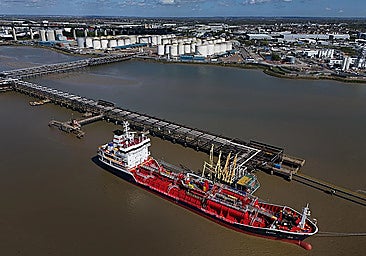
Much of the world's nitrogen fertiliser comes from the Persian Gulf. Up to a quarter of all nitrogen fertiliser (or urea) exports must pass through the Strait of Hormuz to reach the global market. However, shortly after the start of the conflict in late February, the Iranian government blocked the passage of most cargo ships. As a consequence of the trade war, nitrogen fertiliser prices have skyrocketed.
Related story
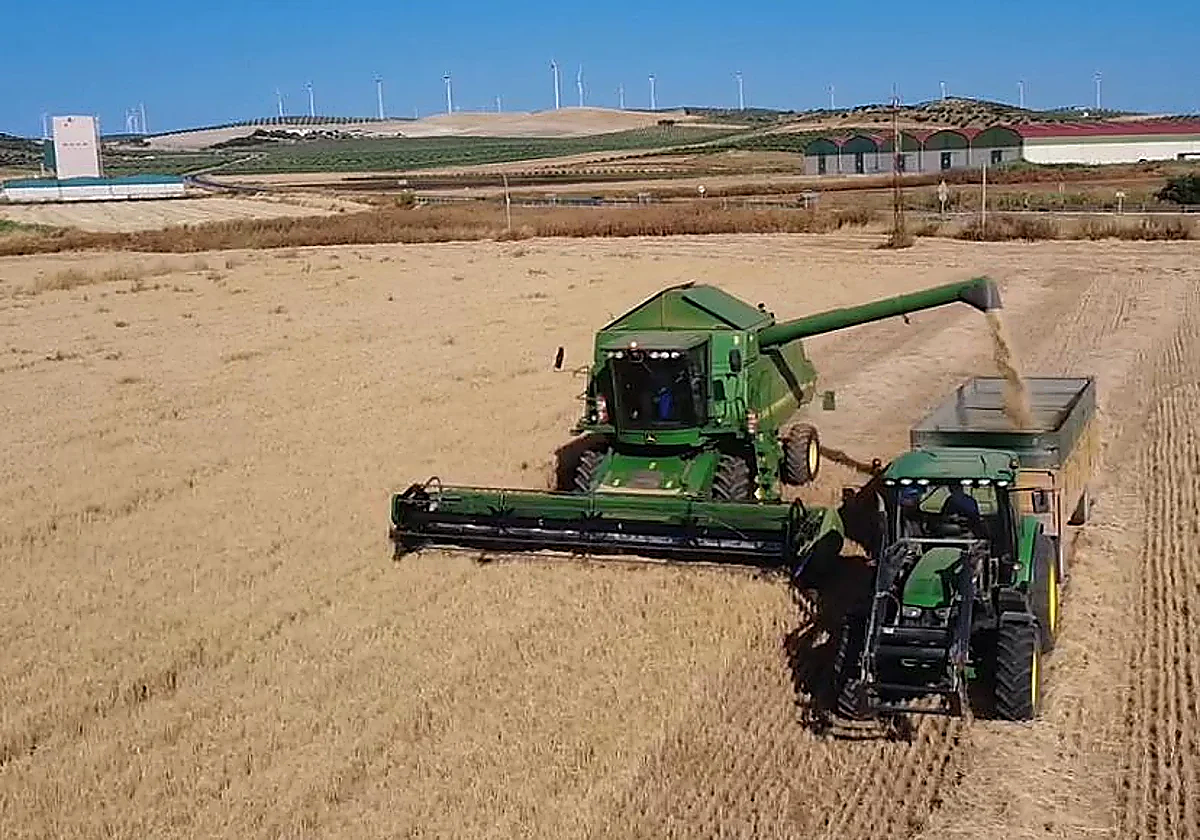
To give an example, SUR talked to a grain field owner in the northern part of the Antequera district. All sorts of crops grow there: wheat, potatoes and sweet potatoes and it is time for spring fertilisation.
Farmers like Benito Avilés know that a good autumn harvest starts now. He told SUR that the rising cost of fertilisers has already reached the fields of Malaga. "Before the war, a tonne of fertiliser cost 400 euros. Now, the price is 600 euros," he said.
The key raw material for the production of nitrogen fertilisers is natural gas. Through a chemical process, the gas is transformed into various substances, primarily ammonia and urea. Urea is simply the nitrogen that farmers need.
Approximately half of the world's population gets enough to eat thanks to the Haber-Bosch process, considered one of the most important inventions of the 20th century. This is because fertiliser significantly increases crop yields.
However, up to 90 per cent of fertiliser production relies on natural gas and its price is closely tied to the price of this fuel. The main producers of urea and nitrogen fertilisers are located in the Persian Gulf and in Russia. For this reason, these products have become a geopolitical tool of power in recent years.
The members of the Asaja association of farmers in Malaga are "very concerned" about the rising prices of fertilisers. "The Strait of Hormuz is essential for global food production," they said.
The impact on groceries
Consumers are no longer asking if supermarket prices will increase. The question is when and by how much. Retailers set supermarket prices. Some of the main players in the market tell SUR there will be repercussions. "Everything depends on whether an agreement is reached to end the price war," sources state.
"Modern industrial agriculture always involves the conversion of energy into food," Asaja says. "When energy prices rise, so do the prices of fertilisers, pesticides and fuel. Subsequently, depending on the severity of the crisis, food prices also rise."
Santiago Sánchez is the general secretary of Asaja in Malaga. "The situation in the agricultural sector doesn't look like it will improve anytime soon," he says, confirming that "farmers are under enormous pressure". "The aid the government is providing is always welcome, but it falls short of the increased costs we're experiencing," he says.
Farmers fear an uncontrollable cost spiral
Farmers like Benito Avilés worry about the near future. The Middle East war is also severely impacting farmers with the cost of diesel, the litre of which has increased by about 50 cents since the beginning of the year.
Not so long ago, after the start of the war in Ukraine, farmers also had to cope with drastic increases in input costs. "However, production continued at full capacity back then because the products could be sold at high prices," Avilés says.
The current situation is completely different: for months, grain and potato prices have been rock bottom. Farmers receive between 190 and 200 euros per tonne of wheat when products are traded on a short-term basis. At the start of the war in Ukraine, the figure was roughly double.
![[]](http://static.vocstatic.com/voc26/latest/assets/images/favicon/surinenglish/apple-touch-icon-57x57.png)