
General strike
Trade unions estimate over 60 per cent of workers took part in general strike in Malaga province, while business organisation says it was a ‘minority’
The CEM highlights the ‘business as usual’ nature of the day’s events, while unions CC OO and UGT complain about the excessive minimum service requirements that were imposed
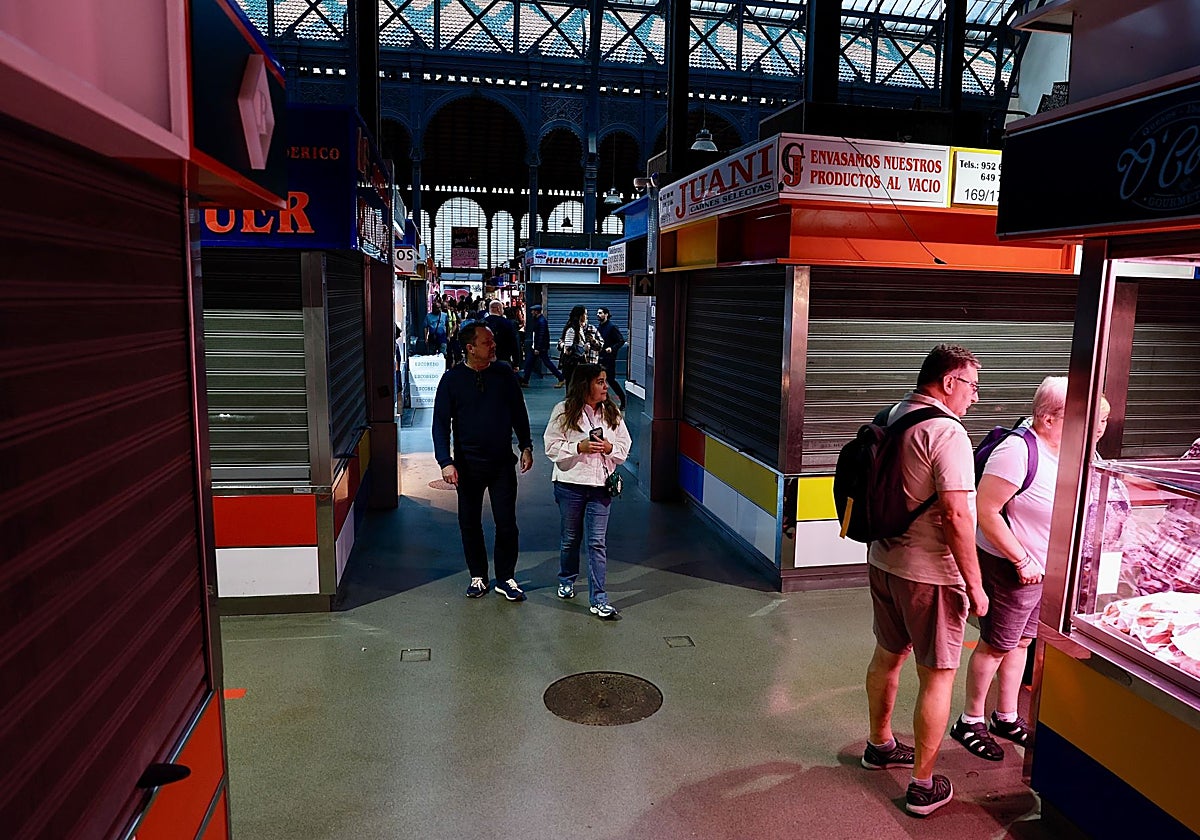

The views of employers’ organisations and trade unions clash over participation in the general strike.
Comisiones Obreras and UGT trade unions put the level of ... participation in the province of Malaga at over 60 per cent.
By contrast, the CEM, Malaga's confederation of business owners, claims to have "verified" that participation is "a minority in all sectors, as reflected in the normal functioning of economic activity in the province, particularly in the private sector".
The employers’ organisation bases its claim on electricity demand figures, which on Wednesday morning showed a 6.5 per cent drop compared with last Wednesday and a 0.9 per cent fall compared with Tuesday.
“These fluctuations, while not in themselves a conclusive indicator of strike participation, do not point to a significant halt in economic activity,” the CEM stated in a press release, in which it also highlighted that, apart from a few moments of tension early on at the Mercamálaga wholesale market and the EMT public transport depot, the day proceeded "as normal".
At a press conference held in the Plaza de la Constitución on Wednesday morning, Fernando Cubillo, general secretary of trade union CC OO, and Antonio González, his counterpart at the UGT (general union of workers), explained that participation in the strike varies by workplace and by sector.
Related story

Cubillo noted that in the hospitality sector, participation stood at over 75 per cent, while in the education sector it was 52 per cent. González, for his part, highlighted that there had been strong support for the strike day within the public sector, as well as at Mercamálaga and the transport hub. He also noted that the trade unions’ night-time action had made it possible to close most leisure venues.
The employers’ organisation states that electricity demand fell by 6.5 per cent compared with last Wednesday and by 0.9 per cent compared with Tuesday
Cubillo also referred to other sectors “in which strikes are not permitted” and in which “participation must be measured in a different way”: "If the transport sector has a minimum service level of 60 per cent, this means that 60 per cent of workers cannot exercise their right to strike. But of the remaining 40 per cent, more than half have taken part in the strike. We are talking about the EMT and also the metro. So there has been a high level of participation among those who are able to strike and have done so.”
He therefore criticised the minimum service levels that had been imposed, particularly in certain sectors, and announced that he would take legal action to overturn what he described as excessive measures that curtail the right to strike.
González, for his part, highlighted another key point he has observed: “There are many workers who support the reasons behind the strike - the right to decent housing, better pay, a reduction in working hours, and the preservation of public services - but they are being pressured by employers. “We find that utterly unacceptable,” he declared.
The employers’ organisation, for its part, explained that any analysis of the strike’s impact must take into account the effect of remote working and the bringing forward of logistics and freight transport operations, which help to reduce the usual number of journeys to workplaces, as well as the general caution prompted by the weather forecast.
Taking legal action
With regard to minimum services, Cubillo also highlighted home help: "By decreeing 100 per cent minimum services, the right to strike has been curtailed. The company, the Andalusian Regional Government and the PP Government are turning a general strike into a partial stoppage measured in minutes. There should be a vulnerability map to identify which service users are highly dependent and absolutely must be cared for – requiring 100 per cent of minimum services – and which are not."
The Comisiones Obreras trade union announced early on Wednesday morning that it would take legal action to overturn the "‘excesses" that have been decreed and the "minimum service" requirements that prevent the free exercise of the right to strike.
“Indeed, we are going to challenge this, because there will be more general strikes; this will not be the last. If the issue of wages is not resolved, if the issue of housing is not resolved, and inflation… we will undoubtedly have more general strikes,” said Cubillo.
In this regard, the CC OO leader praised the collaboration with social movements during this strike: “Last night we witnessed a historic moment. I have experienced every general strike since 1985, and I had never seen a united picket line involving all the trade unions.
“Comisiones Obreras remains true to its social ethos, and we have also joined forces with grassroots movements, with platforms and self-organised neighbourhood groups that highlight the difficulties of life in Malaga. This alliance between social organisations and trade unions must continue to function,” urged Cubillo.
