
Nature
The abandoned mining complex where Malaga dug for silver
The gem hiding between Alhaurín de la Torre and Alhaurín el Grande has immense tourism and historical potential
Javier Almellones
Malaga
The scars of the great fire that ravaged part of the Sierra de Mijas in the summer of 2022 are still visible and even the lush vegetation of recent rains cannot completely conceal them. While many can see the consequences of the fire, few know that the area hides an abandoned mining complex: the Llanos de la Plata.
Nothing in the area could explain what happened there. Between Alhaurín de la Torre and Alhaurín el Grande, one can stumble upon the remains of an important mining complex linked to the extraction of silver-bearing galena during the 19th century.
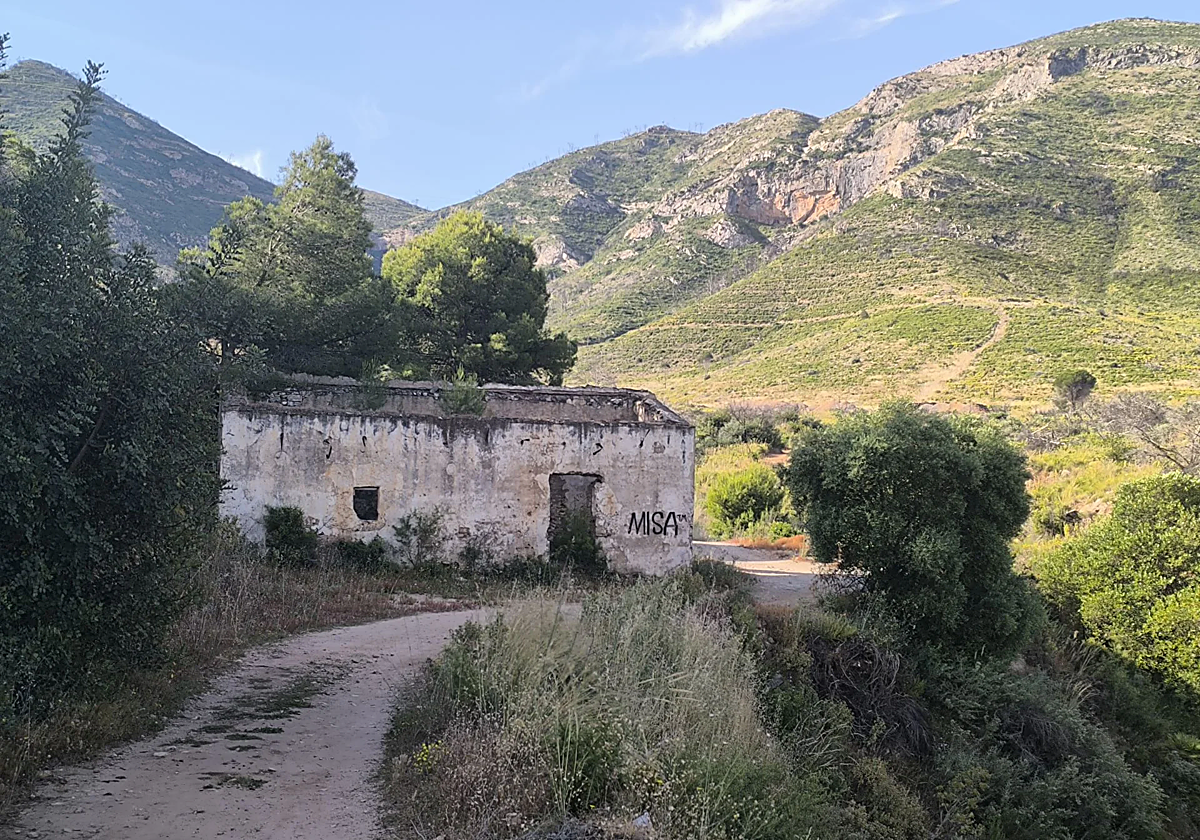
Those who venture into the area may encounter semi-ruined staircases, stone walls, old reservoirs and industrial structures. Vegetation partially covers some of the facilities, while the arches, channels and conduits of others are still visible, allowing one to imagine the intense activity that took place more than a century and a half ago.
On the one hand, the place conveys a sense of abandonment. Graffiti, crumbling remains and vegetation encroaching on parts of the buildings are evidence of decades of disuse and lack of protection. On the other hand, one only need observe the scale of some of the buildings to understand that this was no small site.
Los Llanos de la Plata still preserves part of the memory of a virtually forgotten period in Malaga's industrial history. It is a place where, for decades, miners excavated the mountain in search of minerals.
Historical interest
The historical significance of these mines has been documented since at least the mid-19th century. One of the publications of Aula Museo recalls that the silver-bearing lead mines of Llanos de la Plata (also known as Santa Rita, San José, Los Angelitos and Caño del Inglés) were first mentioned in 1848 by mining engineer José de Aldama Ayala and later, in 1853, by Antonio Álvarez de Linera, provincial chief engineer.
The same documentation also reveals a telling detail about the importance of mining activity in the area. According to historical works, in 1847 these mines produced 50,000 arrobas of ore and 10,400 arrobas of good quality lead, in addition to a few ounces of silver obtained after processing the extracted material. Part of this production was subsequently processed in industrial facilities such as the Las Mezquitas.
The landscape combines old industrial infrastructure with paths, spoil heaps, slag heaps and tunnel entrances among pine forests and fire-ravaged areas. The whole place looks frozen in time.
The memory of the harshness of mining work also remains very present. A visit to the site reveals the enormous physical effort of those who worked long hours underground, in damp, dark and narrow tunnels, largely excavated by hand and under particularly harsh conditions.
Location and access
Los Llanos de la Plata is relatively close to the Lauro Golf resort, between the municipalities of Alhaurín de la Torre and Alhaurín el Grande. The main access is via forest tracks and roads near the residential area and the golf course.
Although some of the old structures and galleries can still be explored from the outside, experts warn that many areas present a risk of collapse, hidden shafts or accumulated deterioration after decades of abandonment. For this reason, they do not recommend entering the mines.
Despite its obvious historical, geological, archaeological and scenic value, the Llanos de la Plata remains largely unknown, even to many residents of Malaga. Currently, there is no tourism or heritage development plan in place to properly study what still survives in the area.
However, specialists have been advocating for years the need to protect and restore this site as a major area of industrial archaeology linked to mining. The complex still preserves enough remains to become a unique cultural and tourist attraction.
![[]](http://static.vocstatic.com/voc26/latest/assets/images/favicon/surinenglish/apple-touch-icon-57x57.png)