
Environment
Spain's coastal authority to relocate 30 protected limpets to create Baños del Carmen beach
The aim is for the beach expansion works to begin before the summer, once divers have finished relocating the creatures
Ignacio Lillo and Chus Heredia
Malaga
All sorts of theories about the delay in the start of the long-awaited expansion works at the Baños del Carmen beach are circulating among the residents of Malaga's Pedregalejo district.
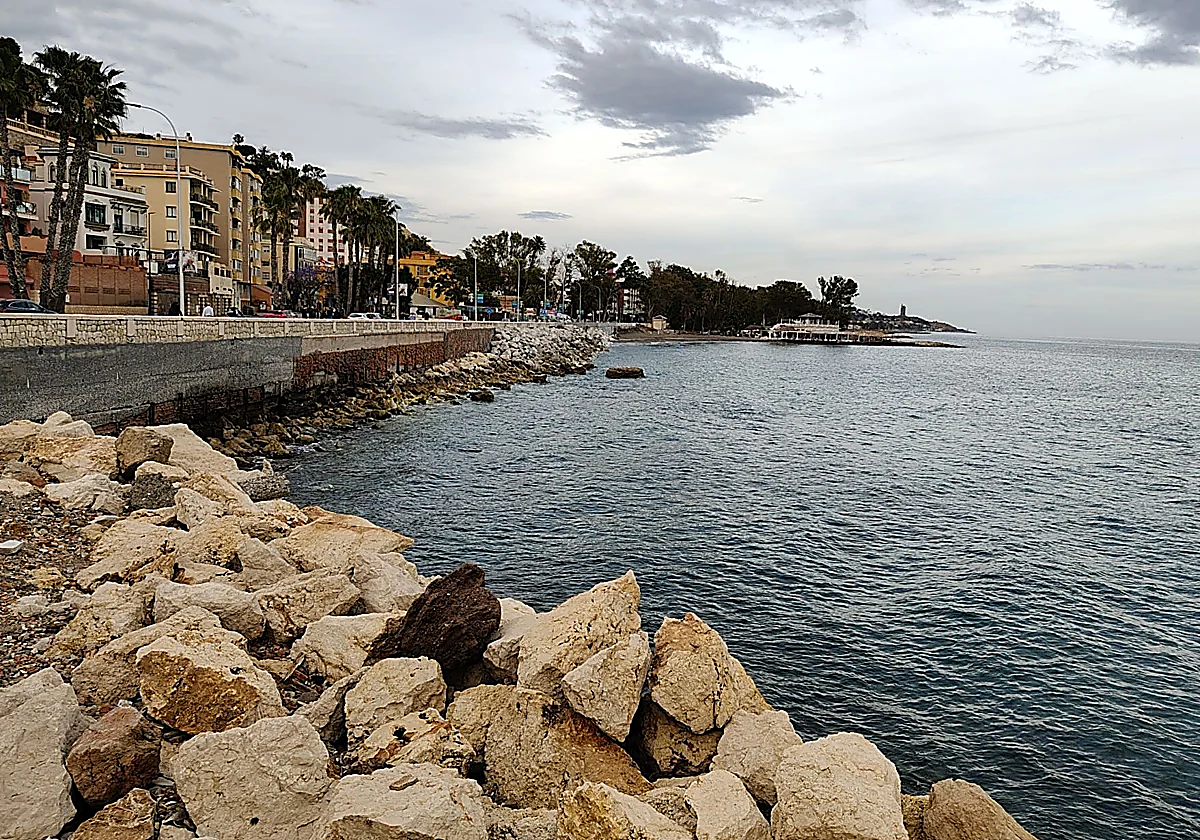
Almost two months have passed since the initial date (the days following Easter), but the usual signs announcing the project are nowhere to be seen around the Morlaco breakwater.
The answer lies at the bottom of the sea, with a small animal under the same environmental protection as an Iberian lynx. Spain's coastal authority has to first relocate numerous specimens of the critically endangered limpet species (Patella ferruginea) before work can begin.
"In recent weeks, all the requirements of the environmental impact statement (EIS) for the Baños del Carmen project have been analysed from an environmental perspective," the government sub-delegation in Malaga said. "One of them is the protection of an endangered species: the Patella ferruginea."
Divers to the rescue
The coastal authority has deployed a team of divers to analyse the existing population of limpets. They have ultimately detected approximately 30 specimens in total.
"Following this, Costas commissioned a study from a company specialising in environmental issues to produce a report, which is now ready with solutions," sources stated.
Simultaneously, technical discussions have taken place with the Andalusian regional government's department of sustainability and environment.
Ultimately, the solution is to carry out a "translocation of the specimens", as they have done in other similar projects. In scientific terms, this refers to the "intentional relocation by humans of living organisms (animals or plants) from their original location to another". It is an active tool for ecological conservation and wildlife management in cases such as this.
Costas is now awaiting a decision from the regional government. Once it has authorisation, the divers will carry out the relocation.
"It's important to stress that the entire process is based on strict adherence to environmental regulations," the government spokesperson in Malaga stated.
Once the underwater relocation of the limpets is complete, construction can begin, likely this summer.
The ferruginous limpet, also called the rusty limpet, is a striking mollusc due to its large size and thick radial ribs. It lives exclusively in the western Mediterranean. It is one of the most emblematic and endangered species from a conservation standpoint.
Its known distribution is limited to the North African coast, from the Strait of Gibraltar (Ceuta) to Tunisia; some areas of southern Spain (the coasts of Cadiz, Malaga, Granada and Almeria); the island of Alborán; Corsica; northern Sardinia; and the Strait of Sicily.
In Spain, the total population is between 89,000 and 108,000, with the majority living in the Chafarinas Islands (over 45 per cent of the total); Ceuta (27-28 per cent); and Melilla (21 per cent). In contrast, only about 700 specimens remain in southern Spain (as in the case of Malaga) and another 350 on the island of Alborán.
Due to the impact of human activity, the species has been disappearing from large areas, especially from the northern Mediterranean basin. "The decline of the species continues alarmingly today and many specimens are on the verge of disappearing," the report states.
For this reason, limpets form part of various lists of threatened species. They also figure as "endangered" in the Spanish catalogue of threatened species. The law obligates the authorities of three regions (Andalucía, Ceuta and Melilla, in addition to the Chafarinas Islands) to "take actions for the conservation of the species".
![[]](http://static.vocstatic.com/voc26/latest/assets/images/favicon/surinenglish/apple-touch-icon-57x57.png)