
University of Malaga secures 3.2 million euros to upgrade Picasso supercomputer
The investment will expand the university's research capacity in artificial intelligence and high-performance computing as it prepares for the arrival of Europe's most powerful quantum computer
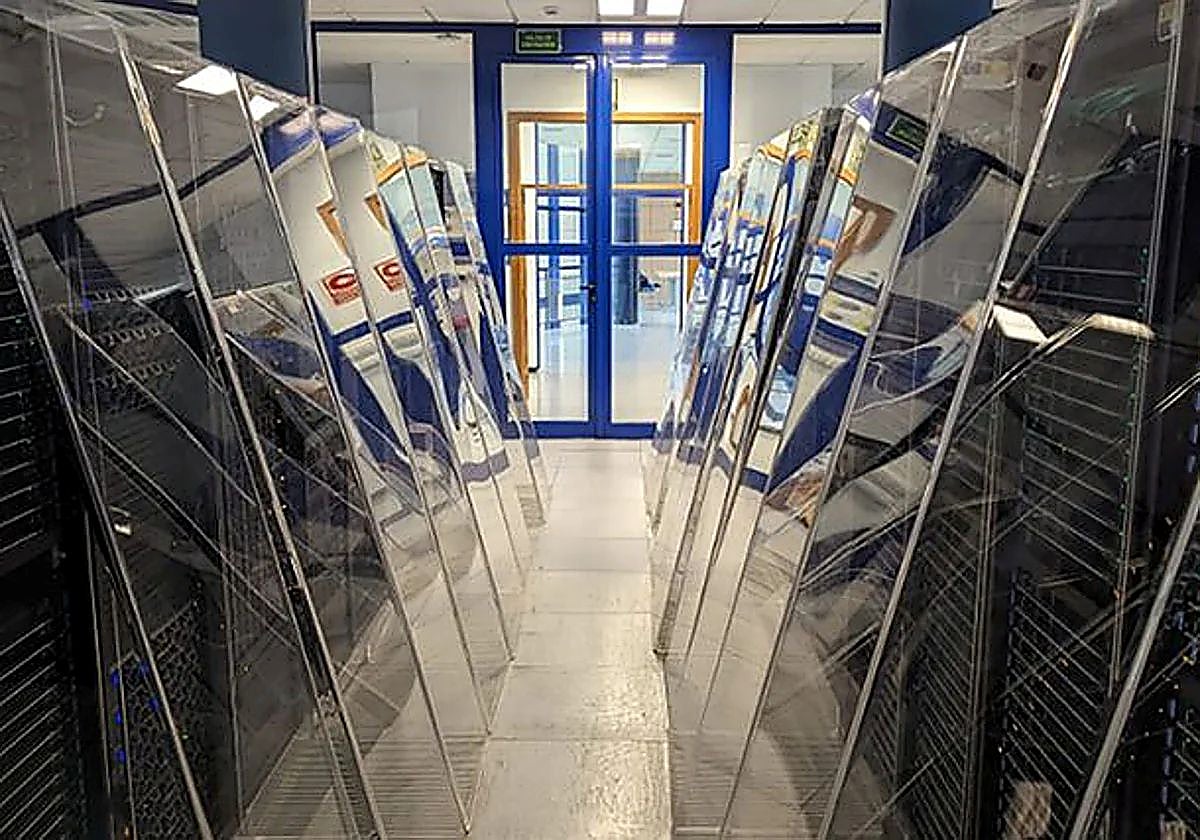

The University of Malaga's Supercomputing and Bioinformatics Centre (SCBI) has secured 3,210,702 euros in additional funding to expand Picasso, its high-performance ... supercomputer, strengthening the institution's position among Spain’s leading computing facilities.
The funding comes from three European Regional Development Fund (ERDF) projects approved under the 2024 call for proposals and responds to growing demand for accelerated computing systems, driven largely by the rise of scientific applications using artificial intelligence.
The investment has significantly increased the SCBI’s processing and storage capacity, with upgrades to both hardware and software infrastructure.
The centre has expanded its high-speed, low-latency data transfer system using flash technology and the NVMe protocol to reach one petabyte of capacity. It has also increased long-term storage based on conventional hard disk drives (HDDs) by up to five petabytes.
To strengthen its artificial intelligence capabilities, the SCBI has installed 16 latest-generation Nvidia B200 graphics cards across two powerful computing nodes, each equipped with 4 TB of RAM.
The upgrade has modernised the research environment and consolidated the SCBI’s position as the second most powerful node in the Spanish Supercomputing Network and the third-largest in terms of storage capacity nationwide.
The development in traditional computing comes just weeks after the University of Malaga announced plans to install Europe’s most powerful quantum computer at its facilities.
Looking to the future
The quantum computing project, developed through a strategic partnership with Quantum Labs, has exceeded initial expectations after it was confirmed the machine will feature 431 qubits, up from the 317 originally planned.
The increased capacity will allow researchers in Malaga to carry out highly complex operations, surpassing the performance of Europe’s current leading quantum system by almost 50 per cent.
The arrival of the technology will also lead to the recruitment of more than 100 engineers, who will work alongside university research groups specialising in areas including computer science, chemistry, medicine, finance, big data and microelectronics.
![[]](http://static.vocstatic.com/voc26/latest/assets/images/favicon/surinenglish/apple-touch-icon-57x57.png)