
Transport
Malaga-Fuengirola commuter line to get seven high-capacity trains
There are also plans to build a new maintenance workshop and to improve accessibility at El Pinillo, Los Álamos and La Colina stations

Málaga
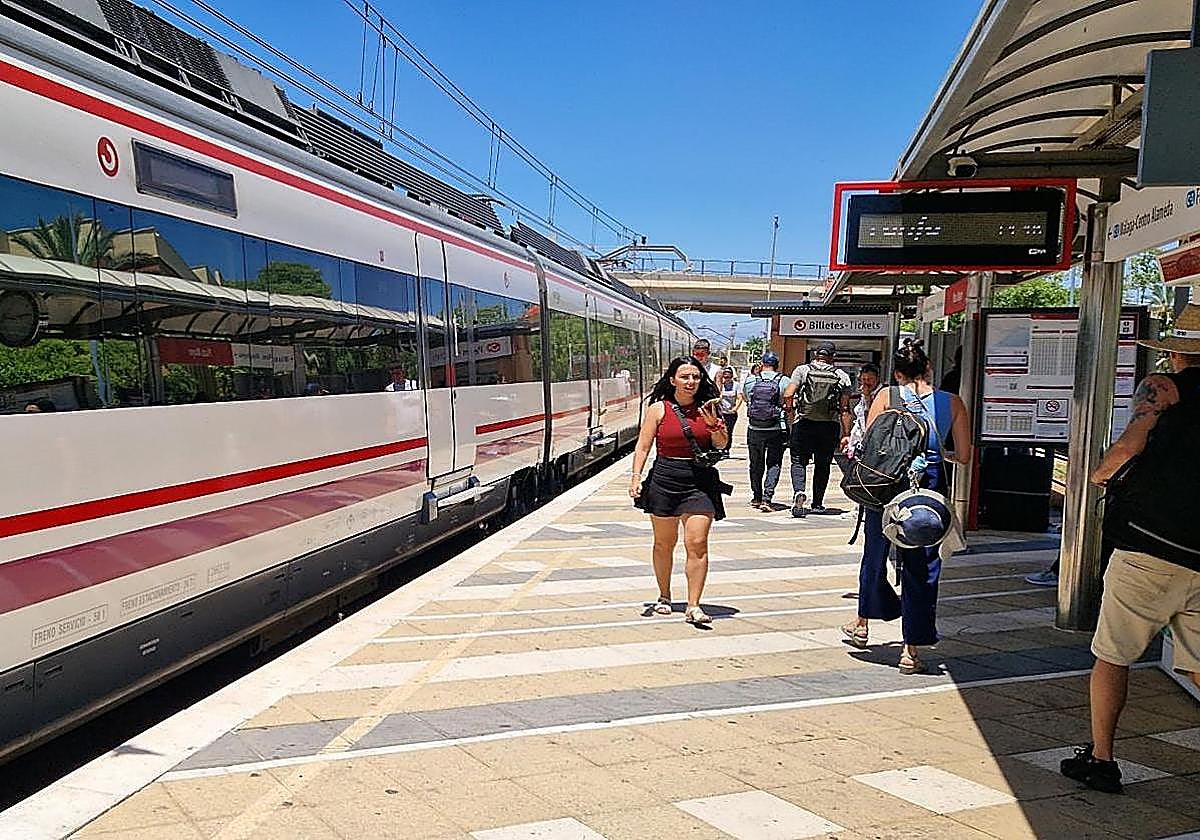
Spanish rail operator Renfe has confirmed that, from 2028, it will expand the fleet with a total of seven high-capacity Alstom-manufactured S452 units ... to serve the C1 Malaga-Fuengirola line.
This initiative has a budget of 66.7 million euros.
The news comes more than a year after Minister of Transport Óscar Puente announced that his department was working to strengthen this service, which had long since been stretched to breaking point. In fact, the local councils of Malaga, Torremolinos, Benalmádena and Fuengirola have been calling for improvements for years.
The investment in these new trains forms part of the fleet reorganisation plan, included in the major renewal of public service obligation, following more than 20 years without the acquisition of new rolling stock.
The initiative will enable available resources to adapt to actual transport needs and strengthen services facing the highest demand, such as the C1 line in Malaga, which currently operates with trains every 20 minutes and is already operating at maximum capacity from a railway operations perspective.
According to the government, the introduction of high-capacity rolling stock is "the best option" for strengthening and improving this section of the line, given that, as there is a single track on many sections, it is impossible to reduce service frequencies to less than 15 minutes.
In 2025, the Malaga commuter rail network carried 15,542,731 passengers, the vast majority of whom travelled on the C1 line between the city and Fuengirola. The line is just 32 kilometres long which, at times, reaches 150 per cent of its seating capacity.
When the new trains come into service, capacity will rise to 245 seats and up to 900 passengers, including those standing.
In addition to introducing new trains, Renfe plans to build a new maintenance depot for commuter trains in Malaga. Work is due to start next year.
"The new workshop also represents a significant step towards supporting the growth of the commuter rail service and ensuring that new trains are delivered with the technical resources required for their maintenance," Renfe said in a press release on Thursday.
More accessible stations
Renfe is also planning to improve accessibility at El Pinillo, Los Álamos and La Colina stations. The total cost of these projects amounts to 6.81 million euros.
These works involve a comprehensive improvement to accessibility and functionality, including entrances, platforms, paving, platform edges, ground levels, shelters, lifts, lighting, enclosures, facilities and underpasses. "The aim is to enhance passenger comfort, optimise passenger flows and ensure compliance with accessibility criteria," Renfe said.
Criticism from the opposition
Members of opposition party PP are calling on the government to provide a written response to a series of questions. According to the PP, these units form part of the contract Renfe awarded to Alstom in 2021 for the manufacture of 152 high-capacity trains, which was extended in 2022 to include a further 49 units.
"This is not, therefore, a new contract specifically for Malaga, but rather the allocation of seven trains included in a state order that has already been awarded and is currently under manufacture," they say in the letter.
Among the issues requiring clarification, PP asks: "On what grounds and based on what technical, geographical and demand-related criteria, has Renfe decided that the new high-capacity trains will arrive in Malaga in 2028, two years later than in the Madrid metropolitan area, when official data from the CNMC ranks Malaga as the area with the highest ratio of passengers to available seats in Spain, far ahead of the rest?"; "What is the planned timetable for the delivery and entry into service of each unit?"; and "Will all seven actually be in service before the end of 2028?"
![[]](http://static.vocstatic.com/voc26/latest/assets/images/favicon/surinenglish/apple-touch-icon-57x57.png)