
Benahavís
Ministry of justice reverses its decision and grants citizenship to Benahavís councillor: ‘Common sense has prevailed’
Scott Marshall, who was born and has lived all his life in the province, welcomes the court’s ruling "with relief" following a lengthy legal process

Benahavís
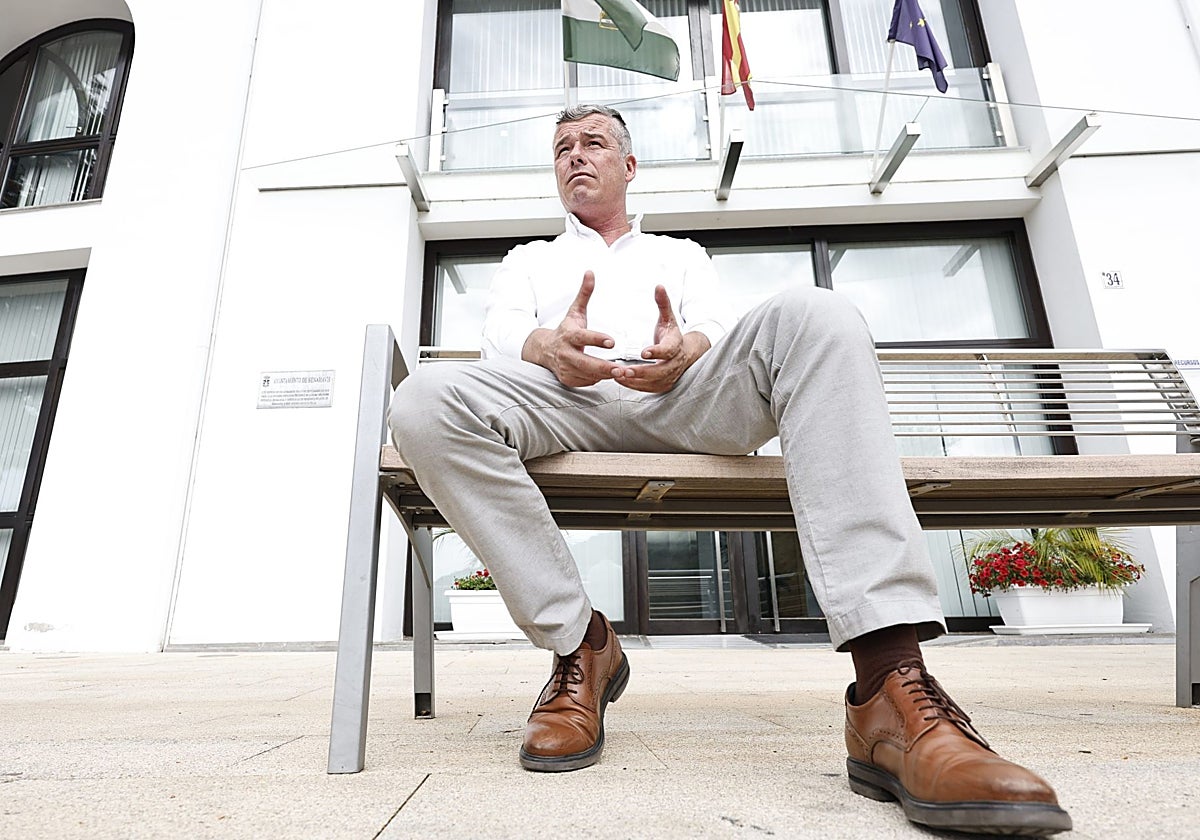
Scott Marshall is now Spanish. Or, to be more precise: he is on his way to becoming so. The ministry of justice has reversed its ... decision and granted Spanish nationality to the PP councillor for Benahavís, who holds a British passport. It had initially been refused, despite the fact that the councillor was born in Malaga and has lived in the province all his life. “Common sense has prevailed,” Marshall said in a statement to SUR.
The decision granting Spanish nationality is the response to the administrative appeal lodged by the councillor after his application was rejected on the grounds that he had “failed to demonstrate a basic knowledge of the Spanish language by providing the diploma of Spanish as a foreign language (…), as well as the examination certifying knowledge of Spain’s historical, constitutional and sociocultural values”.
The refusal thus referred to the two certificates of proficiency issued by the Instituto Cervantes for procedures to acquire nationality through residence, with the aim of demonstrating a sufficient degree of integration into Spanish society: the CCSE (constitutional and sociocultural knowledge of Spain) and the DELE (diploma in Spanish as a foreign language).
The Benahavís councillor, whose father is Scottish and mother American, was born 51 years ago in Malaga and his parents wanted their children to have British nationality.
But Marshall has spent his entire life in the province. He completed his secondary and vocational education in Spain; qualifications which, from the outset, he would have found difficult to obtain without a knowledge of Spanish.
He began paying social security contributions in 1999; he is a businessman; he has two children who are Spanish; and since 2019 he has been a councillor in Benahavís, which entails swearing or promising to "faithfully fulfil the duties" of the office "with loyalty to the King", as well as to " ensure the upholding of the Constitution as the fundamental law of the State".
Among his responsibilities, in addition to tourism, immigration, local development and new technologies, is communications and “the mayor would hardly give this responsibility to someone who doesn’t speak Spanish”, added Marshall, who speaks Spanish without the slightest trace of an accent.
Given this "proof of roots", it seems logical to assume that Marshall did not need to sit those Cervantes institute exams. “It was absurd to say that I wasn’t sufficiently integrated,” he explained. And this has been confirmed by the decision signed by the head of legal security and public trust, María Ester Pérez Jerez, acting as the competent authority by delegation from the minister of justice, Félix Bolaños.
"Having verified that the appellant held a Baccalaureate qualification prior to the date of the application, the integration of the person concerned into Spanish society is deemed to be sufficiently proven," states the decision, to which SUR has had access. This factor, having demonstrated “the period of legal, continuous residence immediately prior to the application” and the fact that “good civic conduct has been observed”, have been the key factors enabling Scott Marshall to become a Spanish citizen.
Since SUR reported on his case, he has faced "unpleasant" incidents on social media and had "a run-in" on television with Susana Díaz
The councillor said that, had he not received a positive response, he would have taken legal action to bring an administrative appeal and he wondered what would have happened if this had happened to an anonymous person.
His case, revealed by SUR, made national headlines and led to some "unpleasant" incidents on social media, as well as “a run in” with Susana Díaz, the former president of the Andalusian regional government. During a television programme in which she appeared, Díaz argued that the councillor had to obtain the Cervantes institute’s certificates of proficiency. That is why the councillor now says he has received the notification of the granting of Spanish nationality “with relief”, adding that the situation had made him “angry”.
Paradoxically, his father, who was born in Scotland and is the reason why he has, until now, held a NIE (foreigners’ identification number) and a British passport, has been a Spanish national for 25 years.
Almost three years of waiting
The ruling brings to an end a process that began "almost three years ago". His application was received by the ministry of justice on 11 January 2024, and it was necessary to apply for a criminal record certificate in the United Kingdom, despite the fact that he has never resided in the British Isles.
The catalyst for his decision was Brexit, the United Kingdom’s withdrawal from the European Union, which took effect on 1 February 2020. “I was in my first term of office at the time and I wanted to continue as a councillor, but I didn’t know whether I would be able to do so after Brexit,” he explained.
Marshall says he is “pleased” to have a national identity card and to be able to vote, and will visit a notary’s office to speed up the final step in the process
For the decision granting Spanish nationality to take effect, Marshall has 180 days to appear before the registrar of the civil registry to swear "allegiance to the King and obedience to the Constitution and the laws’, as stipulated in Article 23 of the civil code.
This is not dissimilar from the oath he has already had to take on two occasions to take up his post as a councillor. The councillor said he will speed up the process by visiting a notary "next week" to avoid the delay involved in booking an appointment at the civil registry.
Marshall said he is “pleased” to have a Spanish national identity card and passport, and “to be able to vote in regional and general elections, because until now I could only vote in local elections”.
![[]](http://static.vocstatic.com/voc26/latest/assets/images/favicon/surinenglish/apple-touch-icon-57x57.png)