
Legal
Fuengirola residents battle over 28 centimetres: owner loses part of parking space after communal car park repainting
A homeowner claimed that work to improve the block's communal car park shifted the dividing line between two adjoining spaces, reducing the size of hers
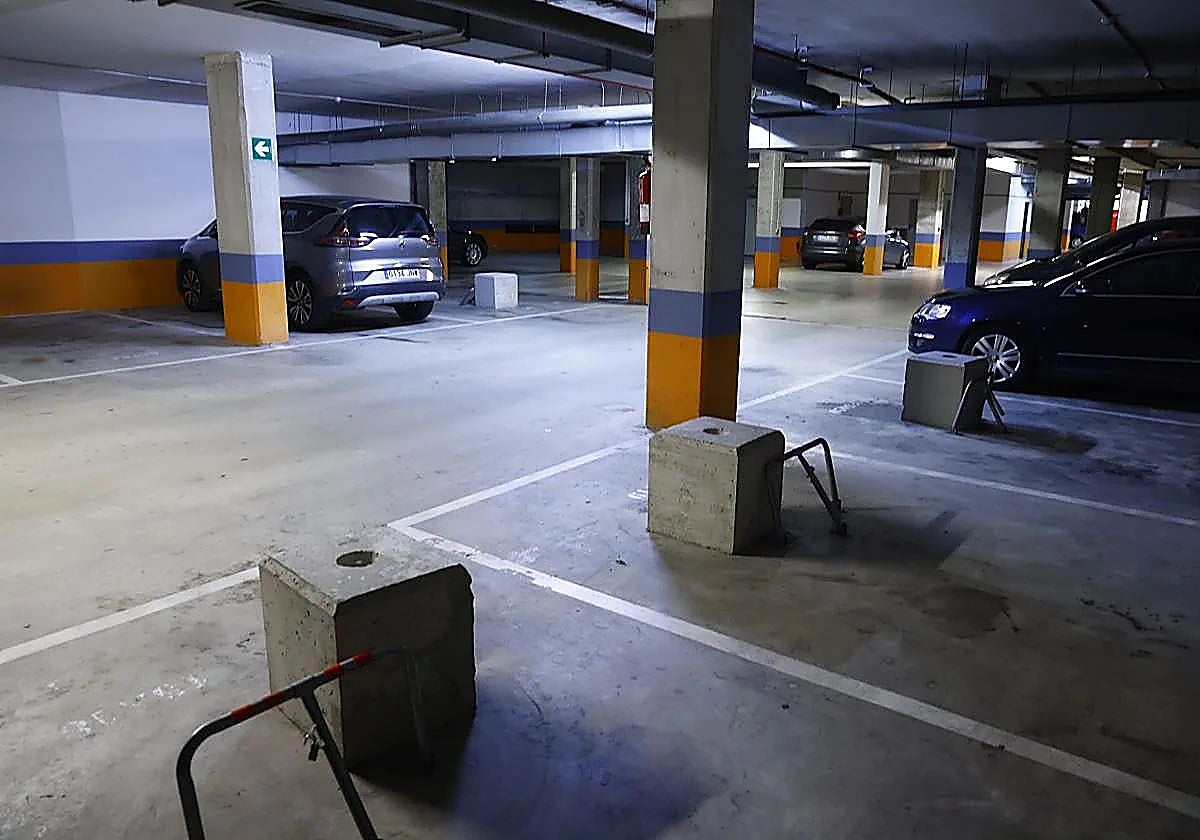

A woman in Fuengirola has lost a legal battle over 28 centimetres of her parking space after a court ruled there was no evidence that ... her neighbours had encroached on her property when the communal car park was repainted.
She claimed that resurfacing work in 2022 had shifted the dividing line between the two adjoining spaces, effectively giving part of her parking bay to her neighbours. But the Malaga provincial court upheld an earlier ruling rejecting her claim, finding that measurements taken before the work showed the boundaries had been preserved.
The owner seeking to recover the disputed strip relied on a survey carried out after the works. The owners of the adjoining parking space, however, produced measurements taken before the work began.
That earlier document proved crucial. The two spaces had been measured on 24 February 2022 so that they could be marked out again after the car park floor had been refurbished, using the measurements recorded before the work.
A court in Fuengirola initially rejected the claim. The owner appealed to the provincial court, which has now upheld the lower court's decision.
The magistrate judges concluded that it had not been proved that the neighbours had appropriated the 28-centimetre strip or that the claimant's parking space had previously been as large as she maintained.
Communal car park works
The disputed works were carried out in 2022. The residents' association undertook improvements to the parking area, including resurfacing the floor.
According to the claimant, when the lines marking out the spaces were repainted, the dividing line between the two spaces was moved by 28 centimetres. She argued that this had reduced the size of her space while increasing that of her neighbours.
A report commissioned by the owner found that the actual dimensions of the spaces did not correspond to the figures recorded by the Spanish land registry's cadastral records.
The records listed each parking space as having an area of 25 square metres, including its proportional share of the communal areas. In reality, one space measured 13.59 square metres and the other 13.44 square metres. That analysis, however, did not convince the provincial court.
The expert had not established how large the claimant's parking space had been before the works, nor had he determined "which part, strip or portion" of it had been lost. The assessment was based on a new division of the two spaces according to their ownership coefficients, but it did not provide a comparison between their dimensions before and after the work.
There was, however, an earlier measurement. An expert commissioned by the residents' association had measured the parking spaces on 24 February 2022, before the refurbishment began. The purpose was to have accurate reference measurements available when the spaces were marked out again after the work.
Once the works were completed, those measurements were used to repaint the boundaries of each parking space.
The claim also required the disputed area to be identified precisely. The ruling notes that a proprietary action allows an owner to recover property held by another person, but the claimant must prove ownership and clearly identify the property being claimed, including its "precise and exact" location, area and boundaries.
In this case, the claimant had not carried out any measurements before the works that could establish the actual extent of her parking space. It was therefore impossible to determine whether the space had originally been the size she subsequently claimed or how much of it, if any, had been lost.
By contrast, the defendants were able to produce the earlier measurements and demonstrate that those dimensions had been "maintained and respected" when the parking spaces were repainted.
The provincial court concluded that there had been no evidence of the "alleged alteration or unlawful occupation" by the defendants. Nor, it said, could the ownership coefficients resolve the dispute. The issue was not how much space should theoretically belong to each owner, but whether the dividing lines had actually been moved.
There was, the court said, no evidence that such a change had taken place. It also rejected the calculations produced by the claimant's expert. Ownership coefficients could not be established simply by looking at the area occupied by the two parking spaces. They had to take into account the whole building and the part of the property in which the spaces were located.
For that reason, the court described the expert's conclusions as inconclusive. The ruling stresses that there was no "clear and conclusive" evidence that the parking space had previously been the size claimed by its owner. Nor had she established ownership of the disputed strip or demonstrated that it had been "occupied or unlawfully taken" by her neighbours.
The ruling is not yet final and she can appeal the ruling to the Supreme Court.
![[]](http://static.vocstatic.com/voc26/latest/assets/images/favicon/surinenglish/apple-touch-icon-57x57.png)