
Health
Cases of Legionnaires’ disease in Mijas have spread to the fire service and a secondary school
Following the positive cases detected within the Local Police Headquarters, two further cases have come to light, all within the space of just three days

Mijas
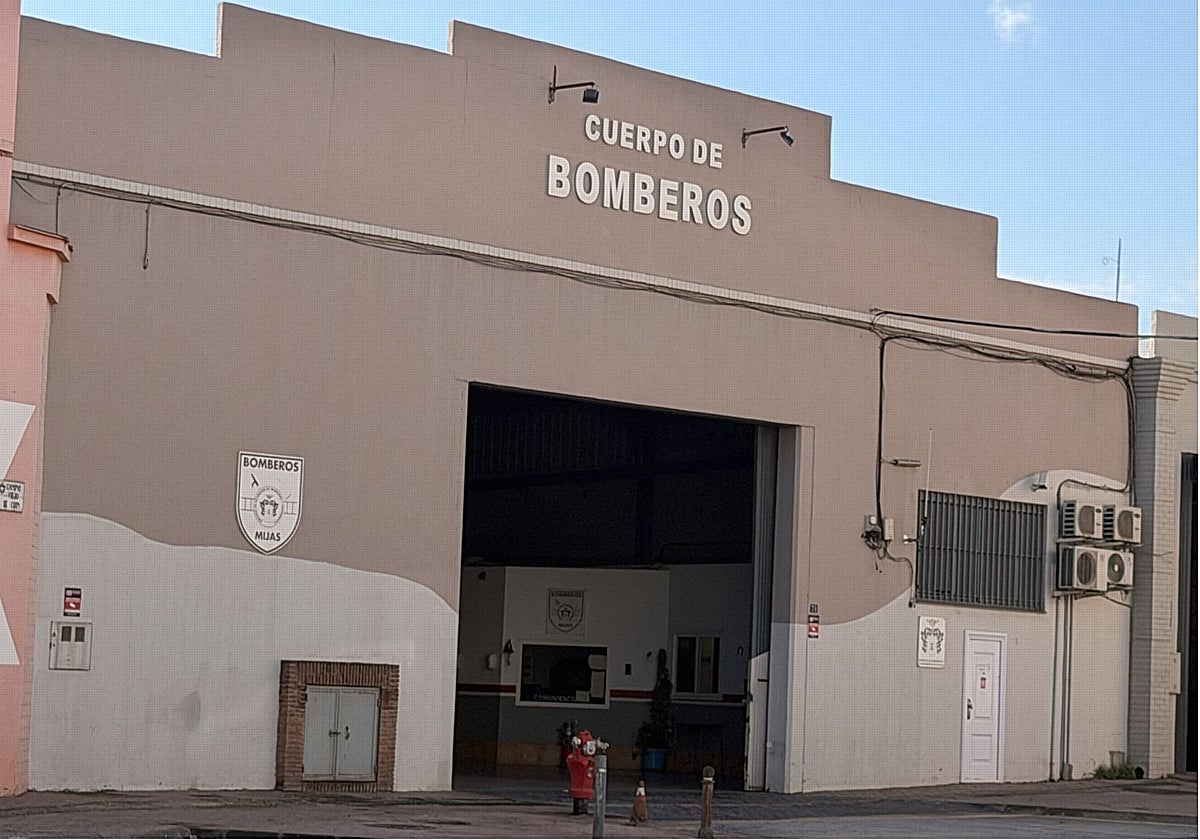
Three cases of Legionella in public facilities in Mijas in the space of just a few days. The Local Police headquarters, the Fire Station and ... the IES Villa de Mijas secondary school have all recorded positive test results for contamination by this bacterium, which occurs naturally in water and can cause a respiratory infection known as legionellosis. At the two municipal facilities, both situated on the same road, Camino Viejo de Coín, in Las Lagunas, tests were carried out on 19 October, but the results were not made public until this week, when the town council’s health department took the necessary measures to resolve the situation. Just two days later, on 21 October, a positive result was recorded at the secondary school, in the town centre.
At the local police headquarters, positive results were recorded at four locations: the water tank intended for human consumption, with a concentration of 200 Colony-Forming Units per litre of water (CFU/L); in two showers in the men’s changing room, with concentrations of 4,000 and 8,000 CFU/L; and in one shower in the women’s changing room, with a concentration of over 10,000 CFU/L, as set out in the notification issued by the municipal health department, to which SUR has had access, and in which the closure of the facilities was ordered.
Current health regulations (Royal Decree 487/2022) distinguish between different types of facilities and, for certain showers, establish a reference level (which does not require action to be taken) of 100 CFU/L; the levels detected therefore exceed that threshold by more than 100 times.
Furthermore, it was also found that the hot water temperature in the showers at the municipal officers’ premises was below 50 degrees Celsius, the minimum level set for hot water consumption points (DHW) to prevent the bacteria from multiplying. In the case of the fire station, the positive result was recorded in the men’s changing rooms, where the concentration was 6,000 CFU/L – 60 times the reference level.
The cases, which were detected during routine testing, led to the closure of the facilities and the implementation of corrective measures
On 21 October, the case came to light at IES Villa de Mijas, as sources from the Regional Education Office have confirmed to SUR. It was during a routine inspection carried out by the cleaning contractor that a positive result was found on one of the taps in one of the school’s toilets. The following day, the toilets were closed off; portable toilets were installed to address the shortfall, and the school stocked up on bottled mineral water to meet the pupils’ needs.
Maintenance and analysis
The PSOE in Mijas, which has brought these cases to light at the town hall, has attributed the positive cases to an “alarming lack of maintenance” in municipally-owned buildings and has criticised the governing team for “systematically covering them up”. “Our firefighters and police officers do not deserve to work in these conditions, which put their health at serious risk,” said the leader of the Mijas Socialists, Josele González, who directly singled out the Vox councillors responsible for the Local Police (Juan Carlos Cuevas) and the Fire Service (Francisco Jerez), as well as the People’s Party councillor, Ana Mata. He announced that he would request the test records for the past year to check whether there had been previous cases of Legionella.
For his part, the Councillor for Health, Marco Cortés, has criticised the Socialists and played down these cases: “The PSOE is alarming police officers, firefighters and their families over something that Public Health describes as a common finding that is resolved by following standard procedure.” “Legionella has been detected precisely because checks are carried out. Poor management would be not to carry out sampling and only find out about it through a case in a hospital. Here, the opposite has happened,” added the councillor.
The town council emphasises that these positive results were detected as part of the monthly tests carried out at the facilities, that the relevant corrective measures were taken (including the closure of the showers and subsequent cleaning) and that all facilities are now back in operation.
