
Rail travel
Costa del Sol commuter rail service's six-month closure in 2027: local mayors protest
The mayors of Malaga city and the towns of Torremolinos, Benalmádena and Fuengirola are demanding "urgent" information from the Spanish government after learning of the proposed line closure between Malaga and Torremolinos for almost six months into 2028


Spain's rail network infrastructure company (Adif) is considering a complete closure of the C1 commuter line (Cercanías) between Malaga and Torremolinos for approximately 5.5 months, between the last quarter of 2027 and the second quarter of 2028.
The stoppage is part of a package of measures aimed at increasing line capacity between Malaga and Fuengirola, one of the most heavily used lines in Spain's commuter rail network.
The proposed closure appears in the 2027 list of temporary line capacity restrictions, a technical document published by Adif on 31 March detailing the limitations planned for the rail network due to required improvements.
According to this document, the section between Malaga city and Torremolinos must be closed for about five months to carry out work on the tunnel located between the airport and the Guadalhorce river, along the C1 Malaga-Fuengirola line.
The affected municipalities are demanding to be informed of the detailed work schedule, the stations affected and what alternative option(s) exist.
This particular project is part of a series of improvement work aimed at increasing the capacity of the line, which currently operates on a single-track basis in several sections, limiting train frequency. The planned work includes doubling the track between the airport and Campamento Benítez, located between the stops at Plaza Mayor and Los Álamos, as well as improvements to stations and other work in tunnels along the track.
The news has come as a complete shock to the town halls of the affected municipalities. The mayors of Malaga city and the towns of Torremolinos, Benalmádena and Fuengirola have requested "urgent" information on work plans from the Ministry of Transport, headed by Óscar Puente.
In a formal letter addressed to the Ministry's central office, the mayors express their "surprise and concern" at not having received information about this project ahead of the public announcement. They described this project as having "a significant impact" on people's mobility along the Costa del Sol, despite institutional contacts having been in place since the summer of 2024 to discuss improvements to the railway infrastructure.
Adif will have to provide an alternative transport plan as it is under a 'public service obligation' to do so.
The signatories of the letter are the mayors of Malaga city (Francisco de la Torre), Torremolinos (Margarita del Cid), Benalmádena (Juan Antonio Lara) and Fuengirola (Ana Mula).
All four agree on the need to improve the line between Malaga and Fuengirola, but consider it essential to know in advance the scope of the work, its specific timeline and the stages in which service interruptions will occur. They also warned that a prolonged interruption could directly affect thousands of workers, students and visitors who use the Cercanías commuter rail service as their primary means of transport on a daily basis.
Related story
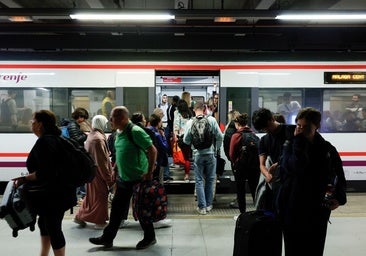
Since this service has been declared a 'public service obligation' (PSO) service, the rail operator will have to provide an alternative transport plan during the closure period, presumably using rail-replacement buses, as is customary in this type of high-impact project.
The dates included in the list of scheduled work are indicative for now and are usually modified according to how construction pans out and any hold-ups in the tendering process, although this document constitutes the planning reference used by the governing bodies and rail operators for such projects.
The mayors are insisting on the importance of coordinating efforts to avoid a succession of constructions projects on different sections that would prolong the inconvenience caused "for years".
They point out that the goal should be to concentrate the work into the shortest possible timeframe to minimise disruption to users and prevent repeated service interruptions. For this reason, they propose the creation of a monitoring committee with the participation of the affected municipalities to ensure fluid communication with central government and continuous monitoring of ongoing work.
![[]](http://static.vocstatic.com/voc26/latest/assets/images/favicon/surinenglish/apple-touch-icon-57x57.png)