
Planning
This is how the new and old town planning schemes will coexist in Marbella
The 1986 general urban development plan will continue to apply on a transitional basis in certain areas until the new detailed development plan is approved
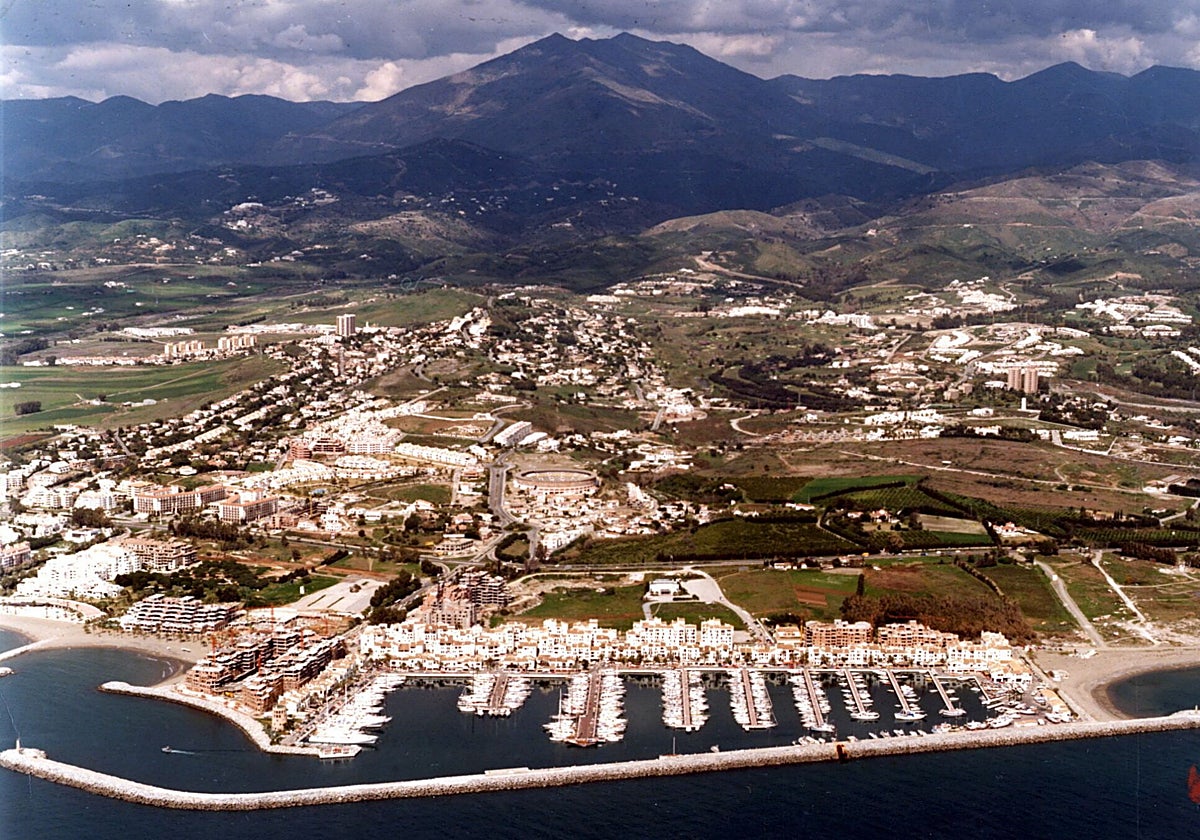

Marbella
Marbella has a new urban development plan, but the approval of the general municipal development plan (PGOM) does not yet signify a complete change of ... landscape. The 1986 general urban development plan (PGOU) will continue to play a role during the transition to the new urban planning model, particularly with regard to detailed land-use planning.
However, this does not mean that the old plan takes precedence. To begin with, although the new PGOM has now been definitively approved by the full council, the document is not yet in force. This will not happen until the day after its publication in the official gazette of the province of Malaga (BOPMA), and this procedure has not yet been completed.
The period during which both instruments coexist is dictated by their very nature. The PGOM stems from the new Andalusian legislation (the law on promoting the sustainability of the territory of Andalucía, LISTA, of December 2021), which divides the functions traditionally concentrated within the general plan.
The PGOM sets out the general planning framework for the municipality, while the future urban development plan (POU), on which the council has been working for some time, is responsible for specifying the detailed planning arrangements.
The new plan sets out transitional arrangements until the local council has the POU in place. However, whilst the PGOM does not entirely replace the PGOU, it does take precedence, meaning that any provisions of the 1986 PGOU that are incompatible with the new planning framework will cease to apply.
Nor does the new PGOM make a clean sweep of urban development projects that have already completed their planning process. Development planning instruments under the PGOU that have received final approval prior to the PGOM coming into force may remain in force and enforceable until their full implementation, in accordance with the conditions set out in the transitional provisions.
Under the PGOM, not all land is subject to the same rules, and the regulations distinguish between different cases depending on the procedure followed
The situation is different for applications currently being processed. The PGOM sets out a series of transitional provisions to determine what happens to applications already in progress when it comes into force. In certain cases, they may continue under the previous planning framework, but must comply with specific time limits.
Once the plan has reached certain administrative milestones, the regulations set a three-year deadline for obtaining final approval. If the environmental procedure has already been initiated under the conditions set out in the PGOM, this deadline may be extended to five years.
Nine transitional provisions
The PGOM sets out nine transitional provisions to address the various situations that may arise during the planning review process. These include provisions relating to existing buildings, industrial premises, private facilities on rural land and existing campsites.
It also includes planning instruments currently under consideration, development plans that have been definitively approved, urban regeneration projects on urban land, development projects on rural land, and the regulations that will apply on a transitional basis to certain planning instruments. Not all land will therefore be subject to the same rules.
The regulations also distinguish between land that already has an approved plan, land for which a plan is currently being processed, and land that was simply designated as developable in the PGOU but had not progressed administratively.
Furthermore, the PGOM provides for mechanisms to carry out certain urban regeneration projects and establish their detailed planning before the POU is in place. This is provided they are always in accordance with the conditions set out in the new planning framework and town planning legislation, thereby allowing certain areas to move forward during this transitional period.
![[]](http://static.vocstatic.com/voc26/latest/assets/images/favicon/surinenglish/apple-touch-icon-57x57.png)