
Senda Litoral
Marbella to build the first section of the coastal path in the east of the municipality
The project is the first step towards a link with Mijas and will bring about the regeneration of the La Adelfa dune and a more "natural" beach

Marbella
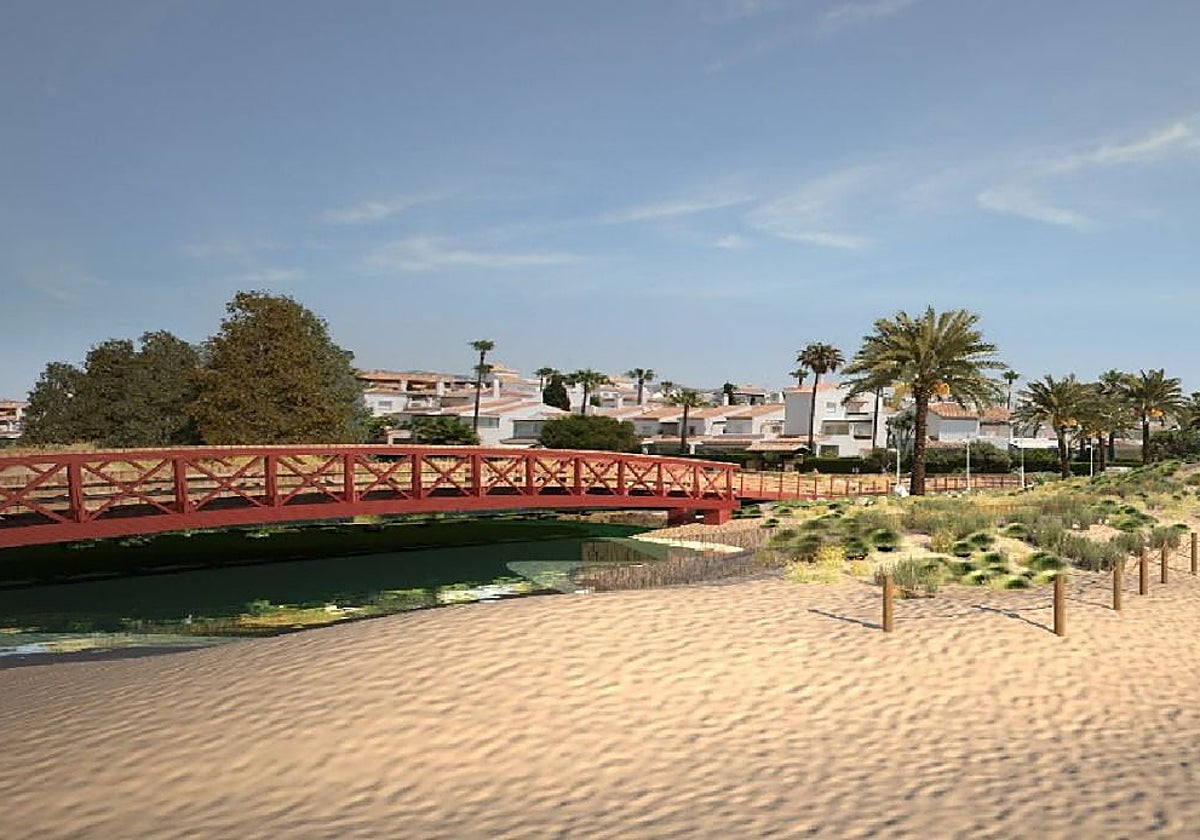
Marbella is to build the first section of the Senda Litoral coastal path in the eastern part of the municipality. Located in the Los Monteros ... area, it will feature a bridge and will improve the surrounding environment, including one of the areas that forms part of the Dunas de Marbella ecological reserve. The project has a cost of just over one million euros and the works are expected to take four months.
Forming part of Marbella’s tourism plan, Plan Turístico de Grandes Ciudades de Andalucía de la Ciudad de Marbell, the project has already been put out to tender.
To date, “most of the seafront promenades and footpaths in Marbella run between the town centre and the western part of the municipality”, meaning that “there are virtually no accessible sections of promenade between the town centre and the eastern part of the municipality”. To “address this shortcoming”, the council has proposed the planned development of a coastal path in the eastern area, which will, “gradually”, link up with the sections of coastal path currently under construction in Mijas.
The new section of the path will start at the car park on Calle Realejo, in the La Morera residential estate, heading eastwards, and will end at the western roundabout of the Bahía de Marbella residential area. The route will be 260 metres long and will include a bridge to cross the Realejo stream. The path will feature a wooden walkway with a width of three metres, a multi-toilet block, street furniture (such as benches and litter bins), lighting "designed to meet energy efficiency criteria and minimise pollution", along with signage and information panels.
The section will be 260 metres long, will include a bridge over the Realejo stream and will improve access to the beach
In addition, the project will involve planting and the environmental enhancement of the surrounding areas; the refurbishment and improvement of access routes to the beach, including access paths to the sandy area for maintenance and security staff; and the installation of a drinking water pipeline along the entire length of the promenade to meet future needs on the beach (such as showers or drinking fountains).
The dune and the beach
The project will involve the restoration of the dune system. The site in question is La Adelfa, one of the nine areas included in the Marbella dunes ecological reserve. The project addresses the damage suffered by this dune, particularly during the summer, due to the "massive influx" of people. Recognising that "the restoration of dune systems that have been altered begins with the elimination of the causes that led to their alteration", the focus is on "reducing visitor numbers". To this end, and in order to demarcate the areas open to the public, the plan involves adapting access points, building walkways and separating these areas with fencing, as well as installing information signs.
The project not only aims to protect the area, but also to restore the topography and replant it with native vegetation. The aim of this revegetation is simply to "restore to the system the vegetation cover that has disappeared and which is causing its destabilisation". For this reason, and "to prevent the restored dunes from eroding before the vegetation becomes established and can perform its stabilising function", revegetation will be carried out by planting dune species. And "once the dune ridge has stabilised", it will be secured by planting so-called "structural" dune species, that is, those which, in their natural state, play a role in the formation and maintenance of the dunes.
The project will also involve restoring the "natural character of the beach", which will be achieved by removing invasive plant species and using non-sandy granular material as fill. Before this can take place, it will be necessary to demolish paths, structures and masonry works that encroach upon the public maritime-terrestrial domain.
![[]](http://static.vocstatic.com/voc26/latest/assets/images/favicon/surinenglish/apple-touch-icon-57x57.png)