
Agriculture
Malaga's countryside responds to increasingly demanding avocado market
The ambitious union Avocoop has Mercadona as a key client that sets high standards through customer approval
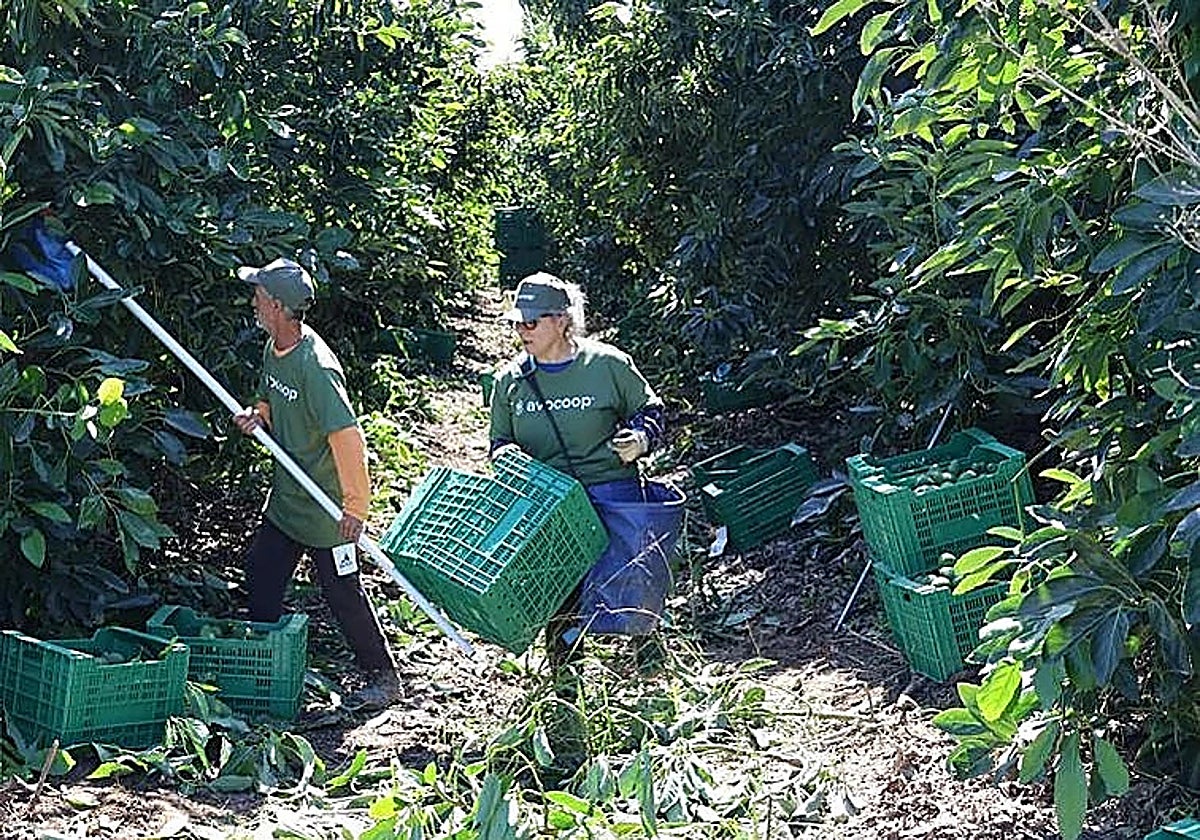
Javier Almellones
The avocado boom in the province of Malaga isn't just measured in cultivated land. It's also measured in how the fruit is produced, selected and reaches the consumer.
On farms like those in Casares, between the Costa del Sol and the Serranía de Ronda mountains, this journey is meticulously managed under a model that prioritises more than just volume. Consistent quality, careful planning and a direct relationship with the market allow for fine-tuning every stage of the process.
Behind this model is Avocoop, born from the union of three companies with track records in production, distribution and international expansion. Avocoop's main client in the domestic market is Mercadona.
Related story
-
Summer escapade
Javier Almellones
"We understood how complementary our strengths were and, above all, that we shared a common vision of where the avocado industry is headed," CEO Kiko Claros says.
The three companies that joined forces to create Avocoop are: Eurofresh, based in Malaga, with extensive experience in avocado production and marketing; Vicente Giner, from Valencia, a leader in the European citrus sector; and the Latin American group APS, with a strong production base in several countries. These three pillars allow the company to operate on a global scale.
For Avocoop, controlling the entire chain, from cultivation to marketing and operating in both hemispheres to guarantee year-round supply is key.
The starting point remains the same: the field. "You can plant avocados in many places, but if you want quality and yield, you have to be very selective about the location," Claros says.
At the Casares estate, beside the Guadiaro river, very close to the border with the province of Cadiz, the conditions are ideal. The balanced climate, with mild winters that allow the crops to rest, optimal springs for flowering and summers that favour fruit development, is complemented by nutrient-rich fertile soils and a high-quality water supply from the Sierra de Grazalema mountains.
From there, technical expertise and precision at every stage come into play. "It's crucial to maintain control from there all the way to the final product that arrives at the shop," Commercial Director Chencho Río says.
This comprehensive control, which also extends to production in countries like Peru, Chile and Colombia, is one of the project's main differentiating factors.
The key lies in fine-tuning the timing and thoroughly understanding the fruit's behaviour. From dry matter levels to the exact moment of harvest, every decision impacts the final result.
"You have to be extremely precise about when you harvest and very efficient throughout the process to ensure the product reaches consumers as fresh as possible," Río says.
In Mercadona's case, that window is reduced to a minimum: just a matter of days between picking and consumption.
There's another factor that explains this success: the direct relationship with Mercadona and, by extension, with the end customer. Listening to that demand has become a tool for constant improvement. "Those who decide whether our results are good are the end customers. They are our yardstick," Río says.
This flow of information with Mercadona allows Avocoop to adjust the product to the market's actual expectations and move towards a model where all links in the chain grow in a coordinated way.
This dynamic also provides stability and facilitates long-term planning. "It has given us security and has pushed us to continue investing and become an increasingly solid project," Río states.
Mercadona's high standard, far from being a hindrance, becomes a stimulus. "A very demanding client makes you improve. The force you to constantly strive for excellence," he says.
Beyond the product, the model also focuses on the people. The commitment to local labour and improving working conditions in the fields is part of a broader vision for the sector. "If you don't invest in the team, the project won't succeed," Kiko Claros says.
The CEO also warns of the risk of losing competitiveness if agricultural work isn't valued and respected.
In a rapidly expanding agricultural sector, where demand continues to grow and competition intensifies, the difference lies not just in producing more, but in producing better. In connecting each phase of the process with what happens at the end of the chain: the moment when the consumer decides.
Explore the main Andalucía regional news section
![[]](http://static.vocstatic.com/voc26/latest/assets/images/favicon/surinenglish/apple-touch-icon-57x57.png)