
Business
Malaga showcases its business strength
San Telmo and Diario Sur presented the 15th 'Who's Who in Malaga' directory

Málaga
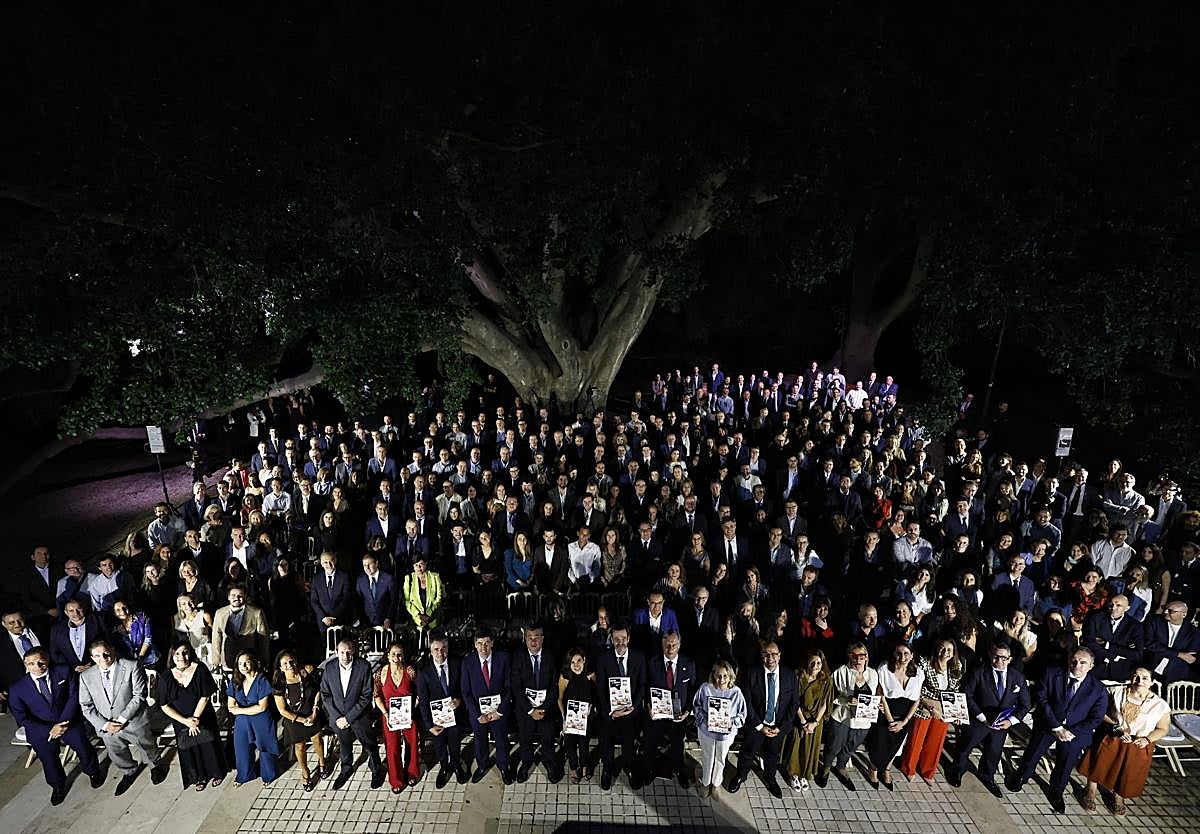
Malaga province's business community gathered on Thursday for the launch of 'Quién es quién en Málaga 2026' ('Who's Who in Malaga 2026'): a ... directory compiled by the San Telmo business school and Diario Sur that marks its 15th year. More than 500 guests attended the launch gala at the business school.
This has become a key date in the city's business calendar. The event also recognised the work of the Malaga chamber of commerce, which received an award for business excellence. As in previous years, the programme included a keynote lecture, delivered by professor José Manuel Cansino.
The event opened with a welcome address from Juan Pérez Gálvez, director of the San Telmo business school. He said the directory had exceeded expectations year after year, both in the number of companies listed and the range of sectors covered. This year features 19 sectors and 1,406 companies.
Pérez Gálvez also welcomed the growing number of self-employed professionals and medium-sized businesses featured in the guide. However, he questioned whether Malaga had the foundations to create companies that could become global leaders. San Telmo had launched a dedicated programme on corporate governance to help address that challenge, he explained.
"Malaga is enjoying a particularly good period, although we still have a long way to go compared with other regions," he said. He also urged small and medium-sized enterprises to embrace new technologies to keep growing. "We cannot afford to miss the technology train. It could be a great opportunity to lower barriers to entry and reach places that once seemed completely out of reach."
Diario Sur director Javier Recio then took to the stage. He said the newspaper would continue to follow the work of local companies closely because they were "the tireless engine driving the province".
The directory now features more than 1,400 companies, but Recio believes it has considerable room to grow, given that Malaga has more than 60,000 businesses. "This is Malaga's major business event," he said.
Navigating a turbulent business environment
As part of the annual launch, professor José Manuel Cansino delivered a keynote lecture examining the risks and uncertainties facing Malaga's business community. "Always be wary of anyone who claims to predict the economic future with certainty," he began.
With that warning in mind, Cansino mapped out the geopolitical tensions and other threats affecting businesses across the province, from conflicts in the Middle East to disruption in the Strait of Hormuz and the more recent invasion of Ceuta. "Today, a company may neither export to Iran nor buy goods from Venezuela, yet still feel the impact through fuel costs, maritime insurance premiums or changes to its logistics chain," he said.
The economist assessed the state of the global economy and explained how developments in different markets could affect businesses. He highlighted factors including consumers' purchasing power, the disruption caused by injectable weight-loss drugs, opportunities in the defence sector, workplace absenteeism and human capital.
He began by focusing on the housing crisis, the erosion of household purchasing power and the wage gap, all of which affect economies such as Malaga's. Although employment continues growing and services and technology businesses remain strong, cumulative inflation has forced consumers to rethink even their most basic spending habits. The cost of a typical shopping basket has risen by 41 per cent since 2019.
Cansino also highlighted the growing impact of weight-loss drugs such as Ozempic and Wegovy. By reducing appetite, these medicines are changing the food industry and hospitality sector, potentially lowering overall consumption.
"We are facing a very interesting situation: medicines that suppress appetite, consumers keeping a closer eye on their spending, and a poultry industry capable of producing large quantities of protein in less time," he said.
"The injections, which are certainly not cheap, and super-chickens help us understand the times we live in, when consumers are trying to rein in both their appetite and their spending," he added.
Cansino also examined structural weaknesses that, in his view, undermine competitiveness and productivity. He singled out high levels of workplace absenteeism and a deteriorating education system, made worse by inadequate university funding and a lack of incentives for teachers.
On energy matters, he has advocated pursuing the goal of maximising direct self-consumption, adopting a pragmatic approach focused on industrial self-consumption and the modernisation of electricity grids, whilst steering clear of dogmatism and idealisation. He called for greater recognition of people who do their jobs well.
"Show the people of Malaga that hard work and talent have a human face, and give them the recognition they deserve. This costs very little in budgetary terms, but the social return on that investment could be substantial," he said.
On energy, Cansino advocated a pragmatic approach focused on maximising direct self-consumption, particularly in industry, and modernising electricity networks. He urged businesses to avoid dogmatism and idealised solutions. Despite his sober assessment, the professor ended on an optimistic note, arguing that every risk also presents an opportunity.
"Business owners cannot control the Strait of Hormuz or tariff policies, but they can control how much energy they use per unit produced and how they diversify their debt," he said. His message was clear: "We must accept that uncertainty is no longer an anomaly. Businesses can prepare, diversify, invest wisely, train their teams and turn information into decisions."
Recognition for the chamber of commerce
After the lecture, Sur journalist Nuria Triguero, who hosted the event, announced the award recognising the Malaga chamber of commerce for its contribution to business development, particularly among small and medium-sized enterprises and self-employed professionals.
The chamber's president, José Carlos Escribano, accepted the award. He stressed that businesses depend on their teams and endure over time thanks to the people they train and develop, both personally and professionally. "This recognition goes to the fantastic team we have at the chamber of commerce," he said.
Escribano added that the award held particular significance because the chamber is celebrating 140 years of history and "a lasting commitment to Malaga's development".
He also stressed the importance of the new directory, saying that understanding who makes up the province’s business community, where companies operate and what they do has become increasingly important given Malaga's enormous growth potential.
Rocío Blanco, the Andalusian regional government's minister for employment and business, delivered the closing address. She began by describing Malaga as "an entrepreneurial and innovative province", with significant added value stemming from innovation, cooperation between businesses and institutional commitment.
Blanco said Malaga was growing rapidly and now accounted for 35 per cent of all companies in Andalucía. Above all, she praised the drive of local entrepreneurs and the business ecosystem taking shape to build the Andalucía brand. "You proudly champion a land that continually pushes us to become better," she said.
Readers can obtain 'Who's Who in Malaga 2026' with the Sunday, 11 October, edition of Sur. CaixaBank and Malaga city council sponsor the directory, with support from Avanza, Bidafarma, Cervezas Victoria, HM Hospitales, HLA Hospital Universitario El Ángel, KPC, Málaga CF, Turismo Costa del Sol and Volvo Vypsa.
![[]](http://static.vocstatic.com/voc26/latest/assets/images/favicon/surinenglish/apple-touch-icon-57x57.png)