
Crime
Malaga police officer accidentally crosses paths with fugitive teen hitman while on holiday in Belgium
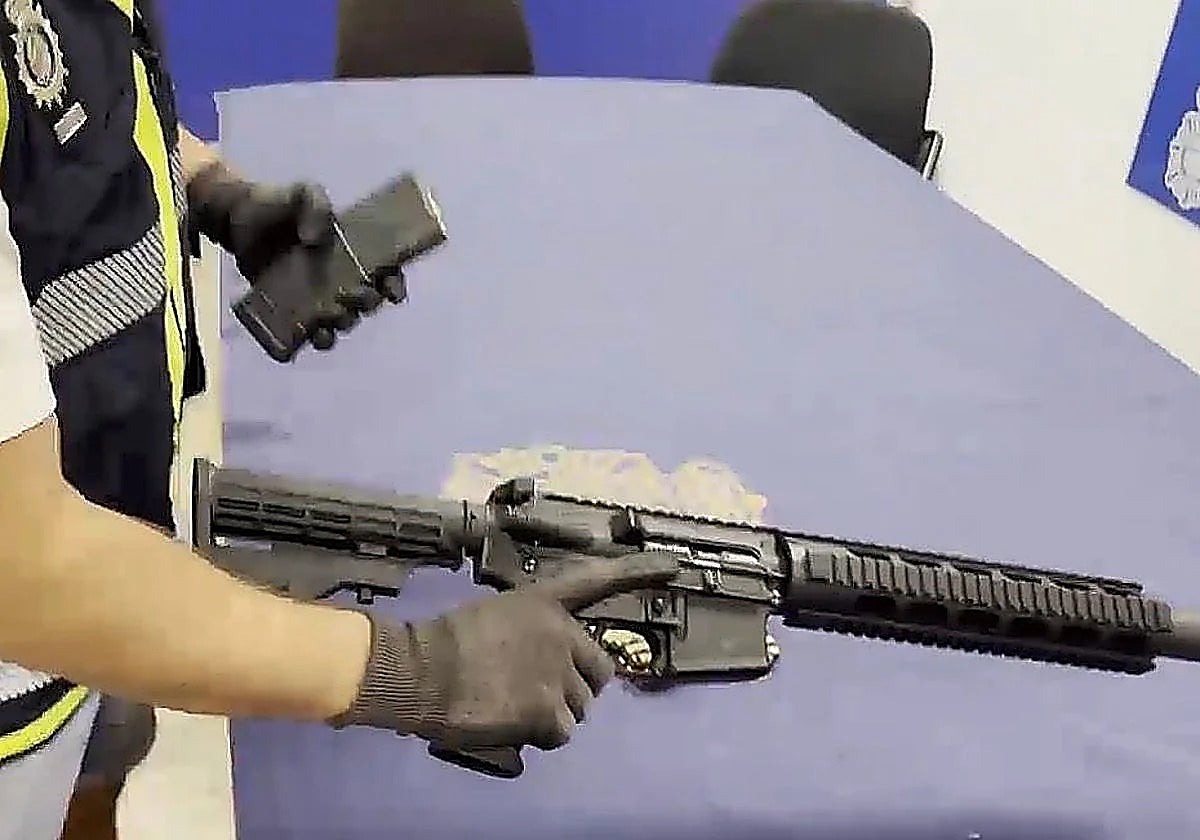
The 17-year-old suspect is accused of murdering a young man with a military-grade weapon in Fuengirola
Juan Cano
A Malaga police officer on holiday in Belgium has helped lead investigators to a teenager suspected of a contract killing after recognising him by chance on a street in Ghent months after the police in Spain had arrested him in connection with another murder in Fuengirola.
The extraordinary encounter took place in July, when the officer was returning to his hotel after dinner and stopped to take photos of some historic buildings in the city centre. As he turned around, he saw a group of teenagers approaching from about ten metres away. One of the faces immediately looked familiar.
"Is that him?" he thought as he stared at the teenager. It was S., a 17-year-old who the police in Malaga province had arrested months earlier over the shooting of a young man with an assault rifle in a street behind a cannabis club in Fuengirola.
Investigators from the Udyco-Costa del Sol organised crime unit believe S. and his alleged accomplices mistakenly targeted the victim. The case bears similarities to the Barcenillas killing, which investigators also believe involved a mistaken identity.
The Fuengirola investigation eventually led police to conclude that S. and his accomplices had gone after the wrong person. The scene had also been disturbed after the shooting: a thief found the victim's body and stole his belongings.
Spanish authorities arrested S. in Belgium over the Fuengirola killing, brought him back to Spain and placed him in a secure youth detention centre.
Under Spain's juvenile justice law, authorities could hold him for a maximum of eight months. Once that period expired, with the judicial investigation still unfinished, they had no choice but to release him. The authorities warned him to remain in Spain and report to the public prosecutor whenever officials summoned him. He did not do so.
The court's decision followed the limits set by the law, but it frustrated investigators who had spent months solving an exceptionally difficult case. Their investigation had identified the alleged perpetrators of a contract killing that investigators say they had arranged abroad before carrying it out on the Costa del Sol.
S. subsequently disappeared from Spain, leaving investigators concerned that the case could go unpunished.
Months later, on a dark street in central Ghent, a Malaga investigator on holiday with his family suddenly found himself face to face with S., who was walking along with friends.
The officer could not arrest him. At that point, there was no international or European arrest warrant against S. and the officer was outside Spain. He could, however, follow him.
The investigator kept a discreet distance as he followed S. through the streets, taking a couple of videos and photos on his phone. He later walked behind him for around two kilometres until the group reached a neighbourhood on the outskirts of the city.
The officer knew he had identified the suspected killer and knew that S. had fled Spain, but without an arrest warrant he had no legal grounds to intervene. He did the one thing he could: he shared the information with his colleagues in their work chat. At first, none of them could believe the coincidence.
The following day, the Udyco unit discovered that, around the time of the encounter, a Dutch court had issued a European arrest warrant for S. The Netherlands had jurisdiction over the warrant because the victim of the Fuengirola shooting came from the country. The Malaga officers simply had not yet received notification of the warrant.
That changed everything. With the warrant in place, Belgian authorities could arrest S. again. The Malaga officer contacted his Dutch and Belgian counterparts, with whom Spanish investigators maintain close working relationships on organised crime cases, and told them about the encounter.
He provided them with the photos and videos he had taken, as well as the exact times and locations along S.'s route. He also identified the CCTV cameras operating in the area. That information proved crucial.
Forty-eight hours later, Belgian authorities arrested S. again over the Fuengirola murder. This time, however, they placed him at the disposal of the Dutch court that had issued the European arrest warrant. Dutch authorities will now take responsibility for the investigation.
Review the latest crime and judicial news reports
![[]](http://static.vocstatic.com/voc26/latest/assets/images/favicon/surinenglish/apple-touch-icon-57x57.png)