
Tech
Malaga to manufacture quantum computers, not only house them
Following the installation of a 317-qubit machine at Malaga University this autumn, Quantum Labs plans to bring "the entire value chain" to the city, with in-house chip production, cryogenic systems, assembly and software development
Nuria Triguero
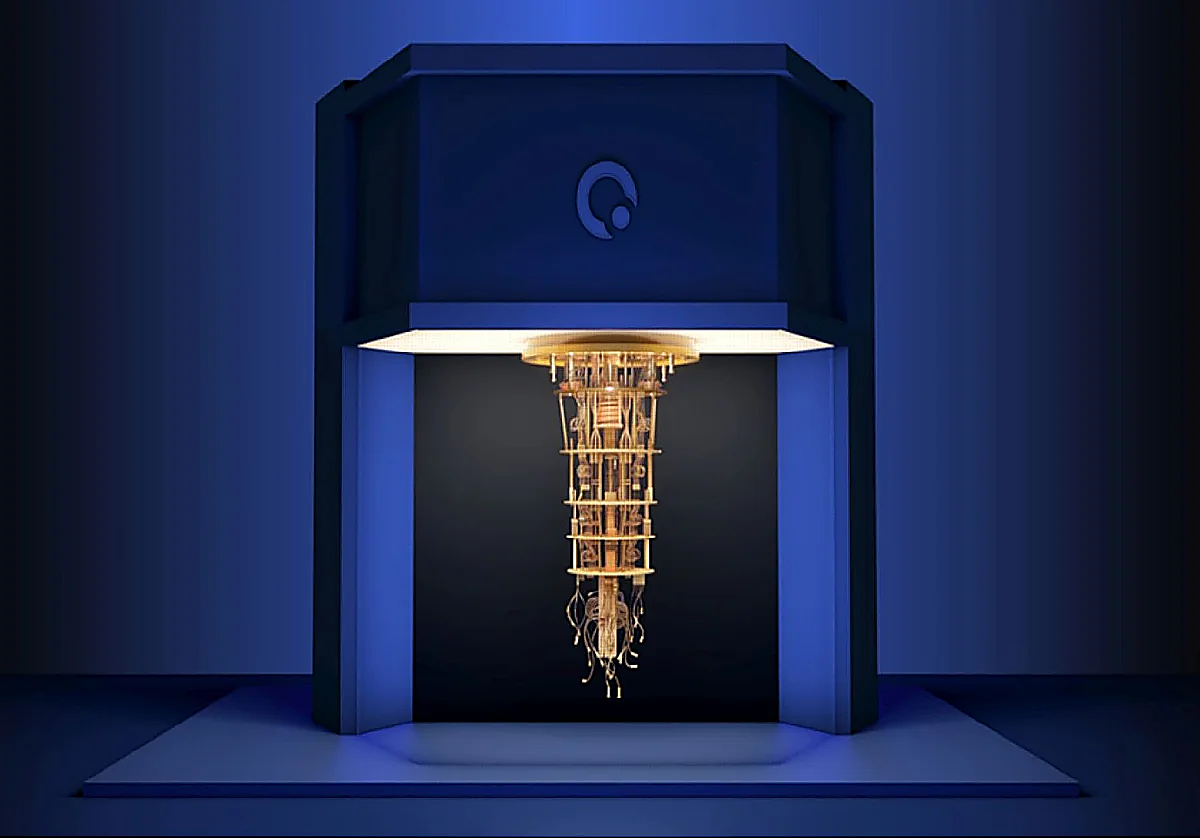
Malaga will not only be home to the first quantum computer in Southern Europe, it will manufacture them. This, at least, is the plan of Quantum Labs - the Chinese company that recently signed an agreement with Malaga University (UMA) to install such a machine next autumn at the UMA supercomputing centre.
On Monday, the company's president, Javier Romero, revealed that their plans go beyond simply bringing this technology to the city and collaborating with companies, institutions and startups that want access to it. The second phase of the plan aims to transform Malaga into a quantum hardware production centre that would encompass "the entire value chain".
"Next year, once we have tested the efficiency of our systems here, we will manufacture the entire computer in Malaga. We want to control the entire value chain, from hardware production to software development," Romero said.
Related story
-
Foreign investment
Nuria Triguero
Romero made this announcement at the presentation of the Ecosistema Cuántico de Málaga, organised by TechPark and the UMA. Phase one of the Quantum Labs plan was already a fact: between October and November of this year, the company will install a 317-qubit quantum computer (135 physical and 182 functional) in Malaga. A cloud system will accompany the machine to allow remote access from anywhere in the world, "placing Malaga's infrastructure on the global map of advanced computing".
Romero then announced the "second phase": the complete production of the computers in Malaga. This includes the manufacturing of quantum chips, the cryogenic cooling systems (essential for these machines to operate at temperatures close to absolute zero) and the final assembly of the machines. "We want to have the entire value chain in Malaga, from hardware production to software development for the various use cases," he stated.
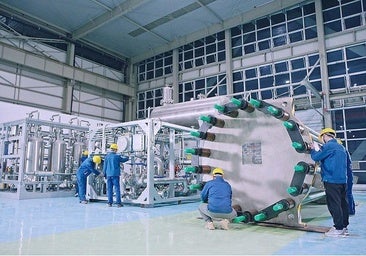
What does a quantum computer factory look like? Don't imagine another large IMEC centre: it will be a small space and won't require much investment, according to Romero. "Our factory in China is no more than 1,000 square metres. Keep in mind that quantum computers are not mass-produced. So far, Quantum Origin has manufactured 50 computers with two chips each," he said.
This is nothing like the large battery and electrolyser factories that two other companies owned by Javier Romero (Hygreen and Sermatec) are planning in Humilladero. This small production centre will stand in stark contrast to the high strategic value of producing quantum technology in Malaga.
Chinese strategic alliance with Spanish capital
Quantum Labs is a joint venture between investment fund China Link ESGT (created by Romero in Hong Kong in 2007) and Origin Quantum, a spin-off of the China Academy of Sciences, which, incidentally, Prime Minister Sánchez visited ten days ago, with Javier Romero also present.
"It is the number one company in the manufacture of quantum computers, possessing a unique vertical integration in the world," Romero said. Founder Dr Guo Guoping heads the CAS Key Laboratory of Quantum Information, which "guarantees a first-rate transfer of knowledge".
"Quantum Origin has the capability to design and manufacture its own quantum chips. It also produces the machines that manufacture the quantum chips. It manufactures the cryogenic cooling system, which is sold to well-known American technology companies. In short, it is capable of producing all the components of a quantum computer and operating it at both the hardware and software levels," Romero stated.
The company has also developed its own cloud system. In fact, the main users of its quantum computers in China are American companies that are remotely testing its quantum systems. "We have also developed a series of suites for different applications in collaboration with industry, for cybersecurity, finance, chemistry, new materials, medical applications and so on," he said.
A collaborative ecosystem
The quantum computer will be the backbone of a collaborative ecosystem with companies, startups and university researchers. "Third parties will be able to use the machine if they want to rent quantum computing time, with our software suite and all the data and servers located in Malaga. Furthermore, we will develop our own models. In the first year, we plan to launch 15 use cases and will begin with four that we have agreed upon with the digital agency of Andalucía," Romero said.
Quantum Labs will also act as a catalyst for the entrepreneurial ecosystem in Malaga. Javier Romero's SDT fund is prepared to finance startups that contribute disruptive ideas in industrial sectors. "We're not looking for companies to come with a ready-made solution. We can finance development and provide them with our hardware and software so they can scale their initiatives," he said.
The company has the capacity to take on between 20 and 30 projects per year. In fact, the company has already attracted initial proposals in areas such as quantum sensing in the city.
Cybersecurity and health
Romero highlights cybersecurity as one of the most advanced fields of application for quantum technology. "We have a complete, full-key cybersecurity solution integrated. That is, we have both the quantum chips for generating random numbers and our own attack and defense switches for those algorithms. Today we have the world's largest library of quantum attack algorithm and we have 70 patents approved in 2025 alone. We also have the mathematical developments for post-quantum communication, which is the key component. We have these systems implemented right now in 1,200 companies in China and we have released the quantum chip for commercial use in mobile phones, drones and robots."
The healthcare sector will also play a key role. The company, in collaboration with Neusoft, has developed the first medical imaging system with quantum sensors approved by the Chinese drug agency. It is a photon counting computed tomography (PCCT) scanner, which offers significantly higher resolution than current PET-CT scanners while using less radiation. "This is one of the applications I would most like to develop here in Malaga," Romero stated.
![[]](http://static.vocstatic.com/voc26/latest/assets/images/favicon/surinenglish/apple-touch-icon-57x57.png)