
Economy
Malaga province hit by biggest price rise in over three years
Fuel prices have soared by more than 10%, making the start of the new school term a struggle for households, despite a more moderate rise in the cost of groceries and a fall in the price of clothing and footwear
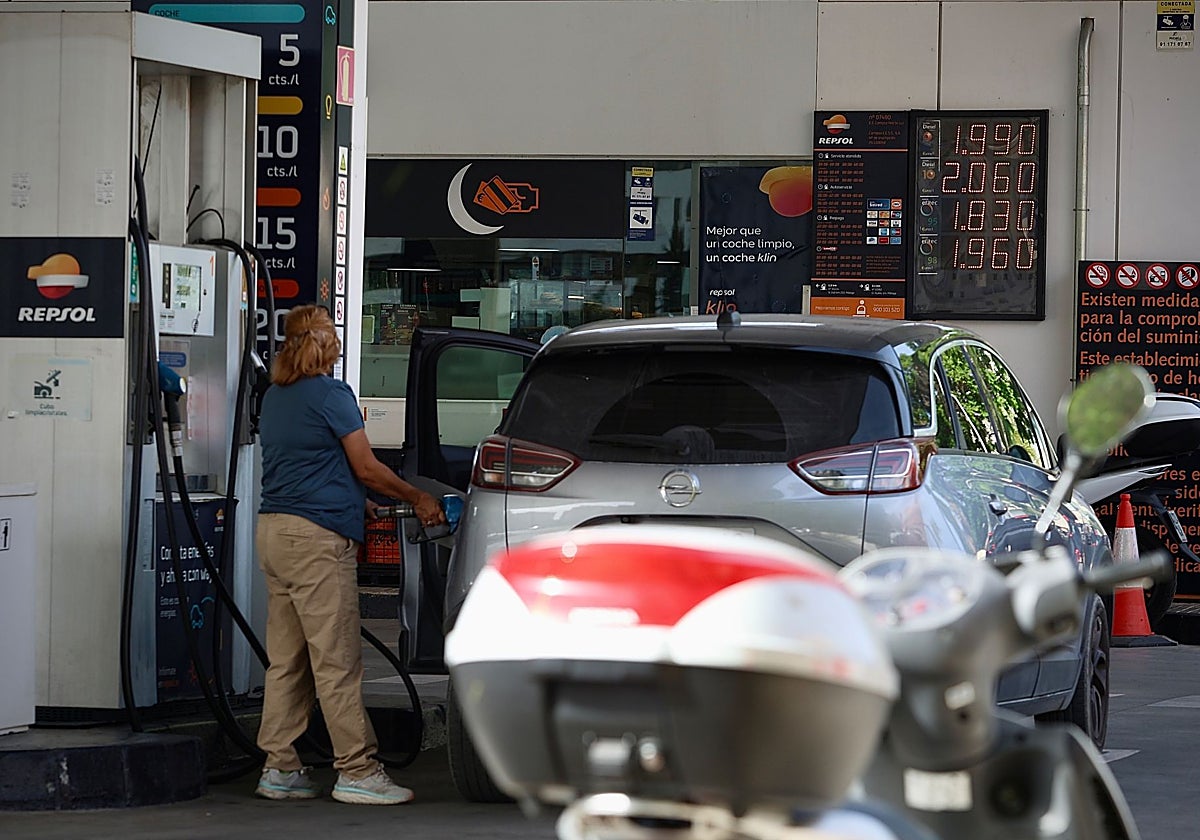

Prices in the province of Malaga were 4.3% higher in August than in August 2025. This is the highest rise in inflation for the ... province since April 2023, when the increase stood at 5%.
For Spain as a whole, the CPI was the highest since February 2023 (6%), according to data the INE (national institute of statistics) published on Tuesday.
These figures indicate an acceleration in the rate of rise in the cost of living, which in July stood at 3.6% both in Malaga and across the country as a whole. However, inflation has been above 3% since February. The healthy target range is usually around 2%.
Related story

Anything that exceeds or deviates from this level alarms central banks, which raise interest rates, as the European Central Bank did last week, to increase the cost of mortgages.
August 2026 has been the worst for prices in Malaga since August 2022, when only a few months had passed since the Russian invasion of Ukraine. At that time, the inflation rate was in double figures (11.1% in Malaga and 10.5% in Spain).
At present, while the circumstances are not exactly the same, something similar is happening but against the backdrop of another geopolitical conflict: the war in the Middle East, with Iran and the Strait of Hormuz, through which a significant proportion of the world's oil passes, as the main theatre of operations.
The CPI component that recorded the sharpest rise last month in Malaga province was transport, with an increase of 10.6%, compared with 6.6% in July, higher than for Spain as a whole (9.5% in August, compared with 6.2% in July).
The component comprising housing, water, electricity, gas and other fuels also pushed up the overall cost of living: it rose by 4.6% in August, compared with 4% in July, in this case lower than for the country as a whole (6.4% in August and 5.7% in July).
Within the group of transport-related goods and services, the main driver of the sharp rise is the use of private vehicles, for which the key cost is fuel, which has soared by 17.7% year-on-year, compared with 10.4% the previous month.
These figures are very similar to those recorded across Spain as a whole. Underlying this trend is the price of a barrel of Brent crude, which began August at around 90 dollars, fell at one point during the month to 80, but by mid-September was trading at around 108 dollars, suggesting that this month's figures will not be particularly good. A year ago, the price per barrel was below 70 dollars.
Electricity, gas and other fuels also saw a sharp rise, with prices now 8.7% higher than a year ago (in Spain the increase is 10.6%). These components are responsible for the rise in the cost of household energy supplies.
In August, the wholesale price of electricity rose by 13%, reaching levels last seen in August 2022 following the Russian invasion of Ukraine, although the impact on household bills has been more moderate.
The rise in household expenditure was mitigated to the 4.6% figure mentioned above by the fall in prices of domestic appliances, utensils and various household items.
In their daily report, Bankinter's analysts explain that the rise in prices in August has been more pronounced than expected, as a result of trends in fuel, gas and electricity prices. They state that, for the time being, no "second-round effects" are apparent, that is, rising fuel prices are not triggering a chain reaction of price increases in other goods and services.
However, with energy prices trending upwards at the start of September due to renewed tensions in the Middle East, it will be difficult for the overall inflation rate to ease in the final months of the year.
Food, clothing and footwear
Another factor having a significant impact on household finances is the cost of food and non-alcoholic drinks, which also saw a slight rise last month: after rising at a rate of 1.9% in July, it rose to 2.4% in August.
The INE attributes this to the prices of fruit and nuts, which fell, but by less than in the same month of 2025.
It was therefore only a slight relief that the rate of price falls for clothes accelerated from 2.8% in July to 4.2% in August, driven by summer sales. Footwear followed an identical trend, with prices falling by 0.7% in July and 1.4% in August.
Restaurants and accommodation services as a whole rose by 4.5% in Malaga province in August, compared with the 4.8% nationally. These overall figures mask the fact that in Malaga the rise in accommodation costs was limited to 2.2%, compared with 7.9% nationally. The breakdown also shows that the hospitality sector raised its prices by 4.6% year-on-year in the province, compared with 4.4% nationally.
Leisure costs, meanwhile, rose by 2% year-on-year in Malaga, exceeding the Spanish average of 1.2%. Cultural and recreational services recorded increases of more than 8% and more than 6%, respectively.
Far from the provinces with the highest inflation rates
Malaga is not the province with the highest price rise.
First is Burgos (5.5%), followed by Cantabria (5.1%) and Toledo (5%). At the other end is Ceuta, which, with a CPI of 2.9%. It is the only region in the country where inflation is below 3%.
Within Andalucía, the provinces with the lowest CPI are Almeria, Huelva and Jaén, all three at an identical 3.6%.
Malaga has consistently recorded price rises above the Spanish average, but in recent months this trend has begun to level off.
By region, Andalucía, with inflation at 4%, is slightly below the Spanish average. At the top of the list is the aforementioned Cantabria (5.1%), followed by Galicia (4.8%) and Castilla y León (4.7%). At the other end are Ceuta, Melilla and the Canary Islands, the latter two with an identical rate of 3.8%.
![[]](http://static.vocstatic.com/voc26/latest/assets/images/favicon/surinenglish/apple-touch-icon-57x57.png)