
Malaga Feria 2026
How Malaga builds its mega-fair: Canopies, cabling and a million-piece puzzle
From 20,000 square metres of shade to 500 light arches, site takes shape ahead of Saturday switch-on

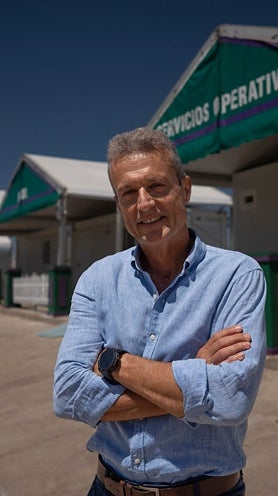
Before the scent of fried buñuelos fills the air, there is only the smell of metal and welding. Manolo Salazar, 60, wearing a blue linen ... shirt, walks purposefully through the Real Cortijo de Torres fairgrounds. The main entrance archway is already rising. Despite temperatures that demand shelter, the noise of construction and the beeping of heavy machinery echo from every corner.
“Planning for the fair begins in council offices on 1 January,” says Salazar, technical engineer for the local authority’s operational services. Branding for major breweries already glimmers above several marquee tents (casetas). With six days to go before the lights are switched on for the 2026 Malaga Fair on 15 August, assembly work in both the fairgrounds and the city centre is in full swing. In less than a week, everything required for a festival aiming to be the “best fair in southern Europe” must be erected. Workers are readying 117 private tents and three municipal ones, installing power lines, and setting up mobile phone masts.
On average, each fairground ride requires 20,000 structural elements and thousands of individual components. The local council alone employs around 200 workers for the setup, while each marquee hires its own crew. Only the core structural frames remain fixed year-round; fitting out and decorating the interiors is an annual ordeal.
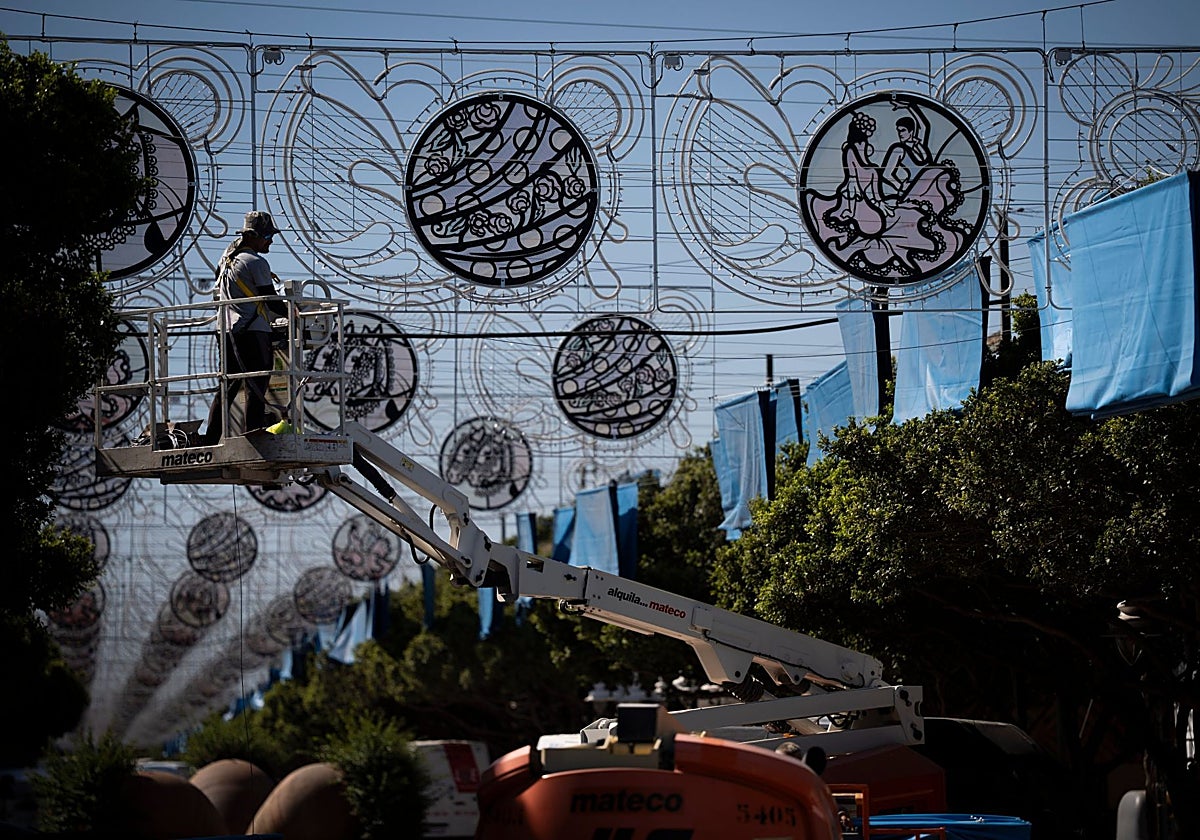
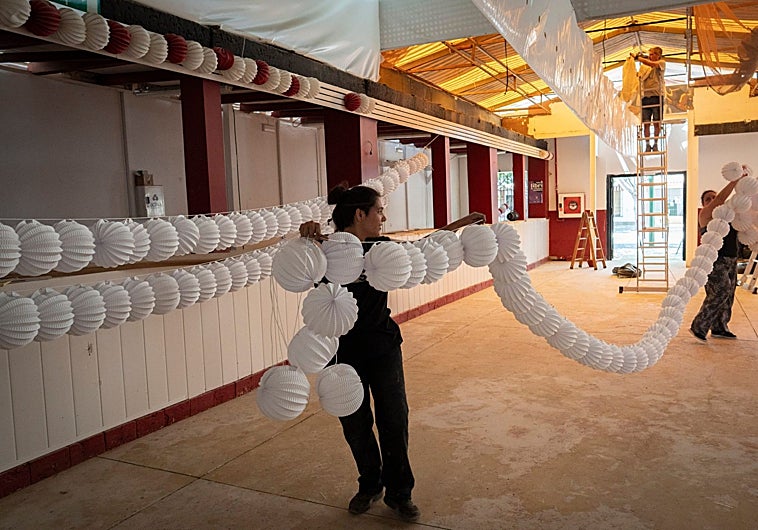
“Work starts in January because of the sheer volume of bureaucracy - formalising contracts and putting others out to tender,” Salazar explains. “We design the blueprint for this year’s fair, but physical setup on-site intensifies from July.” Having overseen operational services for 36 fairs, Salazar knows the grounds like the back of his hand. He rattles off statistics like clockwork: 20,000 square metres of shade canopies - equivalent to four football pitches; 24 megawatts of power, enough to supply a town the size of Algarrobo; 700,000 euros invested solely in updating transformer sub-stations; nine kilometres of festoon lighting; 500 light arches; and over 35,000 paper lanterns lining the streets. Salazar also remembers when the grounds were “extremely dusty” and lacked basic sanitation.
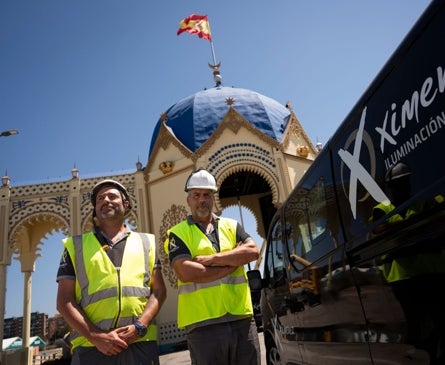
If anyone rivals Salazar’s knowledge of the festival, it is Teresa Porras, councillor for operational services and festivities. Viewed from above, the Real Cortijo de Torres resembles a massive patchwork quilt, where distinct zones sit side-by-side without overlapping. Near the entrance at Camino de San Rafael, half a dozen riggers work on the main entrance arch - the festival's visual calling card. Juan José Gómez is the structural manager for illuminations firm Grupo Ximénez.
Tanned from long hours under the sun, Gómez speaks rapidly. He has built entrance arches across the world, including in Russia and Romania - an improbable journey for someone who describes himself as a simple lad from the town of Puente Genil. “At 18, I was working for Telefónica erecting giant masts,” he says. “I’ve always loved working with my hands. As a teenager, I used to strip down bicycles and motorbikes just to rebuild them.”
Current efforts focus on wiring the lighting rigs. A small truss sways gently as a crane lifts it into position. Both structure and lighting fall under Grupo Ximénez. Gómez and his 20-strong crew execute what engineers design on computers. The most nerve-wracking moment is the official switch-on. “At that exact second, everyone's heart is pounding,” he admits.
Once the frame is secure, the roof is fitted and lighting points are marked. Raúl Forner, 48, is Gómez’s right-hand man. Decades of high-pressure work have forged a close friendship. “There are no deadline extensions for a fair,” Forner says. “Our philosophy is simple: the impossible doesn't exist here. You just make it happen. Phrases like 'it can't be done' aren't in our vocabulary.”
While the crew takes pride in its craftsmanship, there is concern over a growing skills shortage. “Since the old vocational training schools closed, fewer young people are learning the trade of traveling assembly,” Gómez notes. Today, veteran hands alongside migrant workers sustain the industry.
Even simple details carry unexpected technical hurdles. Years ago, municipal engineers discovered that frequency jammers from official VIP motorcades interference-blocked the wireless lighting controls. The council promptly scrapped remote technology, returning to traditional direct cabling with indicator signals.
Key local figures also voice concern over the event's changing culture. Manolo Curtido, 70, president of the Malaga Federation of Social Clubs (Peñas), faces this year's edition with mixed feelings. He warns against commercialisation, cautioning that the fairgrounds risk turning into a “theme park of nightclubs and restaurants.” He urges member clubs to preserve local traditions and calls on the council to strictly enforce municipal regulations.
Nightlife sector representative Juan Rambla notes that rising operational costs and red tape are squeezing margins. Business owners must invest heavily in air conditioning, health and safety infrastructure, and staffing - costs they cannot easily pass on to visitors. Paco Mena, operator of the Lombok venue, estimates that setting up a standard marquee now requires a minimum investment of 30,000 to 40,000 euros.
Even equestrian traditions have adapted to modern logistics. The traditional horse and carriage parade is now managed via a digital control system. Every horse entering the grounds is verified via a QR code, ensuring vaccination records, health cards, and insurance policies are updated in real time.
Managing the festival remains a dual challenge: Malaga effectively operates two simultaneous events. While the main fairgrounds host the night festivities, technicians in the historic city centre must navigate narrow architecture to string lanterns across historic facades, such as Calle Larios, requiring negotiations with private property owners. Meanwhile, a unified command centre at Plaza de la Marina coordinates local and national police, fire services, and civil protection.
As setup nears completion, Salazar smiles. For his team, the work never truly stops: as soon as this edition ends, planning for 2027 begins immediately.
![[]](http://static.vocstatic.com/voc26/latest/assets/images/favicon/surinenglish/apple-touch-icon-57x57.png)