
True story
The story of the mother who gave birth without realising she was pregnant: ‘If the baby had survived, we would have been very happy’
Nely went to her health centre after her period stopped and she tested negative on a pregnancy test; she was referred to an endocrinologist and underwent several medical tests
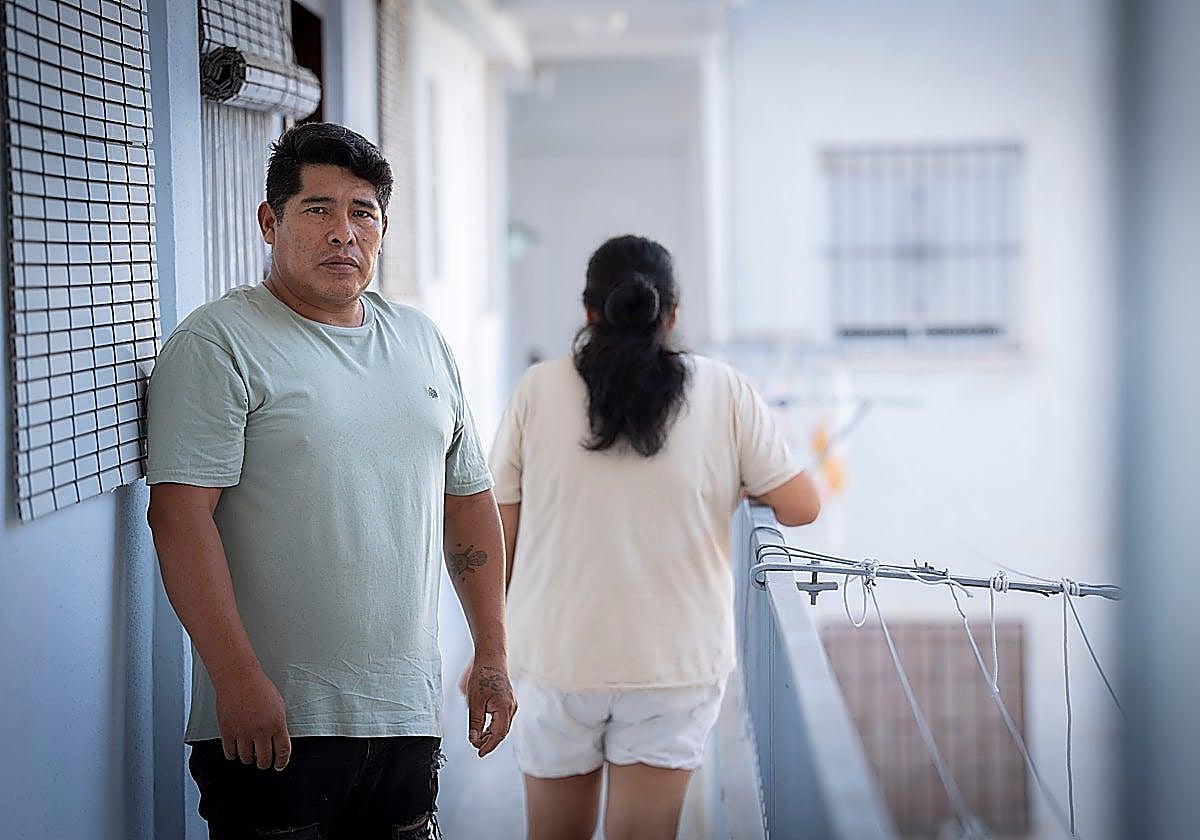

Nely worked right up until the day before she gave birth. Her ankles were swollen, she felt a bit tired and had some discomfort in ... the upper part of her tummy.
Her periods had stopped eight months earlier, but the home pregnancy test she took came back negative.
Shortly afterwards, she went to see her GP, who ran some blood tests and referred her to an endocrinologist.
Since then, she had been undergoing the medical tests prescribed by the specialist, but she had not yet been given a diagnosis.
“I was very worried because I thought I had something serious,” she says.
She still cannot understand why the hospital did not rule out the possibility of pregnancy. “I trusted the doctors and what they told me,” she admits. At the age of 43, the woman went into labour at home, in Malaga city, and the baby died.
Pain
That day Nely was at home when the pain started. She had a rough night and by the morning she was feeling worse. She also started bleeding.
“I always used to have really bad pains on the first day of my period, so I thought that was what it was,” she explains.
She went to the bathroom and sat on the toilet while her family were having breakfast.
Her husband, Juan Ismael, went to check on her after 20 minutes. She decided to have a shower to ease the discomfort when she felt “something hard” and screamed, her partner recalls.
“I rushed in and saw the baby coming out; it fell into the toilet. I quickly grabbed it by the feet, handed it to my wife and ran out to get help from a neighbour.”
Nely says she remembers practically nothing about that moment or the hours that followed. The neighbour massaged the baby’s chest until the emergency services arrived. The first to arrive were officers from the National Police; they were followed by paramedics, who were unable to do anything to save the newborn’s life. Nely’s placenta was delivered on the sofa in her living room, and she was taken to the maternity and children’s hospital. Juan was left holding the lifeless baby in his arms.
Later, the forensic police and the judicial team arrived, and transferred the body to the Institute of Forensic Medicine (IML) in Malaga.
The family hoped to recover the body as soon as possible and lay the child to rest. “We believe that this will help us heal the wound a little.”
They admit that when they lie down in bed to rest, the image of the baby’s face keeps coming back to them over and over again; a thousand questions spring to mind, and they imagine what his new life might have been like if things had turned out differently.
Torment
“I would have loved to have had it,” admits Juan. Nely can barely get a word out. She gets emotional time and time again. She even finds it hard to go to the toilet.
“That place really stirs something up inside me.” Now they just want to escape - from the house, from Malaga and from everything that torments them time and time again.
“I think about going back to my country, about going on a trip… but we can’t. We’ve got our jobs and our son is here… we have to be with him.”
Jordi is 19 years old and was having breakfast when he heard his mother’s screams. Ever since then, he has been wondering, "Where was the baby?".
Nely explains that she felt the upper part of her abdomen, just below her chest, was slightly swollen and hard. “The last time I mentioned it to the doctor, he told me it could be wind.” But she insists she didn’t have a pregnant bump or any of the typical symptoms.
Taking action
It was November 2025 when Nely’s period stopped. “I started spotting very lightly,” she says. She took a home pregnancy test, which came back negative. However, she remained concerned and in January 2026 she went to the Carranque health centre.
Following an initial blood test, her GP explained that her "hormone levels were very high" and referred her to the Endocrinology department. Nely had her first appointment with the specialist in March. In April, she had an MRI scan.
According to the test results, to which this newspaper has had access, the aim was to examine the pituitary gland, a small gland at the base of the brain responsible for regulating a woman’s cycles.
“They told me I might have a benign tumour,” says Nely. At the end of May 2026, she had another blood test. Prolactin, the hormone responsible for producing breast milk, was sky-high – six times the normal level. Apparently, the doctors again linked this to the pituitary gland.
However, the medical report shows very high oestrogen levels. A figure which, according to specialists consulted by SUR, is practically impossible in a woman who is not pregnant.
“At my last appointment, the specialist was going to prescribe a treatment, but in the end he told me it would be better to send me for another blood test.” Just two days before she went into labour, the woman went to hospital to have a blood test. Her next appointment was scheduled for 14 July.
Nely is on sick leave and Juan Ismael has taken a few days off work. They cannot come to terms with what has happened. “We can’t see the light at the end of the tunnel.”
Now, the family, who have contacted a solicitor to assess the situation, are not ruling out the possibility of taking legal action. “If my baby had survived, we would have been so happy.”
![[]](http://static.vocstatic.com/voc26/latest/assets/images/favicon/surinenglish/apple-touch-icon-57x57.png)