
Society
Malaga's Santo Domingo soup kitchen needs urgent help: 'Our survival is at risk'
The humanitarian organisation is facing an increase in the number of service users, rising food prices and a freeze on funding from public authorities
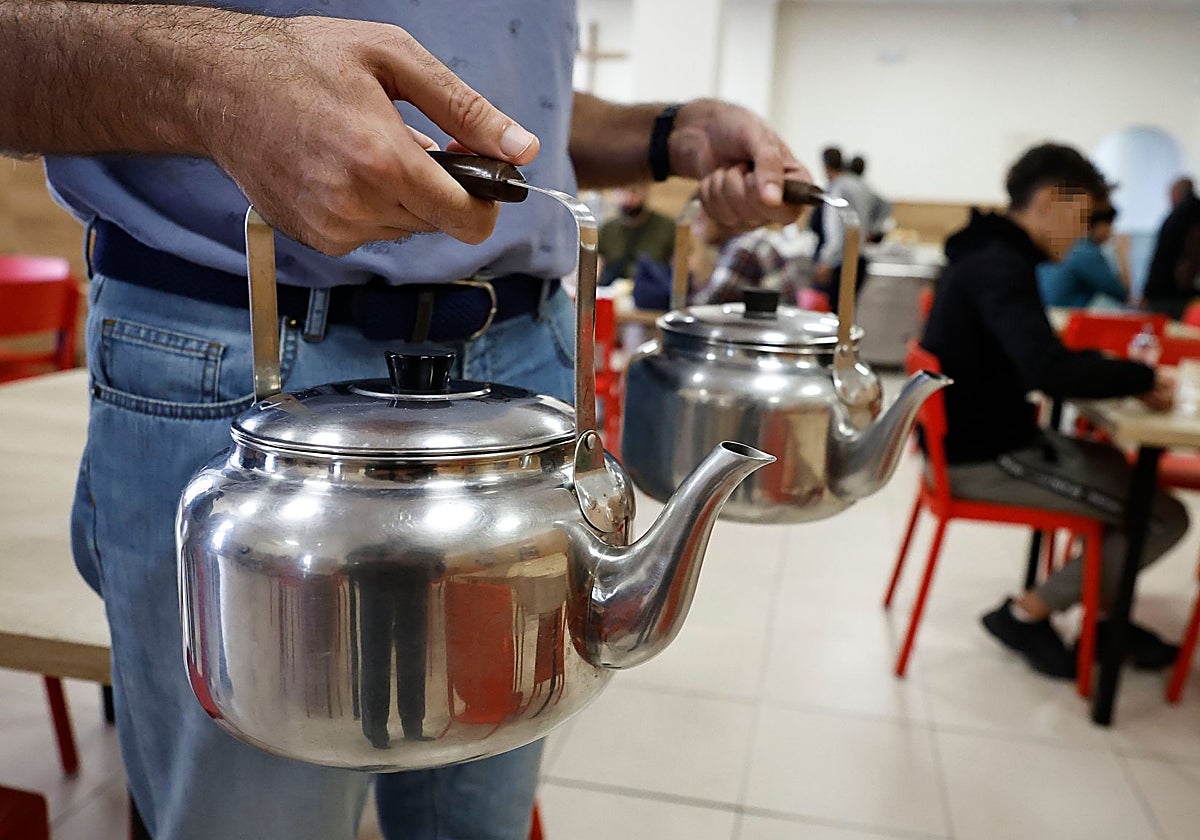

"The Comedor de Santo Domingo is very important. You only have to look around you," 37-year-old Pedro says, pointing to the other ... tables in the dining room of the Santo Domingo soup kitchen, with windows opening out onto Llano de la Trinidad, a gleaming floor and red chairs that add a cheerful splash of colour.
He's tucking into his breakfast: a hot coffee with milk, bread with butter and jam and a pastry. According to Pedro, "a walk around Malaga" is enough to notice the rise in homeless people in the city.
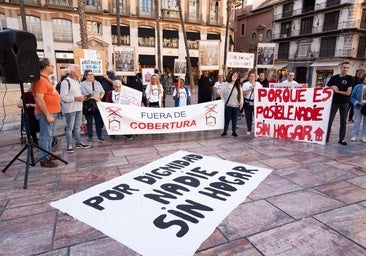
Malaga University confirms this: a study shows that the number of people living in the street has risen by over 60 per cent since 2024, reaching 300. Just as many people spend the night in shelters.
Related story
-
Cristina Vallejo
"If there weren't places like this, there'd certainly be more thefts. Hunger is terrible and those of us on the streets know that all too well," Pedro says. His partner, Carmen, 36, adds: "This place is a blessing."
For them, too, it's the place where they met, which means she no longer has to spend her nights alone out in the open. "I can't leave her on her own. Life on the streets isn't the same for a man as it is for a woman," Pedro says.
"The food here is really good. We leave here having had breakfast with a hot coffee and we don'y have to worry about where we'll have to go next to get something to eat," Pedro says.
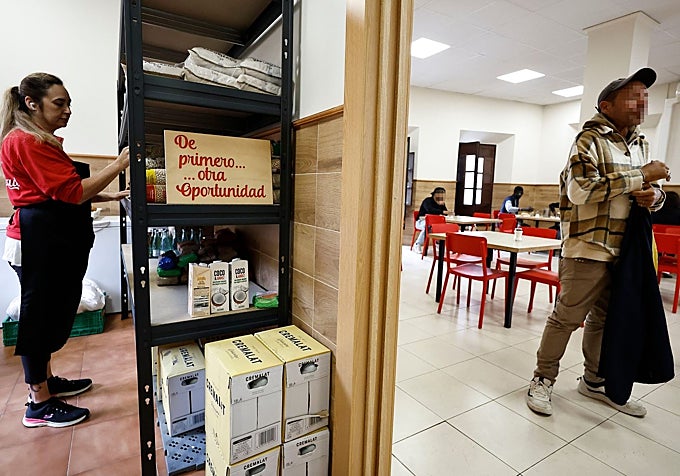
He praises the Santo Domingo centre not only for the food it provides, but also for the efforts of the social workers and psychologists who offer personalised support. The aim is for the soup kitchen to be merely a stepping stone towards an autonomous, independent life, with a home and a job.
The soup kitchen needs funding
Maintaining all that infrastructure costs money. Now, the soup kitchen is asking for help, from individuals and businesses alike, to partner with them, make donations and get involved to keep it going. Santo Domingo's financial viability is under threat and its very survival is at risk.
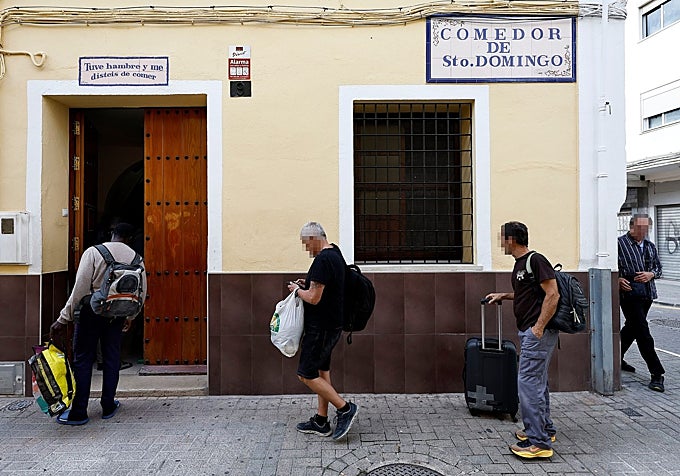
Director Damián Lampérez shares that the rise in the number of homeless people is evident in the increased daily turnout at the premises: breakfast begins at 9.30am, but before 9am there is already a sizeable queue between Calle Mármoles and Llano de la Trinidad.
Security guard José Ramos knows and calls everyone by name as he greets them. "Working here is tough. People tell you their stories and many are in a very bad way. But there are also those who get off the streets, feel useful again, get their lives back on track, succeed and come back to visit to tell me all about it. That's the best part of this job," he explains.
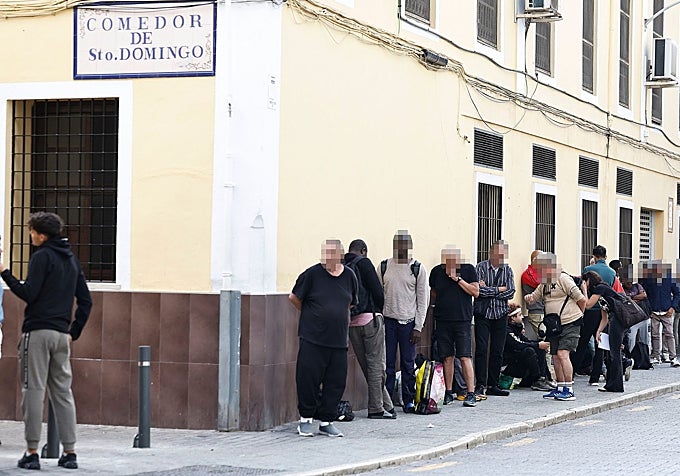
"This year, the number of people has risen by 15 per cent compared with last year," Lampérez says. According to him, homelessness affects more people than the latest UMA statistics indicate, as there are people sleeping much further away from the city centre than the fieldwork has reached.
As well as the number of people needing their help in Malaga increasing, so too have their costs: "Since 2019, the CPI has risen by 21.68 per cent; food prices by 38 per cent; and electricity by 25 per cent," Lampérez says.
The building requires maintainance too and the staff must be paid. "Wages have risen and their rights are firmly established. We have to be very careful about this: we cannot be helping people in precarious situations while having staff here working in undignified conditions."
Public freeze
Despite all of this, the budget allocated by the city council and the regional government has not increased. The director even says that, at times, it falls slightly.
The council grant is a fixed amount of 58,000 euros, which is equivalent to ten per cent of the sum needed to run the soup kitchen each year. The regional government's grant is variable: it has a budget for social organisations which may well have increased, but as there are more and more of these organisations, each one receives a smaller share of the funds.
Consequently, while the organisation had expected to receive around 100,000 euros from regional sources last year, that amount was capped at 88,000. "We're closing this year's budget with a deficit," Lampérez says.
He calls for greater cooperation from the authorities, stating: "Here, we are assisting the state with matters that fall within its remit. Homelessness is a municipal responsibility and food security falls under the regional government's remit."
While they await a response from the authorities, they are in the middle of a campaign to recruit regular members in order to secure a steady stream of private funding to offset the decline in public funding.
At present, the soup kitchen has between 800 and 900 members. However, some are still paying the membership fee they agreed to when they first became involved in the project, which dates back four decades. Furthermore, these supporters are getting older and the next generation has to take over.
Without any further regular sources of funding, Lampérez warns, the sustainability of the soup kitchen is seriously under threat. It cannot survive for many years with a chronic deficit.
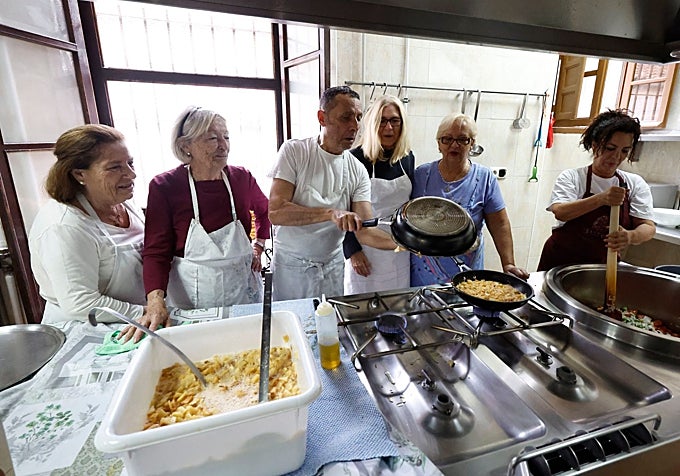
They don'y need any volunteers at the moment, though. Many of those who help out at the organisation have been loyal to the project for several years now. Like Alicia, Mariluz, Amparo and Carolina, who are busy in the kitchen. The latest addition to the kitchen team is Manuel, who is flipping one tortilla after another out of the frying pan this Thursday morning. In the dining room is Juan, who is making his way between the tables with jugs of coffee and milk to refill the glasses as they run empty.
Rafael, 40, is one of the first in the queue before they start handing out breakfast. He has slept on the beach and says: "Without this soup kitchen, we'd go without food. What's more, it provides good-quality food. It has a team of professionals to help us get out of this situation. We can get psychological and moral support. They try to open doors for us. They treat us like family, in a warm and welcoming way, not coldly. That's what it's all about: welcoming people, not solving your problems for you, but paving the way for you."
Nearby is 23-year-old Mohamed, who arrived in Spain on his own, hidden under a lorry. Samir, also Moroccan, instead of crossing the Strait, ended up in Spain after travelling halfway across Europe from Turkey.
A vote of confidence
Samir sits down for breakfast with three friends who have also spent the night out in the open. "We've come here to work, not to sleep on the streets. We need a roof over our heads," he explains.
Samir has training as a car mechanic, but because of his background, he sees rejection and suspicion in the eyes of those who look at him. He's also asking for a vote of confidence so that he can build a life in Malaga, in Spain, just like anyone else.
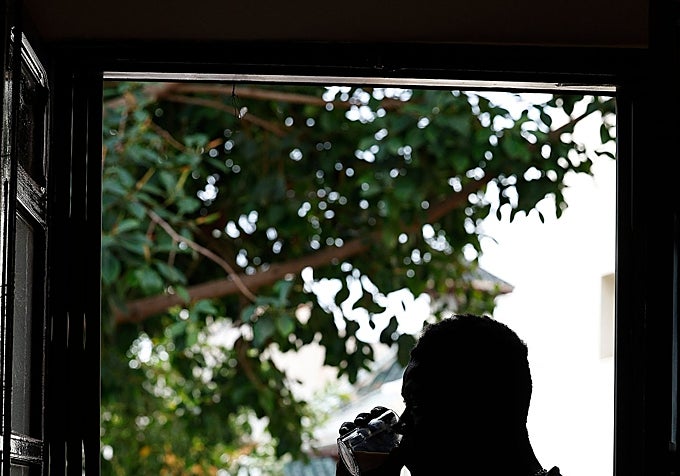
That is also what 22-year-old Bakary from The Gambia is asking for. He believes that with a job he will be able to get off the streets, even though the UMA study states that a third of homeless people find themselves in that situation despite receiving a wage.
A week ago, Sur came across Bakary on the street. Today he is in a slightly better position than he was seven days ago: he proudly shows off the residence permit he was issued last Friday. As he has no home, the address on the document is a Red Cross shelter in the province.
"I'm happy, but there's still a long way to go," he says. A friend having breakfast beside him describes his life: "After breakfast here, we go out onto the streets, but we don't do anything, as we don't have a job or a room."
Now that their paperwork is in order, the Santo Domingo soup kitchen is helping them to achieve both of these things. "More important than providing food, what we're trying to achieve is for people to regain their independence. Our mission is to strike a balance between providing aid and support, while ensuring that everyone also takes responsibility for their own lives," the director of the organisation says.
This work can only be carried out by real professionals, who get paid. That is why they are urgently appealing for members, collaboration and solidarity.
You can support the Santo Domingo soup kitchen via its website comedordesantodomingo.org, under the section '¿Cómo puedes ayudarnos?' ('How to help').
