
Environment
Residents of Malaga's Cerro de la Tortuga area call for preservation of biodiversity
The residents' association is calling for Malaga's green belt to include the site: "It seems they've forgotten about us"
Javier G. de Toro
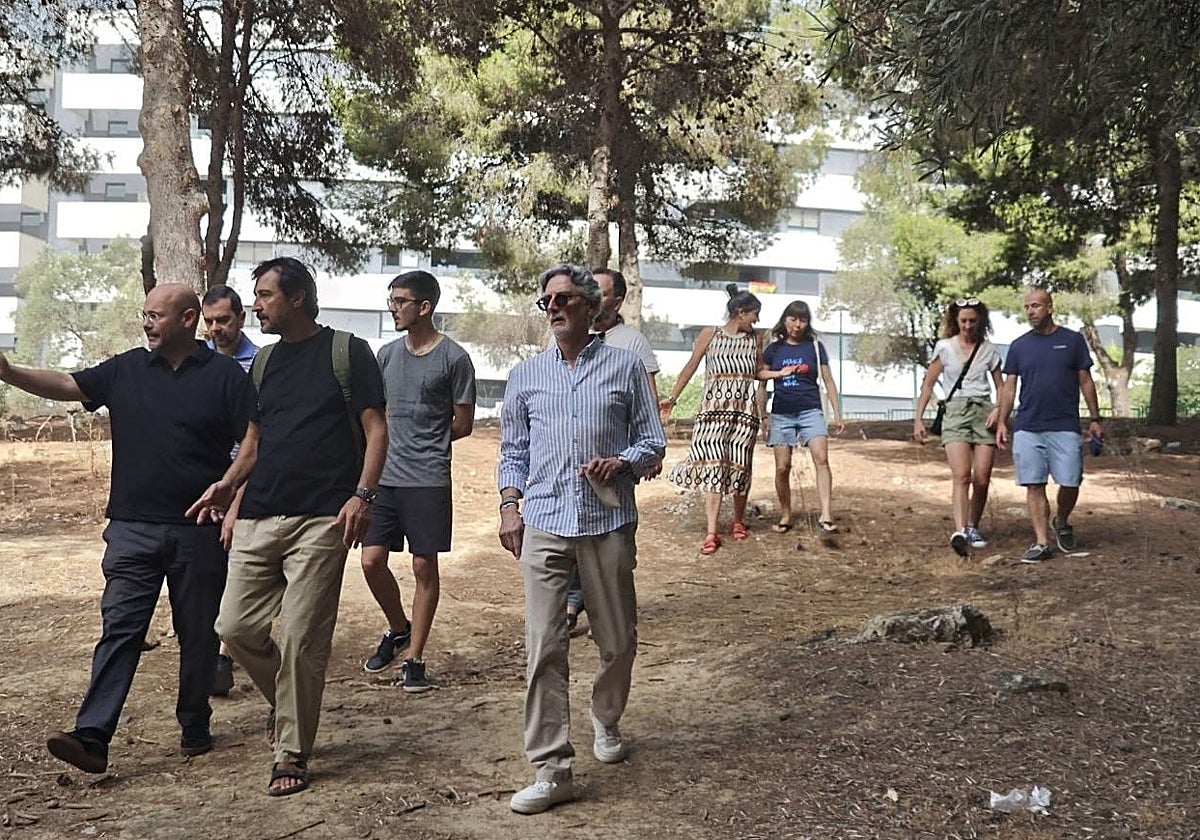
Dozens of local residents make their way through a pine forest, where the MA-20 separates El Atabal from Miraflores, near the Teatinos district. They ... pass through there every two weeks, but whenever they return, there is more waste.
Young people who, given the state of neglect in which the Cerro de la Tortuga natural site currently finds itself, are unaware of its importance and are putting both the woodland and its wildlife at risk.
Since last year, the residents of Cerro de la Tortuga have come together in a commitment to their local area, which is under threat from a lack of care, a general lack of public awareness and a failure to recognise its potential.
"Our concerns are entirely justified. Despite our repeated requests, we have not received any response from the city council," members of the Cerro de la Tortuga residential association told SUR.
After initiating the necessary procedures, registering with the regional government of Andalucía and the city council as a legally established association, the residents have raised their concerns and demands with the environment department on two separate occasions. To date, they have still not heard back.
It all began when the residents learnt of the location of a new electricity connection in the area. "Once this is installed, they can start building at any time," chairman of the association Antonio Jesús García said.
For the residents of Cerro de la Tortuga, feeling ignored is nothing new. Every two weeks they turn up to help clean up the area. Sometimes they organise neighbourhood clean-ups to collect all the waste they find. However, after two weeks, "everything is back to the way it was".
Mountains of cans, shopping trolleys piled high with furniture and scraps of waste are a daily sight for residents, who go for walks with their children.
Waste is not the biggest concern, the risk of fire is. "Trees fall over and are left lying there. Last year there were four fires and no action. Not even any clearing. There's been a complete lack of care," García said, alongside the association's treasurer, Antonio Matías Morillo, and secretary Carolina García.
"It's not even a possibility. This is going to burn. Plants fall, dry out and everything piles up. This is a powder keg," Morillo said, looking at the piles of dry branches.
Historical significance: archaeological sites and remains
Much of the hill is classified as a site of cultural interest (BIC). Within its boundaries lie the remains of Iberian-Punic settlements, as well as prehistoric sites from the Bronze Age and the Phoenician period.
Most of these were discovered during excavations in the 1950s and 1960s, along with many others found in the 1980s, according to the association.
"They haven't been properly catalogued. There are many theories, but no in-depth studies. There may even be Neolithic remains," Morillo, who teaches history at nearby secondary schools, explained.
"When you climb the hill, you can see the whole of the Bay of Malaga. If you look at the whole area and know a bit about geography, you realise that there was a time when the sea reached right up to here," Carolina García said.
"It's a question of whether one chooses to recognise its cultural value, but it certainly has it," the association's president said.
Biodiversity and protected species
Cerro de la Tortuga's present is very much alive, in the form of the flora and fauna that inhabit it. Protected species such as tawny owls, the red squirrel and several dozen forest and migratory birds use the hill as a resting place on their journeys to Africa or northern Europe.
"We must understand that this is not a single area or several separate ones. This whole area forms an ecological corridor that allows species to move freely. If you cut it off or fragment it, if you take that first bite, there's no turning back," the residents warned.
"It should form part of Malaga's green belt," they stated.
They also highlighted the importance of designating the hill as a special protection area for chameleons. "It's not just that there are one or two. We were here with biologists and we found three chameleons as soon as we arrived. Fragmenting the area could lead to a decline in their population and who knows by how much," the association said.
Antonio Jesús García also highlighted the importance of the pine forest. "These are trees that could easily be 100 years old. If they go ahead with construction, they'll have to cut them down. They might tell us they'll only cut down one or two, but that's how it starts and then they'll keep finding excuses to go a bit further and a bit further," he said.
Water system considerations
The hill is also of vital importance to the river. Remains of the aqueduct that ran through the area in the 16th century can still be seen, as Malaga University professor Belén Zayas said.
"You might come here and find it dry, but go a little further up and you'll see the water seeping out. It doesn't disappear. It continues on its course and seeps underground," Morillo said.
The basements of residential blocks suffer from these water currents during the rainy season. "Any building you construct in this area will have problems because it will alter the water's course. This isn't an ideological issue, nor is it a struggle of any kind against any political group," Antonio Jesús García said.
The area is part of the public waterway system. Consequently, the 100-metre buffer zone on either side of the riverbed must be respected, because it ensures the proper condition of the water and its flow.
Residents, however, fear that a technical analysis might conclude that it is not necessary to adhere strictly to those 100 metres.
The near future
Despite the lack of responses, the city council has assured them that there are no plans to build housing on the plots that make up the hill.
"There are four plots. Two of them are set aside for green spaces and there will be no building there whatsoever. The other two are earmarked for educational use, so development for that purpose will take place when appropriate," the city council stated.
The residents' fears, however, remain. "Any kind of development would be that first bite," they said. They want the area to be recognised and respected.
If construction does take place, they said, it should be done in consultation with local residents and a panel of experts and technical specialists who can assess the best way to manage the area.
The residents' association is calling for the area to be adapted to make it easier for them to access both the green space and the archaeological site on the hill.
"We're talking about an entire pine forest. With all the talk at the moment about green spaces and whether to build, we have this right here," Morillo stated.
![[]](http://static.vocstatic.com/voc26/latest/assets/images/favicon/surinenglish/apple-touch-icon-57x57.png)