
Science
Malaga University study makes the front cover of Science
Scientist Narimane Chatar has discovered a key evolutionary trade-off in mammalian dentition
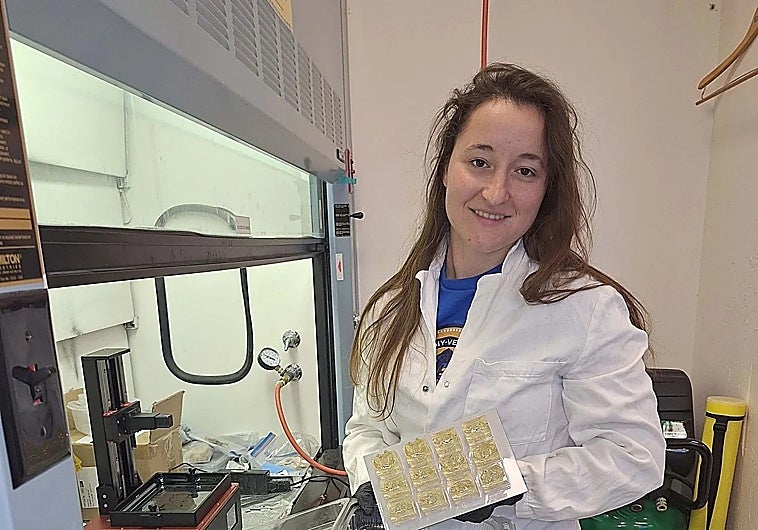

An international scientific study, involving the University of Malaga (UMA), has identified a fundamental biomechanical trade-off in mammalian evolution: the most effective tooth shapes ... for cutting tissue are not usually the most suitable for grinding hard food.
This finding has been featured on the cover of the latest issue of Science: one of the world's most prestigious journals.
The study reveals how this functional trade-off has shaped the evolution of the lower carnassial molar in both extant and extinct predatory mammals.
The research was led by postdoctoral researcher Narimane Chatar, currently based at the University of California, Berkeley, on a European Marie Curie fellowship. She has strong ties to the palaeontology department at the UMA, where she is set to return in December 2027.
Chatar has been in Berkeley since December 2023, when she began this line of research alongside renowned Professor Jack Tseng. In this study, they have used innovative 3D scanning and printing methods to analyse the dentition of mammals, particularly the lower molars of carnivores such as dogs, cats, bears, otters and raccoons.
As the young scientist points out, carnivores have lower molars of very varied shapes, but some species retain molars that resemble the tribosphene, the original architecture of mammalian molars.
Chatar says that, to assess their function, they had carried out penetration tests using 3D-printed teeth, employing medical-grade gelatine to simulate flesh and quantify cutting ability, as well as sections of bone printed in a material that replicates their mechanical properties in order to simulate crushing.
Alejandro Pérez Ramos also took part in this study. He completed his doctoral thesis at the UMA, although he now works as a lecturer at the University of Burgos.
The experimental approach of the research draws on their previous experience in analysing the biomechanics of mastication in large mammals, particularly ursids, gained during earlier postdoctoral fellowships at the Californian university.
This methodological background contributed to the design and interpretation of the biomechanical tests used in this new study. Both experts say that teeth constitute the primary interface between vertebrates and their food.
Their close relationship with diet, biomechanics and ecology, combined with their excellent preservation in the fossil record, makes them an essential source for studying the evolution of mammals.
One of the most significant innovations was the emergence of the tribosphene molar, a dental architecture that combines two functional regions: the trigonid, primarily involved in cutting, and the talonid, which plays a role in grinding food. In predatory mammals, this gave rise to the lower carnassial molar, a tooth specialised in the mechanical processing of food. However, the new study shows that its two main functions are, to a large extent, antagonistic.
Features that enhance cutting efficiency, such as tall, sharp cusps and aligned ridges, reduce the surface area and strength required for crushing. In contrast, wide, low teeth with a well-developed heel offer better performance when dealing with hard food, but are less effective at cutting through tissue.
All in all, the main finding has been to demonstrate that the tribosphene molar, with its two regions specialised in opposing functions, imposed a structural constraint on the evolution of dental diversity in mammals.
In other words, the teeth that contributed to these animals' evolutionary success also had a hidden limitation: they were very good at either cutting or grinding, but rarely at performing both functions optimally. This mechanical trade-off drove carnivores towards different diets and shaped their evolutionary history, Narimane Chatar explains.
3D technology
To carry out this three-dimensional analysis, 3D printing and biomechanical experiments, the team studied the shape of the lower carnassial molar in 250 specimens belonging to different groups of extant and fossil predatory mammals.
The sample included felids, canids, hyenas, bears, mongooses, viverrids and several extinct lineages, such as hyaenodonts and oxyenids. Furthermore, to directly assess the mechanical performance of the different morphologies, they used 3D printing to produce a selection of real teeth and theoretical shapes.
Cutting ability was examined using multi-layered biomedical gels designed to replicate the mechanical behaviour of soft tissues, while crushing ability was assessed using 3D-printed bone models with controlled material properties.
The results show that the lower molar cutters most effective at cutting are concentrated within a very small area of the morphological space, where the best cutters exhibit highly specialised bicuspid shapes, characteristic of large hypercarnivorous predators.
![[]](http://static.vocstatic.com/voc26/latest/assets/images/favicon/surinenglish/apple-touch-icon-57x57.png)