
Business
Taking over a working bar or restaurant in Malaga city centre now costs more than ever
Business transfer prices are in excess of 200,000 euros, making the prospect of starting up in the hospitality sector increasingly difficult
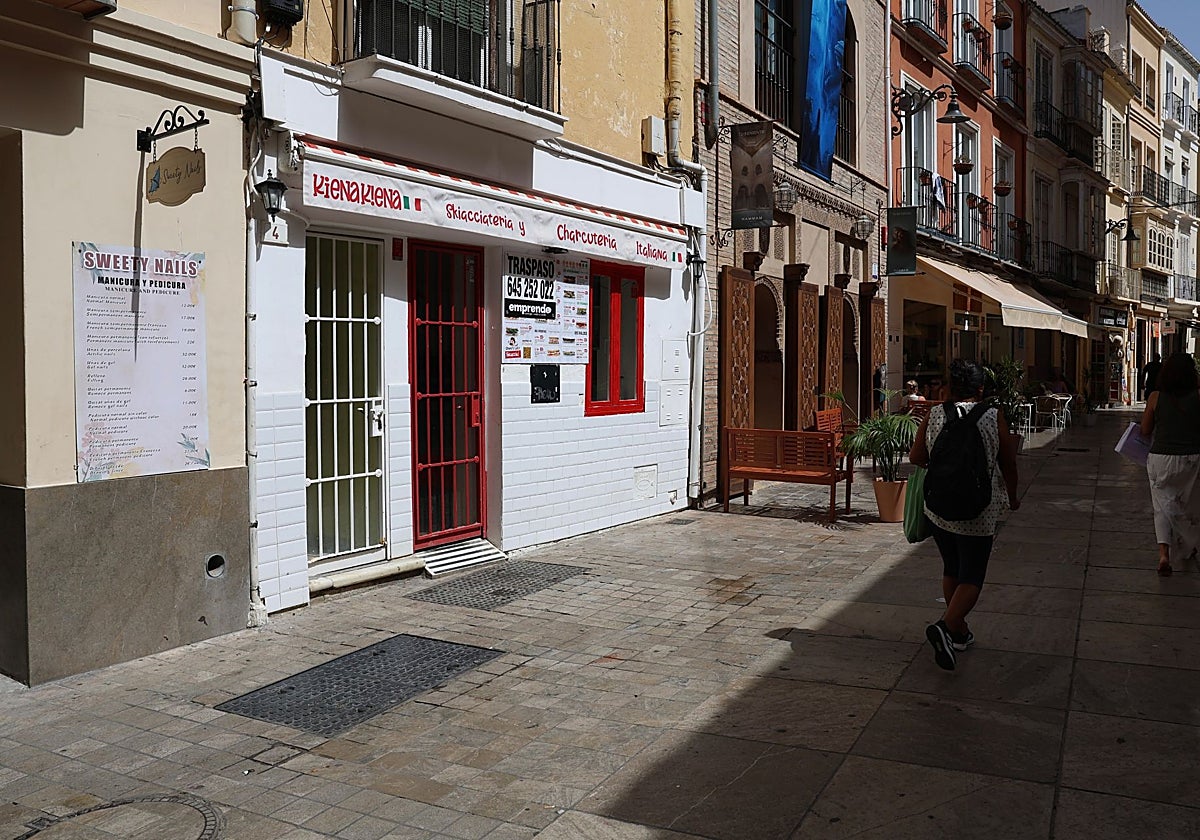

Bars and restaurants in Malaga city centre are finding it increasingly hard to survive, and soaring business transfer prices aren't helping.
"Some premises ... close almost as quickly as they open," a veteran Malaga restaurateur says.
Property websites such as Idealista are packed with listings offering businesses that are still trading or premises that are ready to open in the near future. According to hospitality-sector experts in Malaga, asking prices have reached record highs.
Never before has opening a bar or restaurant been such a difficult proposition. The average asking price to take over an existing business in the city centre now stands at 202,615 euros.
That initial outlay, which approaches 400,000 euros in some areas, comes on top of another substantial monthly burden: rent. The average rent for available premises in the old town has reached 4,161 euros a month, forcing businesses to generate substantial turnover from the very first day of each month simply to keep their doors open.
A map of the city-centre hospitality market reveals a major barrier to entering the sector. The days when opening a bar or restaurant was within reach for someone with a modest amount of savings are now gone.
In what could be described as a prime area (around the Cathedral, Calle Larios, Calle Bolsa and Calle Fresca) prices are difficult to absorb without investors or substantial financial backing. The cost of taking over a business ranges from 220,000 to 390,000 euros, while monthly rents can reach 6,300 euros.
Even smaller premises aimed at the café or brunch market, in areas undergoing major renovations such as Calle Carretería, now command transfer prices of up to 150,000 euros, plus rents of 5,000 euros a month.
Some of the businesses currently available for transfer occupy extremely small premises. One example is an advertised "takeaway food bar" measuring just eleven square metres in Pasaje Chinitas, with a transfer price of 31,000 euros. The listing specifies, however, that the premises has neither a kitchen nor an extraction system, while highlighting its prime location for "capturing passing trade".
Then there is the case of a restaurant on Calle Fresca occupying 170 square metres, with a terrace offering views of the Cathedral. The asking price for the business transfer is 220,000 euros, followed by a monthly rent of 5,100 euros.
The so-called 'golden mile' of Malaga's food and drink scene comes with particularly steep price tags. One current listing is for a fully operational restaurant and café on the centrally located Calle Bolsa, for which the takeover price is 390,000 euros.
A restaurant measuring just 58 square metres near Plaza de los Mártires and the Thyssen Museum is advertised as a pristine "turnkey" operation for 85,000 euros, with monthly rent of 1,100 euros.
This unprecedented rise in prices threatens to bring about a dramatic and potentially permanent change to Malaga's urban landscape. Traditional bar owners and small local entrepreneurs risk being pushed out in favour of a homogeneous open-air shopping centre model dominated by international chains.
José Félix Pérez-Peña, director of Savills in Andalucía, has first-hand knowledge of Malaga's business transfer market. Speaking to SUR, he confirmed that prices are at "record highs".
"What you see on Idealista is only part of the picture. Many transfers take place through other channels. A lot of money is changing hands," he said.
According to Pérez-Peña, one factor has acted as a catalyst for rising transfer prices: the acoustically saturated zone (ZAS) designation. Because no new licences are issued for bars and restaurants in the historic centre, premises that already have the necessary licences are more valuable than ever.
President of Mahos hospitality association Javier Frutos also believes that transfer prices have become an insurmountable barrier for many people who dream of running their own hospitality business.
"We see premises changing hands a lot. Hospitality is difficult. People think it is simply about making money, but we have to deal with very high costs. Many people only realise this once they are already in the business and the figures do not add up. It is easy for things to snowball and for you to quickly find yourself heavily in debt. Rent, suppliers… The transfer has also become a way of recovering the investment and getting your head back above water," Frutos said.
Entering Malaga's city-centre hospitality market is now more difficult than ever. An unprecedented increase in commercial property values has pushed up entry costs, while rents have become unaffordable for many operators.
According to industry sources, these conditions are driving the local hospitality sector towards greater concentration in the hands of franchises and large groups with the financial strength to absorb the costs.
For many small entrepreneurs, the dream of opening a bar or small restaurant is becoming an impossible one.
![[]](http://static.vocstatic.com/voc26/latest/assets/images/favicon/surinenglish/apple-touch-icon-57x57.png)