
Business
University of Malaga opens Picasso supercomputer to local SMEs for artificial intelligence development
Regional node of European AI Factory project offers free supercomputing power and technical guidance to help small businesses process data and build custom models
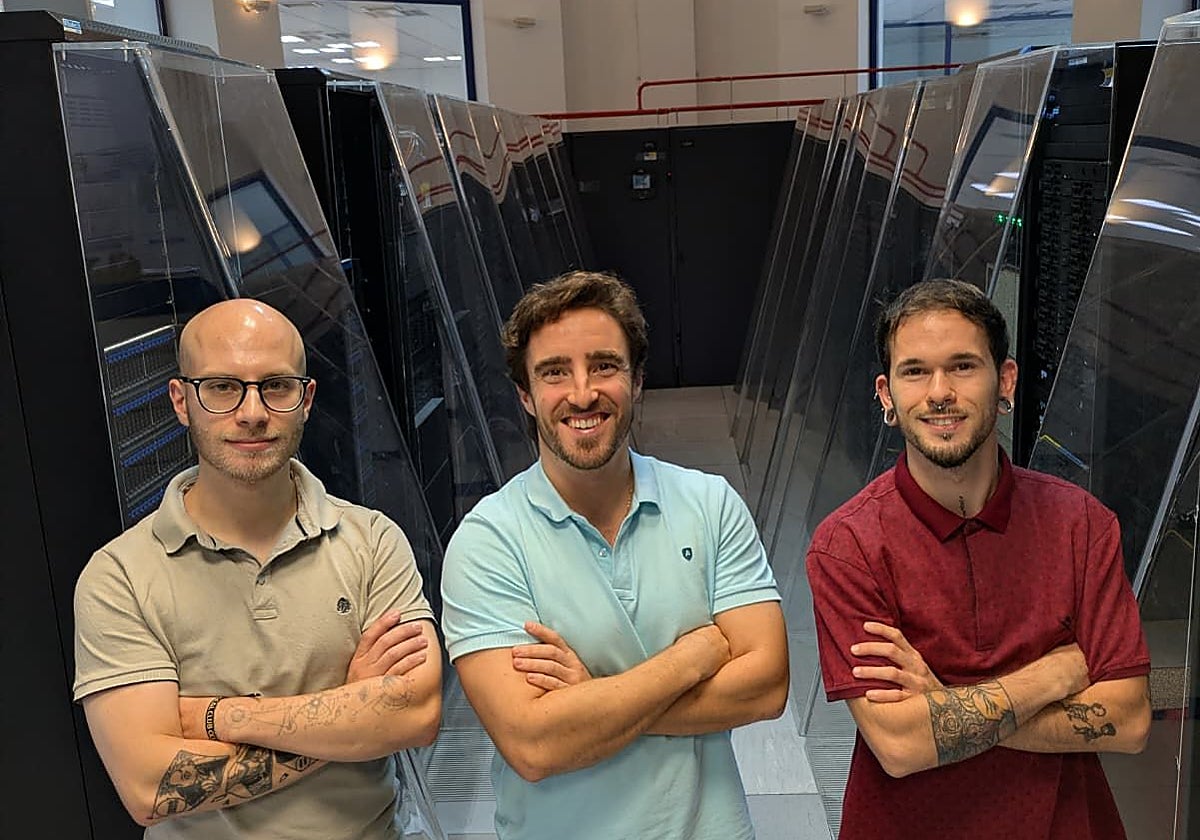

A small business may handle millions of pieces of customer data, need to forecast demand for its products or be considering developing its own AI ( ... artificial intelligence) model, but lack the resources, staff or expertise to do so. From now on, it will have a point of contact in Malaga.
The UMA (Malaga University) has joined the BSC AI factory (the European project led in Spain by the Barcelona supercomputing centre) as a regional node, with one particular feature: as well as advising companies on how to make the most of AI, it will also provide them with access to the computing power of Picasso, one of the most powerful supercomputers in the Spanish supercomputing network.
Related story
The aim is for businesses to harness the potential of this technology to improve processes, boost productivity and become more competitive, particularly smaller firms, which do not have the resources of larger companies. "They need to know how to face the world that lies ahead, because eventually it will be upon us," AI expert adviser for the project Felipe Romero says.
Three people have been working since August at the university's supercomputing and bioinformatics centre at TechPark: a business liaison officer, a project manager and an expert adviser on AI.
The AI factory aims to provide free access to AI and supercomputing resources to companies, start-ups and SMEs that would otherwise find it difficult to access such infrastructure on their own.
"We are the hub that connects businesses to the project," Romero explains. Malaga offers specialist advice and access to the Picasso supercomputer. "At a local level, we are responsible for providing that advice and also for facilitating access to the supercomputer infrastructure offered by the UMA."
From a hotel to a biotechnology company
A hotel, a clinic, a manufacturing business, a retail outlet or an agri-food company can all request advice. The services will depend on the "technological maturity" of each business and range from learning how to get the most out of AI tools to receiving guidance on working with their own models.
The process begins with a form in which the company explains what it needs. It then holds a meeting with the UMA team. An assessment determines the company's level of expertise in AI, the staff it has available, its needs and which of the AI factory's services are best suited to them.
Related story

"We examine the specific case and provide a series of proposals and next steps to follow," Romero says. He does, however, point out that the UMA will not develop the product on the company's behalf. Its role will be to provide guidance and expertise and, where necessary, provide the infrastructure to enable the company to do so.
This is where Picasso comes in. A company may have vast amounts of data that it needs to process or may wish to train its own model, tasks that may exceed the capacity of its existing systems. The supercomputer enables parallel processing of massive volumes of data, reducing both processing times and energy costs.
Romero highlights "this ability to process millions of data points". "When greater computing power is required, we can turn to MareNostrum 5 in Barcelona," he states.
At least 90 companies
The agreement sets out very specific objectives. Over 22 months, the UMA must contact at least 90 companies. Between 30 and 90 will receive initial support, with a minimum of 15 technical hours per organisation, and up to 45 will be able to access expert advice, with more than 32 technical hours each. The budget amounts to 284,717 euros, of which 278,851 is for staff costs and 5,867 for travel expenses.
Initial contacts have already been made. The team have approached eight or nine companies and two have completed the initial assessment. One works with medical data and is seeking to validate models capable of generating synthetic patient data that can be used to train AI systems without directly relying on real clinical information; the second, an engineering firm, specialises in business start-ups, planning permission and energy certification.
The priority now is to raise awareness of the service through conferences, workshops and talks. The focus is on SMEs and start-ups and bioinformatics is one of the fields with particular potential in Malaga, although the possibilities extend to businesses that handle large amounts of data or seek to improve customer management.
According to a study by CEA (the confederation of Andalusian business leaders), in 2022, 58.1 per cent of the companies surveyed had no plans to implement AI-related technologies in the short term. Three years later, that figure had fallen to 25.6 per cent. Almost three in four are now considering adopting such technologies. "Many want to use it, but don't know exactly how," Romero says.
He states that the possibilities are vast: demand forecasting, image recognition for quality control and customer service are just a few examples. The project also includes guidance on ethics, legal issues, cyber security and data protection. "We need to learn how to use it, but to use it properly," Romero states.
![[]](http://static.vocstatic.com/voc26/latest/assets/images/favicon/surinenglish/apple-touch-icon-57x57.png)