
Culure
Malaga philharmonic musicians declare future auditorium management proposal illogical
The Philharmonic Orchestra committee is demanding written commitments from the mayor to ensure that cultural priorities take precedence over conference use
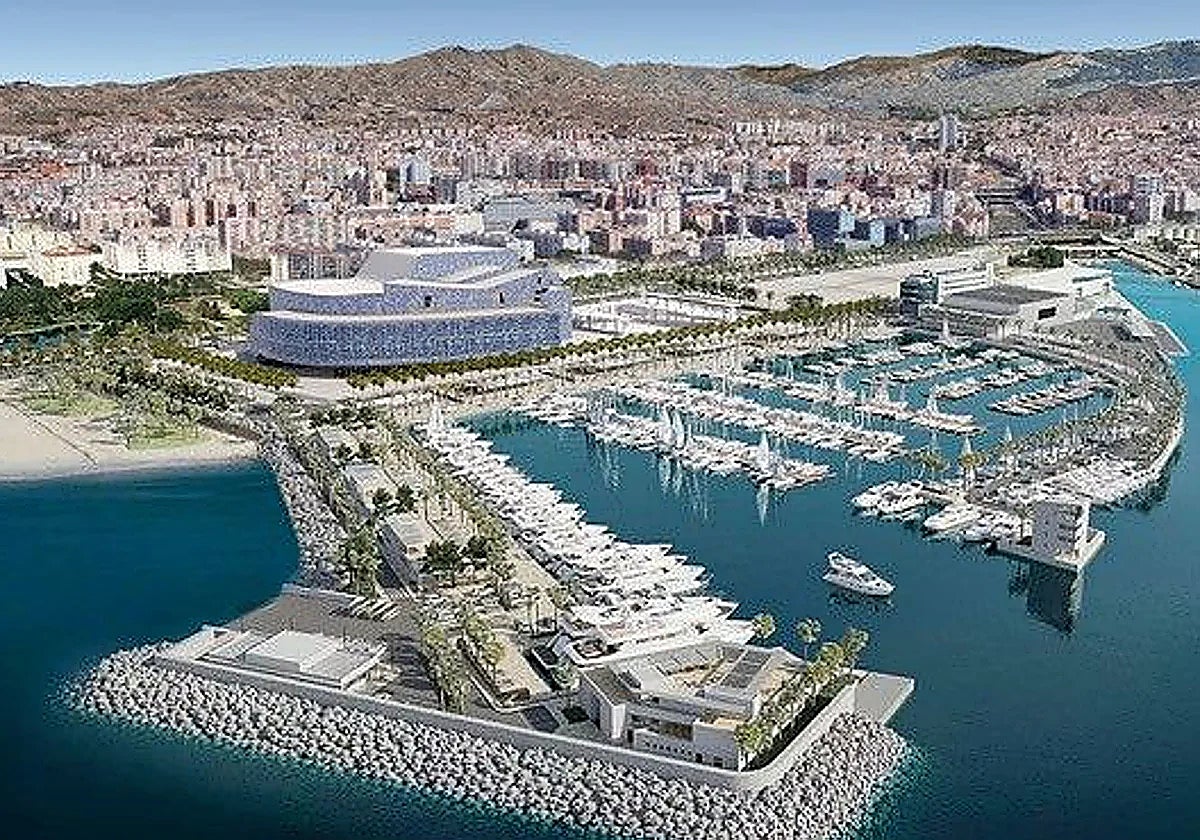

Concerns about the management of the future Auditorio de la Música (or Palacio de la Ópera) in Malaga and its use as a conference venue ... keep emerging.
In a letter to Mayor Francisco de la Torre, the musicians of the Malaga Philharmonic Orchestra (OFM) have expressed their concern at the decision to entrust Promálaga with the running of a venue where the priority will be cultural, as the mayor recently told SUR.
"It defies all logic that a venue whose main and predominant activity will be cultural should be managed by an organisation with no connection to the cultural sector," the letter states.
Related story
-
Infrastructure
Paco Griñán
The musicians are asking the mayor to provide a written commitment that culture "will never lose its primacy" at the auditorium.
They also challenge the mayor's suggestion that cultural activities would occupy the building for six months of the year, a figure he said had been provided by the city council's culture department.
According to them, the estimates reflect the activity of an orchestra that currently has no permanent concert hall and operates as a "nomadic" ensemble, moving between different venues, principally the Teatro Cervantes and the provincial authority headquarters.
"Sizing our future home according to the limitations we currently face only guarantees that those limitations will continue in the new building," the letter says.
In their view, the purpose of the new auditorium should be to allow the orchestra to expand in a venue with acoustics designed specifically for symphonic music, something it currently lacks at the Teatro Cervantes. "Malaga has never truly heard its own orchestra," they say.
The musicians also stress that an orchestra must rehearse in the same hall where it performs, something they believe would be difficult if rehearsal spaces were frequently occupied by conferences.
"Acoustics are not merely part of the scenery; they are the orchestra's largest instrument, and they are precisely what the 209-million-euro investment is paying for. An orchestra that rehearses in one acoustic environment and performs in another arrives at every concert without having been able to fine-tune balance, articulation or dynamics in the actual performance space," the letter reads.
"If the unspoken plan is for the OFM to continue rehearsing in El Ejido and simply 'visit' the auditorium on performance days, then its residency would exist in name only and the investment in world-class acoustics would be wasted every day. It would be like buying a Stradivarius only to play it on Fridays."
The committee is also seeking guarantees that the city council's own cultural programme will not be charged for using the venue, including rehearsal periods and stage set-up days.
The musicians say that a genuine auditorium should, over time, aim to produce its own operas and then hire those productions out to other theatres. "That would turn expenditure into income while creating skilled backstage and production jobs in Malaga."
Responding to arguments that the auditorium must generate sufficient income to justify its cost (one of the main reasons given for incorporating conference facilities), the musicians point out that the same commercial test is not applied to other public cultural institutions.
"No one questions a library because it does not sell enough books. No one suggests closing a museum because ticket sales do not cover its costs. No one measures the value of a park, a hospital or a road by the direct financial return it generates," the letter states.
The OFM states the auditorium should be viewed in exactly the same way. "It is a strategic cultural asset whose true value should be measured by the legacy it leaves Málaga for future generations."
The letter concludes: "Culture is not an expense. It is a strategic investment of the highest order."
![[]](http://static.vocstatic.com/voc26/latest/assets/images/favicon/surinenglish/apple-touch-icon-57x57.png)